Good communication is at the heart of quality care. It helps to build trust, promote dignity, and ensure that individuals receive the support that meets their needs, wishes, and preferences.
This Care Certificate Standard 6 online course provides you with the essential knowledge and practical skills to communicate clearly and effectively with the people you support, their families, and your colleagues.
Why Take This eLearning Course?
Effective communication is about more than words — it’s about understanding, listening, and responding appropriately. In health and social care, poor communication can lead to confusion, distress, and mistakes. Strong communication skills, on the other hand, create safe, person-centred environments and positive outcomes for everyone involved.
This course will help you to:
- Understand different forms of communication, including verbal, non-verbal, written, and digital.
- Communicate clearly and sensitively with individuals, colleagues, and families.
- Adapt your approach to meet language, cultural, and communication needs.
- Maintain confidentiality and share information appropriately.
- Overcome barriers to ensure mutual understanding and trust.
Learning Outcomes
By the end of this course, you will be able to:
- Explain the different ways people communicate and why communication is central to good care.
- Describe how effective communication supports teamwork and strengthens relationships.
- Recognise the importance of observing reactions and body language to understand how a message is received.
- Identify barriers to communication and strategies to overcome them.
- Adapt your communication to meet individual needs, preferences, and cultural backgrounds.
- Apply the principles of confidentiality and data protection in daily work.
- Know when and how to share information safely and appropriately.
- Identify sources of advice, support, and specialist services that can help improve communication.
Care Certificate Standard 6 Course Outline
Module 6.1: Effective Communication at Work
Learners will explore the different ways people communicate, including verbal, non-verbal, written, and digital forms. The module highlights how effective communication builds positive working relationships, supports teamwork, and promotes trust between colleagues and individuals receiving care. Learners will also understand the importance of observing and responding to individuals’ reactions to ensure that communication is clear, respectful, and person-centred.
Module 6.2: Meeting Communication and Language Needs, Wishes, and Preferences
This module focuses on how to identify and meet each person’s unique communication and language needs. Learners will explore different communication methods, styles, and aids, including the use of interpreters, translation services, communication boards, and technology. The module emphasises the importance of adapting communication to respect preferences, culture, and ability, ensuring that everyone is heard and understood. A short knowledge check reinforces key learning points.
Module 6.3: Promoting Effective Communication
Learners will understand the barriers that can prevent effective communication, such as sensory impairment, environmental noise, language differences, or emotional distress. The module teaches practical strategies to reduce these barriers, including active listening, clear language, appropriate body language, and the use of aids or support services. Learners will also explore ways to check understanding and where to find further advice or resources to improve communication in care settings.
Module 6.4: Principles and Practices Relating to Confidentiality
This module explains what confidentiality means in a health and social care context and how it applies to everyday communication. Learners will understand relevant legislation, such as the Data Protection Act 2018 and GDPR, and the agreed ways of working that protect people’s private information. The module also covers situations where information may need to be shared—such as safeguarding concerns—and identifies who to approach for advice or support about confidentiality.
Target Audience
This course is suitable for:
- Health and social care workers completing the Care Certificate
- Support workers, care assistants, and home carers
- Team leaders, supervisors, and volunteers in care settings
- Anyone who wishes to improve their communication skills in a care context
No prior knowledge is required — the course is accessible and practical for all experience levels.
FAQ
Why is communication important in health and social care?
Because it underpins trust, safety, and person-centred care. Good communication ensures that individuals are understood, respected, and supported appropriately.
How long will the course take?
The course typically takes around 1–2 hours to complete, depending on your pace.
Is this course mandatory?
Yes — Standard 6: Communication is a required unit for anyone completing the Care Certificate.
Will I get a certificate?
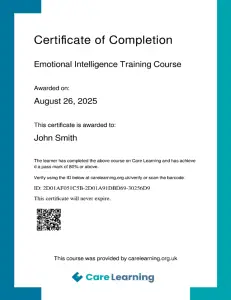
Yes. You’ll receive a Care Certificate Standard 6: Communication certificate upon completion.
Is the course CPD-accredited?
It aligns with recognised Skills for Care and CQC frameworks and can be used as evidence towards your CPD record.
Every interaction in care — from a simple conversation to a complex handover — relies on effective communication. By improving how you listen, speak, and respond, you can make a real difference to people’s safety, confidence, and wellbeing.
Good communication also strengthens teamwork, ensures consistent care, and builds the respectful relationships that define high-quality support.
Enrol on the Care Certificate Standard 6: Communication Training Course today
Learn how to communicate effectively, maintain confidentiality, and build stronger relationships in your health and social care role.
You must log in and have started this course to submit a review.