
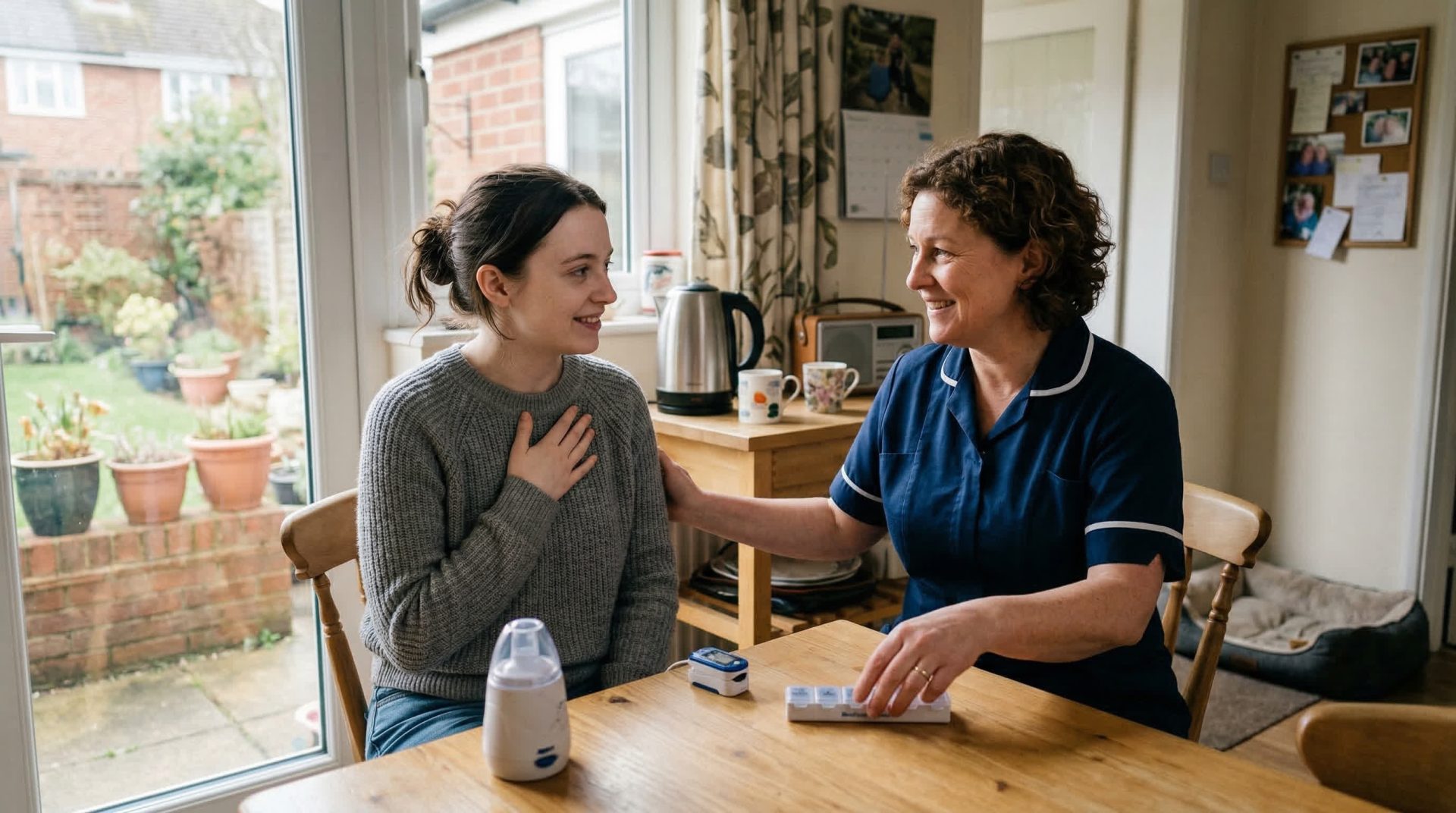
Cystic fibrosis is a long-term genetic condition that mainly affects breathing and digestion. It causes mucus in the body to become thicker and stickier than usual, which can block airways and ducts, leading to repeated infections and other complications. In health and social care, it is important to understand that cystic fibrosis affects people differently and that support needs can change over time.
This Cystic Fibrosis online course covers what cystic fibrosis is, how it is inherited, how it affects daily life, and how professionals can support people who use services in a safe, person-centred and informed way.
Why Take This eLearning Course?
A good understanding of cystic fibrosis helps health and social care workers provide safer, more responsive support. It supports better recognition of symptoms, more confident communication, and a clearer understanding of treatment routines, nutrition needs, infection risks and emotional wellbeing.
This course will help you to:
- Understand what cystic fibrosis is and why it is a lifelong condition.
- Recognise that cystic fibrosis is genetic and not caused by lifestyle or infection.
- Understand who may be affected by cystic fibrosis in the UK.
- Explore how cystic fibrosis can affect daily life, routines and independence.
- Learn how cystic fibrosis is inherited and what carrier status means.
- Understand the role of the CFTR gene in simple terms.
- Recognise how diagnosis often happens, including newborn screening and confirmatory testing.
- Explore how cystic fibrosis affects the lungs, digestion and nutrition.
- Identify common symptoms and complications.
- Understand the main treatments used in cystic fibrosis care.
- Learn about the role of physiotherapy, medication and diet in daily management.
- Recognise the importance of specialist cystic fibrosis care teams.
- Understand the emotional and family impact of living with cystic fibrosis.
- Explore challenges that may arise across childhood, adolescence and adulthood.
- Learn practical ways to support individuals with cystic fibrosis in health and social care settings.
- Understand the importance of infection prevention and person-centred care.
Learning Outcomes
By the end of this course, you will be able to:
- Define cystic fibrosis.
- Explain that cystic fibrosis is a genetic, lifelong condition.
- Identify who is affected by cystic fibrosis in the UK.
- Describe how cystic fibrosis affects daily life.
- Explain how cystic fibrosis is inherited.
- Define the CFTR gene in simple terms.
- Identify carrier parents and explain what carrier status means.
- Outline diagnosis, including newborn screening.
- Describe how cystic fibrosis affects the lungs.
- Explain the impact of cystic fibrosis on digestion and nutrition.
- List common symptoms and complications.
- Describe common treatments and daily management.
- Explain the role of physiotherapy, medication and diet.
- Identify specialist cystic fibrosis care teams.
- Describe the emotional and family impact of cystic fibrosis.
- Identify challenges linked to cystic fibrosis across the lifespan.
- Identify ways to support individuals with cystic fibrosis.
- Explain infection prevention and person-centred care in cystic fibrosis support.
Cystic Fibrosis Awareness Course Outline
Module 1: Understanding Cystic Fibrosis
Learners will explore what cystic fibrosis is and how it affects the body. This module explains cystic fibrosis as a long-term genetic condition that mainly affects breathing and digestion by causing mucus to become thicker and stickier than usual. Learners will examine how this sticky mucus can block airways and ducts, leading to repeated infections and ongoing health problems. The module also explains that cystic fibrosis is a lifelong condition present from birth and not caused by lifestyle, parenting, or infection. Learners will also consider who is affected in the UK, recognising that cystic fibrosis can affect children and adults from any background and that support needs can vary widely between individuals and over time.
Module 2: Inheritance, Genetics, and Diagnosis
This module focuses on how cystic fibrosis is inherited and diagnosed. Learners will examine the autosomal recessive pattern of inheritance, understanding that a child needs to inherit an altered gene from both parents to have the condition, while parents may be carriers without having cystic fibrosis themselves. The module also explains the CFTR gene in simple terms, showing how it helps control salt and water movement in cells and how changes in this gene lead to thicker mucus and digestive secretions. Learners will explore how carrier parents may be identified through family history, partner testing, antenatal pathways, newborn screening follow-up, and genetic counselling. The module also covers diagnosis, including newborn blood spot screening, sweat testing, genetic testing, and specialist assessment, with emphasis on clear communication and timely referral to specialist teams.
Module 3: How Cystic Fibrosis Affects Daily Life and the Body
Learners will explore how cystic fibrosis affects everyday life and the main body systems involved. This module explains how treatment schedules, nutrition routines, fatigue, infection awareness, and appointments can shape a person’s daily activities, education, work, and social participation. Learners will examine how cystic fibrosis affects the lungs through airway blockage, repeated infections, inflammation, and long-term lung changes, and will also explore the impact on digestion and nutrition caused by blocked pancreatic secretions and reduced absorption of nutrients. The module also identifies common symptoms and complications, including persistent cough, repeated chest infections, poor weight gain, bowel symptoms, diabetes risk, and possible liver disease. The importance of noticing symptom changes and understanding day-to-day variation is emphasised throughout.
Module 4: Treatment and Daily Management
This module focuses on the main treatments and management approaches used in cystic fibrosis care. Learners will examine how daily care often combines airway clearance routines, inhaled and oral medicines, CFTR modulator medicines, pancreatic enzymes, vitamin supplements, and regular specialist monitoring. The module also explains the role of physiotherapy, medication, and diet in maintaining lung function, reducing infection risk, and supporting growth, nutrition, and energy levels. Learners will explore how treatment plans are often intensive and highly individualised, and why routines need to be supported in ways that are safe, respectful, and compatible with the person’s daily life. The importance of following care plans, monitoring tolerance, and reporting changes to specialist teams is also highlighted.
Module 5: Specialist Teams and Wider Impact on Individuals and Families
Learners will explore the wider support systems involved in cystic fibrosis care and the emotional and family impact of the condition. This module explains the role of specialist cystic fibrosis care teams, including consultants, specialist nurses, physiotherapists, dietitians, pharmacists, psychologists, social workers, and microbiology or respiratory support staff. Learners will examine how these professionals work together to provide coordinated, evidence-based care. The module also explores the emotional and family impact of cystic fibrosis, including worry, uncertainty, treatment burden, sibling experiences, financial pressure, and changes in family roles and relationships. Challenges across the lifespan are also considered, including treatment routines in childhood, transition to adult services, adulthood, work, relationships, fertility issues, and changing health needs over time.
Module 6: Supporting Individuals with Cystic Fibrosis in Health and Social Care
In the final module, learners will explore the role of health and social care workers in supporting people with cystic fibrosis safely and respectfully. This module explains how staff can support individuals by following care plans, promoting independence, helping with treatment routines, supporting medicines management, and recognising early signs of infection or deterioration. Learners will also examine the importance of infection prevention, including hand hygiene, cleaning routines, respiratory hygiene, avoiding cross-infection, using PPE where required, and building infection control into person-centred care planning. The module emphasises that support should always be flexible, respectful, and tailored to the individual, with privacy, dignity, clear communication, and partnership working at the centre of care.
Target Audience
This course is suitable for:
- Health and social care workers.
- Care assistants and support workers.
- Senior carers and team leaders.
- Social care practitioners and assessors.
- Housing, community and outreach staff.
- Managers and supervisors.
- Anyone involved in supporting children, young people or adults with cystic fibrosis.
No previous specialist knowledge of cystic fibrosis is required.
FAQ
Is this course relevant to health and social care in the UK?
Yes. The course is designed for UK health and social care practice and reflects person-centred care, infection prevention, data protection and relevant legal frameworks such as the Mental Capacity Act 2005 and Equality Act 2010.
Does the course explain the genetics of cystic fibrosis in simple language?
Yes. It explains inheritance, carrier status and the role of the CFTR gene in clear, accessible terms.
Will this course help me understand treatment routines?
Yes. The course explains common treatments such as airway clearance, inhaled medicines, antibiotics, enzyme capsules, nutrition support and specialist reviews.
Does it cover emotional and family impact?
Yes. It includes the emotional, social and family impact of cystic fibrosis, including treatment burden, uncertainty, transitions and changing support needs over time.
Is person-centred support included?
Yes. The course explains how to provide support that respects privacy, dignity, independence and individual care plans while responding safely to changing symptoms.
Does the course cover infection prevention?
Yes. It includes the importance of infection prevention, hand hygiene, cleaning, respiratory hygiene, avoiding cross-infection and applying these measures in a person-centred way.
How long does the course take?
The course is self-paced and typically takes 1 hour to complete.
Will I receive a certificate?
Yes. A certificate is issued after successful completion.
Is the course CPD accredited?
Courses are not currently CPD accredited, but accreditation is planned.
A strong understanding of cystic fibrosis helps health and social care workers provide support that is safer, more respectful and more responsive to changing needs. By understanding the condition, treatment routines and wider life impact, professionals can help people with cystic fibrosis maintain wellbeing, independence and quality of life.
Enrol now to build your understanding of cystic fibrosis in health and social care.
You must log in and have started this course to submit a review.
Cystic Fibrosis Awareness Training Course CPD Accredited and Government Funding
We’re working on getting this Cystic Fibrosis Awareness Training Course CPD accredited, and any course that’s approved will be clearly labelled as CPD accredited on the site. Not every health and social care course has to be accredited to help you meet CQC expectations – what matters is that staff are competent, confident and properly trained for their roles under Regulation 18. Our courses are built to support those requirements, and because they’re not government funded there are no eligibility checks or ID needed – you can enrol and start learning straight away.

