Positive Behaviour Support (PBS) is an evidence-based approach that aims to improve quality of life and reduce behaviours that challenge through understanding, prevention, and positive intervention. This free Positive Behaviour Support online course provides a practical and person-centred introduction to PBS, helping health and social care professionals apply its principles effectively in their daily practice.
PBS is not simply about managing behaviour — it’s about creating supportive environments, teaching alternative skills, and promoting dignity, choice, and respect.
Why Take This eLearning Course?
Behaviours that challenge often communicate an unmet need. Understanding why behaviour occurs is the foundation of compassionate, effective care. This PBS course equips you with the knowledge, strategies, and confidence to work proactively with individuals, families, and teams to promote positive outcomes.
Here’s why this course is ideal for you:
- Evidence-based and practical: Learn from real-world examples and NHS-endorsed PBS principles.
- Person-centred approach: Discover how PBS promotes dignity, independence, and inclusion.
- Improved professional confidence: Develop strategies for managing challenging behaviour safely and effectively.
- Team-focused learning: Understand how collaboration between professionals, families, and individuals leads to better outcomes.
- Aligned with UK frameworks: This course follows the UK PBS Competence Framework and the PBS Academy Standards for best practice.
Positive Behaviour Support (PBS) Course Content Outline
Module 1: Introduction to Positive Behaviour Support
Learners will explore what Positive Behaviour Support (PBS) is and understand its purpose in promoting positive outcomes for individuals who display behaviours that challenge. They will review the core principles of PBS, including person-centred, evidence-based, and proactive approaches, and learn how collaboration with individuals, families, and professionals underpins effective practice.
Module 2: Understanding Behaviours
This module helps learners identify behaviours that challenge and explore their potential causes. They will understand the influence of antecedents (triggers) and consequences on behaviour, supported by NHS-based video resources that demonstrate how PBS addresses behavioural challenges.
Module 3: Assessment and Planning
Learners will develop skills in conducting functional behavioural assessments and collaboratively creating PBS plans. They will explore proactive strategies such as teaching alternative skills and adapting environments to reduce triggers. The module includes a video resource and knowledge check to reinforce learning.
Module 4: Implementing Positive Behaviour Support
This module focuses on putting PBS plans into action. Learners will review how to implement plans consistently across all stakeholders and apply proactive and reactive strategies using the ABC (Antecedent–Behaviour–Consequence) model to prevent and respond to challenging behaviour effectively.
Module 5: Monitoring and Evaluation
Learners will understand the importance of data collection, record keeping, and monitoring the effectiveness of PBS plans. They will learn how to analyse outcomes, make adjustments, and measure progress to ensure interventions remain effective and person-centred.
Module 6: Communication Skills
This module highlights how effective communication and active listening support PBS implementation. Learners will explore how communication builds trust, promotes positive relationships, and reduces the likelihood of behavioural escalation. A knowledge check consolidates learning.
Module 7: Practical Application
Learners will review safe disengagement techniques for managing challenging situations and understand how to maintain safety and well-being for everyone involved. This module emphasises calm, respectful, and legally compliant approaches to behaviour management.
Module 8: Post-Incident Reviews
This module examines the purpose and process of post-incident reviews. Learners will understand how reflective reviews help identify learning, improve future interventions, and strengthen person-centred support.
Module 9: Guidelines and Standards
Learners will explore the UK PBS Competency Framework and the standards developed by the PBS Academy. They will understand how these frameworks guide best practice, ensure service quality, and align PBS delivery with national expectations and ethical standards.
Learning Outcomes
By the end of this course, learners will be able to:
- Define Positive Behaviour Support (PBS) and explain its purpose in health and social care.
- Describe the core principles of PBS, including person-centred, evidence-based, and proactive approaches.
- Identify behaviours that challenge and understand their potential causes.
- Recognise the importance of functional assessment and how to develop PBS plans collaboratively.
- Implement proactive and reactive strategies, including the ABC (Antecedent–Behaviour–Consequence) model.
- Collect and monitor data to evaluate PBS plan effectiveness.
- Apply effective communication and active listening techniques.
- Use safe disengagement and wellbeing strategies during incidents.
- Conduct post-incident reviews to inform future practice.
- Understand UK legislation, competency frameworks, and ethical standards related to PBS.
Target Audience
This course is suitable for:
- Support workers, carers, and healthcare assistants.
- Registered nurses and allied health professionals.
- Team leaders, managers, and PBS practitioners.
- Anyone supporting individuals with learning disabilities, autism, or behaviours that challenge.
No previous PBS experience is required. The course is designed for both new and experienced professionals.
FAQ
What does this course cover?
The course covers the foundations of PBS, functional assessment, behaviour analysis, plan development, communication skills, and reflective practice.
Is this course based on UK standards?
Yes. It aligns with the frameworks for supporting people with learning disabilities and challenging behaviour.
How long will it take?
The course is self-paced and typically takes 1 hour to complete.
Do I need prior knowledge?
No. The course introduces PBS concepts in a clear and accessible way, suitable for all levels.
Will I receive a certificate?
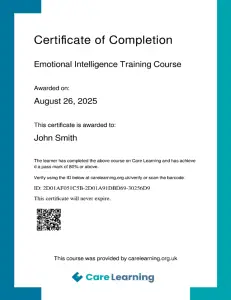
Yes. You’ll receive a digital certificate upon successful completion.
Is this course CPD accredited?
It is currently under review for CPD accreditation and will soon include CPD certification.
Join today and learn how Positive Behaviour Support can transform the way you understand and respond to behaviour.