Personal and professional development is at the heart of quality care. Standard 2 of the Care Certificate focuses on how health and social care workers take responsibility for their own learning and growth. This free online course will help you create a Personal Development Plan (PDP), reflect on your practice, and understand how to use feedback and learning opportunities to improve the care you provide.
This module builds on the foundations of Standard 1 and supports you in meeting Care Certificate Standard 2 requirements.
Why Take This eLearning Course?
In health and social care, learning never stops. Every day offers an opportunity to build new skills, gain insight, and grow in confidence. This course helps you recognise your strengths, address areas for improvement, and set clear, achievable goals that align with your role.
Here’s why this course is for you:
- Develop a clear Personal Development Plan: Learn how to set goals and map your progress in line with your organisation’s values and expectations.
- Use feedback effectively: Discover how constructive feedback helps you enhance your performance and provide better care.
- Reflect on your experiences: Explore how self-reflection builds confidence, competence, and compassion.
- Measure your progress: Learn to assess your knowledge, skills, and performance against professional standards.
- Commit to continuous professional development: Understand the importance of lifelong learning in health and social care.
Care Certificate Standard 2 Course Content Outline
Module 1: Sources of Support for Learning and Development
Learners will explore where to find support for their professional growth in health and social care. They will understand the importance of supervision, appraisals, training courses, and mentoring, as well as how professional bodies and online resources contribute to their ongoing learning.
Module 2: Agreeing a Personal Development Plan (PDP)
This module explains the process of creating a personal development plan. Learners will reflect on their strengths and needs, set SMART goals with their line manager, and understand who should be involved in agreeing and reviewing their PDP.
Module 3: Using Feedback to Improve Practice
Learners will explore the value of feedback from supervisors, colleagues, and people who use services. They will understand how constructive feedback builds confidence, supports continuous improvement, and strengthens teamwork and care delivery.
Module 4: Contributing to and Owning Your Personal Development Plan
This module guides learners in taking responsibility for their own PDP. They will learn how to reflect on practice, identify learning needs, set development goals, and agree on actions to achieve them. Regular review and contribution ensure that plans remain meaningful and relevant.
Module 5: Personal Development Plan Agreement
Learners will review how PDP agreements establish shared responsibility between employers and employees. The module covers how to set realistic SMART objectives, ensure access to learning resources, and meet regulatory expectations such as those set by the CQC.
Module 6: Literacy, Numeracy, and Communication Skills
This module explores the essential literacy, numeracy, and communication skills needed for safe and effective care practice. Learners will understand how these core skills impact record keeping, medication accuracy, teamwork, and communication with people who use services.
Module 7: Assessing Current Skills and Abilities
Learners will identify ways to evaluate their current literacy, numeracy, and communication levels through self-assessment, supervision feedback, peer input, and formal testing. This helps target areas for improvement and ensures professional standards are met.
Module 8: Learning Activities and Reflection
This module focuses on how learning activities and reflective practice improve skills and understanding. Learners will explore the benefits of formal training, practical exercises, and reflective journaling in enhancing competence and confidence.
Module 9: Measuring and Comparing Performance Against Standards
Learners will learn how to measure their performance against frameworks such as the Care Certificate Standards, National Occupational Standards, and organisational policies. They will also review how audits and appraisals help assess progress.
Module 10: Accessing Learning Opportunities
This module outlines a range of learning opportunities available in health and social care, from formal training and e-learning to mentoring, workshops, and professional networks. Learners will understand how to use these opportunities to enhance their practice and career development.
Module 11: Recording and Evidencing Professional Development
Learners will explore the importance of recording progress through reflective journals, learning logs, or digital platforms. The module explains how accurate record keeping provides evidence of competence and accountability in line with regulatory standards.
Module 12: Importance of Continuing Professional Development (CPD)
This final module highlights why CPD is essential for maintaining high standards in care. Learners will explore how ongoing development keeps skills current, supports career progression, and demonstrates professional accountability, ultimately improving outcomes for people who use services.
Learning Outcomes
By the end of this course, learners will be able to:
- Identify sources of support for their learning and development.
- Explain how to agree a Personal Development Plan (PDP) and who should be involved.
- Recognise why feedback from others is vital for improving practice.
- Contribute actively to developing and reviewing their own PDP.
- Understand the process of personal development plan agreement.
- Assess their literacy, numeracy, and communication skills against job requirements.
- Describe how learning activities and reflection enhance skills and knowledge.
- Measure their own knowledge and performance against professional standards.
- Identify available learning opportunities and use them to improve practice.
- Understand the importance of recording progress and continuing professional development (CPD).
Target Audience
This course is suitable for:
- New health and social care workers completing the Care Certificate.
- Experienced care staff refreshing their personal development knowledge.
- Team leaders, mentors, or managers supporting others with their PDPs.
The course is relevant across all adult social care and healthcare settings in the UK.
FAQ
What does this course cover?
You’ll explore how to create and review a Personal Development Plan, use reflection to improve your practice, and recognise the importance of lifelong learning in social care.
Do I need to create a PDP during the course?
Yes – you’ll have the opportunity to start your own plan or update an existing one.
How long will it take?
The course takes approximately 1 to 2 hours, depending on your pace.
Do I need prior knowledge?
No – this course is designed for beginners, though it’s equally valuable for experienced care professionals.
Is it mapped to the Care Certificate?
Yes, it aligns fully with Care Certificate Standard 2.
Will I receive a certificate?
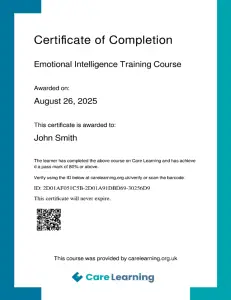
Yes. On completion, you’ll receive a digital certificate confirming your achievement.
Why Personal Development Matters
Personal development isn’t just about ticking boxes – it’s about being the best version of yourself in your role. By understanding your strengths and growth areas, you’ll provide safer, more effective, and compassionate care to those who rely on you.
Join this Care Certificate Standard 2 course today and take an active step in your professional growth and confidence as a care worker.
You must log in and have started this course to submit a review.