
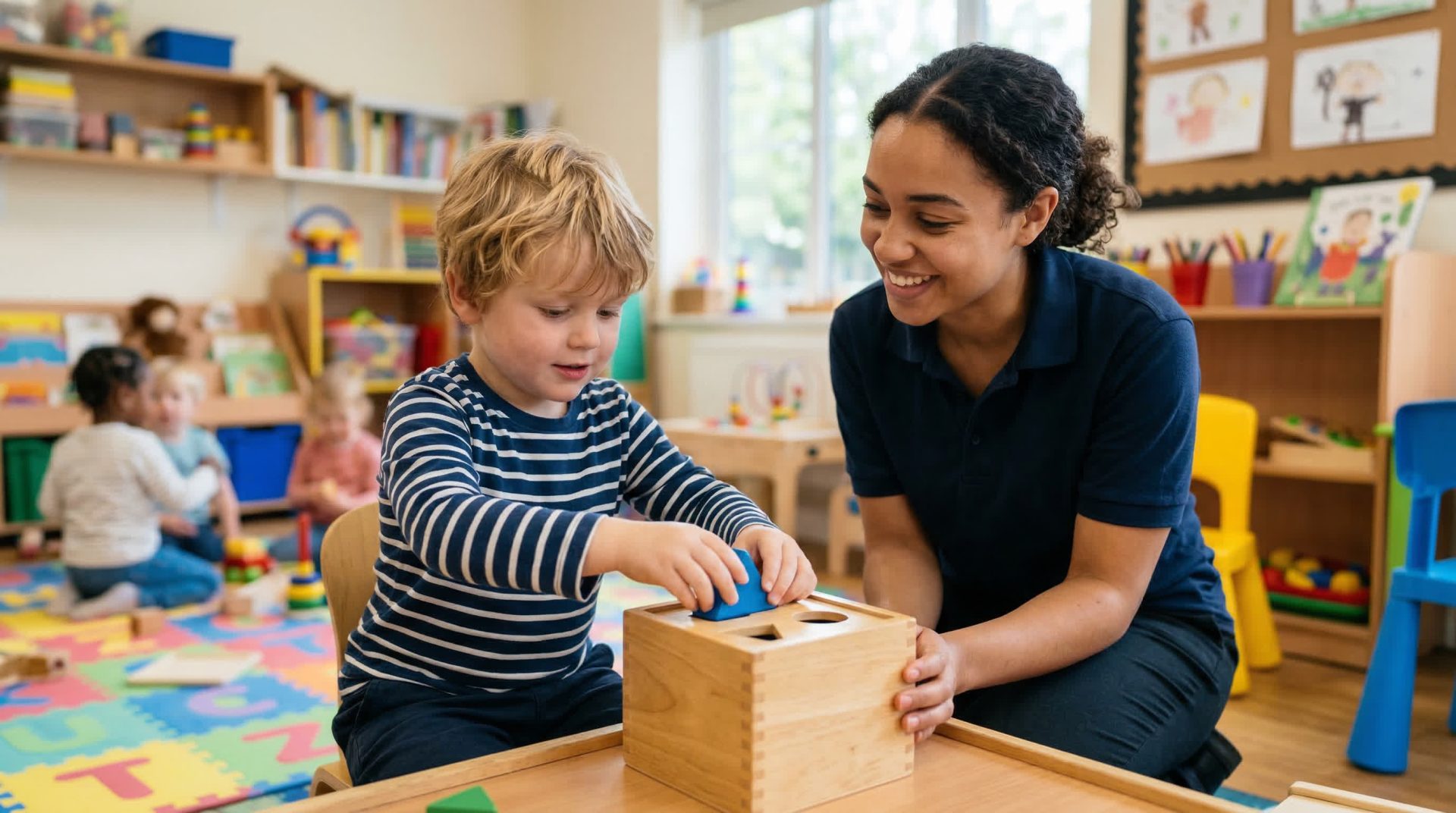
Motor skills are the controlled movements children make using their muscles, bones and nervous system. They develop through practice, play and everyday routines, and they improve as the brain and body coordinate more smoothly. In early years, motor development supports how children explore, communicate, manage self-care and take part in learning across the day.
This free motor skills online course introduces motor skills in the context of Early Years practice in England. It explains what motor skills are, how gross and fine motor development differ, what typical development may look like from birth to age five, and how practitioners can support movement through play, planning, inclusive practice and early identification of concerns.
Why Take This eLearning Course?
Motor development is a vital part of holistic development in the early years. It supports physical health, confidence, independence, communication, self-care and readiness for learning. When practitioners understand motor development well, they are better able to plan meaningful opportunities for movement, notice emerging concerns and work effectively with families and other professionals.
This free course will help you to:
- Understand what motor skills are and why they matter in early years development.
- Recognise the difference between gross motor skills and fine motor skills.
- Understand typical age-related expectations for motor development from birth to age five.
- Explore what gross motor skills are and how they develop over time.
- Recognise common gross motor skills such as running, jumping, climbing and balancing.
- Learn about activities that support gross motor development.
- Understand what fine motor skills are and how they develop over time.
- Recognise common fine motor skills such as grasping, drawing and using tools.
- Learn about activities that support fine motor development.
- Explore physical, environmental and social factors that affect motor development.
- Understand the role of play in developing motor skills.
- Learn how adult support and modelling can help children build motor control and confidence.
- Recognise how to plan age-appropriate activities for motor development.
- Understand how indoor and outdoor environments support movement in different ways.
- Explore inclusive practices that support children with differing abilities.
- Identify signs of possible motor development delay.
- Learn when and how to raise concerns appropriately.
- Understand the importance of working with parents and other professionals.
Learning Outcomes
By the end of this course, you will be able to:
- Define motor skills and explain why they are important in early years development.
- Describe the difference between gross motor skills and fine motor skills.
- Identify typical age-related expectations for motor development.
- Explain what gross motor skills are.
- List common gross motor skills in early years.
- Describe how gross motor skills develop from birth to age five.
- Give examples of activities that support gross motor development.
- Explain what fine motor skills are.
- List common fine motor skills in early years.
- Describe how fine motor skills develop from birth to age five.
- Give examples of activities that support fine motor development.
- Identify physical, environmental and social factors that affect motor development.
- Describe the role of play in developing motor skills.
- Explain how adult support and modelling can help motor development.
- Outline how to plan age-appropriate activities for motor development.
- Describe how indoor and outdoor environments support motor skills.
- Identify inclusive practices to support children with differing abilities.
- Identify signs of possible motor development delay.
- Describe when and how to raise concerns appropriately.
- Explain the importance of working with parents and other professionals.
Motor Skills in Early Years Course Outline
Module 1: Understanding Motor Skills and Their Importance in Early Years
Learners will explore what motor skills are and why they are important in early years development. This module explains motor skills as the controlled movements children make using their muscles, bones, and nervous system, and shows how they develop through practice, play, and everyday routines. Learners will examine why motor development matters for independence, safety, communication, learning behaviours, and physical health, and how it supports children to explore, manage self-care, and take part in daily life with growing confidence. The module also explains the difference between gross motor skills and fine motor skills, helping learners understand how large body movements and smaller hand movements both contribute to children’s wider development.
Module 2: Gross Motor Development in Early Years
This module focuses on gross motor skills and how they develop from birth to age five. Learners will examine gross motor skills as the large movements that rely on the bigger muscles in the arms, legs, back, and core, supporting posture, balance, coordination, strength, endurance, and spatial awareness. The module explores common gross motor skills in early years, including running, jumping, climbing, balancing, throwing, catching, kicking, and striking, and explains how these develop over time through active play, daily routines, and repeated movement experiences. Learners will also examine a range of activities that support gross motor development, such as outdoor free play, obstacle courses, climbing, ball play, dance, wheeled toys, and stretching or yoga-based movement.
Module 3: Fine Motor Development in Early Years
Learners will explore fine motor skills and their role in early years development. This module explains fine motor skills as the small, precise movements involving hands, fingers, wrists, and hand–eye coordination, and shows how these support object handling, self-care, creative play, and early writing readiness. Learners will examine common fine motor skills such as grasping, releasing, threading, drawing, page turning, using cutlery, manipulating tools, and managing fastenings. The module also explains how fine motor development progresses from birth to age five, moving from whole-hand grasping towards more controlled finger movements, and explores activities that support fine motor skills, including dough play, tool use, threading, mark making, cutting, collage, and real self-care routines such as pouring and dressing.
Module 4: Factors That Affect Motor Development and the Role of Play
This module focuses on the different factors that influence motor development in early years. Learners will examine how physical factors such as health, muscle tone, coordination, vision, hearing, fatigue, and nutrition can affect movement, alongside environmental factors such as space, equipment, clothing, flooring, and access to active play. The module also explores social factors, including relationships, adult attention, peer play, confidence, stress, and daily routines, and explains how these affect children’s willingness to practise movement. Learners will examine the role of play in developing motor skills, showing how repetition, motivation, enjoyment, curiosity, and social interaction all help children strengthen both gross and fine motor control in meaningful ways.
Module 5: Adult Support, Planning, and Enabling Environments
Learners will explore how adult support and thoughtful planning can help children develop motor skills safely and confidently. This module explains how adults can support movement through careful observation, safe environments, clear modelling, breaking tasks into smaller steps, using simple language, encouraging regular practice, and adapting activities for inclusion. Learners will also examine how to plan age-appropriate activities for motor development, using observation, clear purpose, progression, varied resources, repetition, and effective risk management. The module also explores the role of indoor and outdoor environments, showing how indoor spaces can support fine motor control and smaller movement experiences, while outdoor provision often supports larger body movements, strength, stamina, and body awareness through a wider range of active play.
Module 6: Inclusion and Supporting Children with Differing Abilities
This module focuses on inclusive practice in motor development and how early years settings can support children with differing abilities. Learners will examine how inclusive practice begins with the expectation that all children should be able to take part in movement experiences, with reasonable adjustments made to reduce barriers and support participation. The module explores practical inclusive approaches such as adapting equipment, changing the height or distance of tasks, providing stable seating or positioning, using uncluttered spaces, and offering resources that are easier to grip or manipulate. Learners will also consider the importance of observation, encouragement, and partnership with families and professionals so that children experience movement opportunities that are accessible, respectful, and supportive of success alongside their peers.
Module 7: Recognising Possible Delays and Working in Partnership
In the final module, learners will explore how to recognise possible signs of motor development delay and how to respond appropriately. This module explains that concerns are usually based on patterns over time rather than isolated incidents and may include limited movement variety, ongoing balance difficulties, weak posture or stamina, avoidance of physical play, fine motor challenges, or marked differences between sides of the body. Learners will examine when and how to raise concerns appropriately, using clear observations, following setting procedures, involving the SENCO where needed, sharing concerns with parents, and considering referrals to relevant health services with consent. The module also explains the importance of working with parents and other professionals, showing how shared understanding, joined-up strategies, respectful communication, and clear record keeping support more responsive, inclusive, and effective support for the child over time.
Target Audience
This course is suitable for:
- Early years practitioners.
- Nursery and preschool staff.
- Childminders and childminding assistants.
- Reception staff and teaching assistants.
- SENCOs and staff supporting physical development.
- Managers and supervisors.
- Anyone involved in supporting children’s physical development in the early years.
No previous specialist knowledge of motor development is required.
FAQ
Is this course relevant to Early Years practice in England?
Yes. The course is designed for Early Years practice in England and reflects EYFS expectations around physical development, inclusive practice, safeguarding and observation-led planning.
Does the course cover both gross and fine motor skills?
Yes. It explains both areas clearly, including how they differ, how they develop and how practitioners can support them through everyday routines and play.
Will this course help me recognise possible motor delays?
Yes. The course includes common signs of possible delay, guidance on observation over time, and how to raise concerns appropriately within setting procedures.
Does it include practical activities?
Yes. The course includes examples of activities that support both gross and fine motor development, along with planning guidance for age-appropriate and engaging practice.
Is inclusion covered?
Yes. The course explores inclusive approaches for children with differing abilities, including adjustments to activities, equipment, environments and adult support.
Does it cover partnership with families and professionals?
Yes. It explains why partnership with parents, carers and professionals is important, and how joined-up working supports clearer planning and more consistent support.
How long does the course take?
The course is self-paced and typically takes 1 hour to complete.
Will I receive a certificate?
Yes. A certificate is issued after successful completion.
Is the course CPD accredited?
Courses are not currently CPD accredited, but accreditation is planned.
A strong understanding of motor development helps early years practitioners create environments where children can move, explore and grow with confidence. By supporting both gross and fine motor skills through play, observation and inclusive practice, practitioners can help children build the physical foundations they need for learning, independence and wellbeing.
Enrol now to build your understanding of motor skills in Early Years practice.
You must log in and have started this course to submit a review.

