
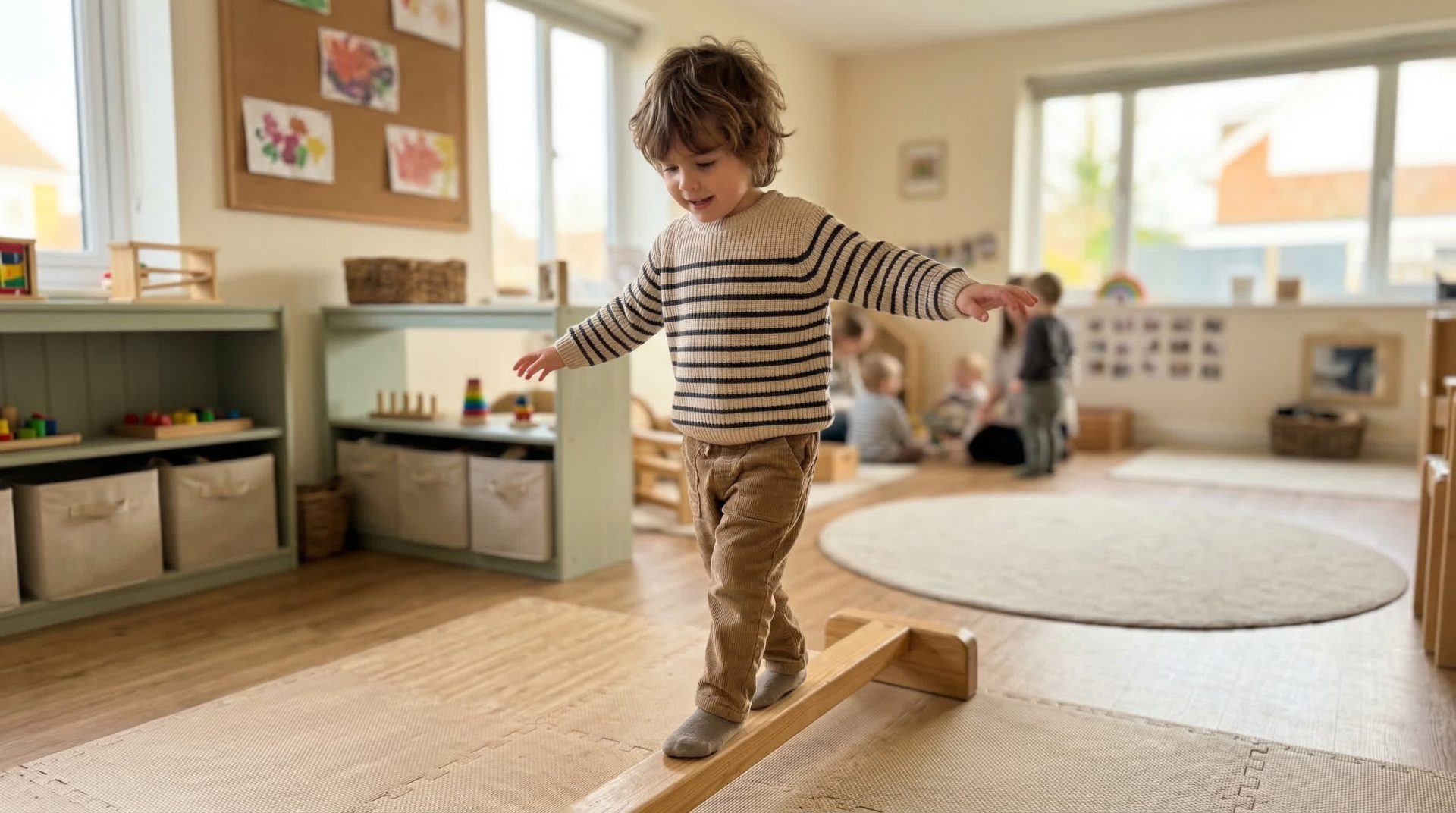
Physical activity in the early years means any movement that uses energy and supports growing bodies. For babies, this begins with early movements such as tummy time, reaching, stretching and rolling. For young children, it is usually seen through active play and everyday movement across the day, including crawling, walking, climbing, dancing and outdoor exploration.
This free course introduces physical activity in the context of Early Years practice in England. It explains why movement is essential from birth to five, how physical development progresses over time, and how practitioners can create safe, inclusive and stimulating environments that support active play, wellbeing and healthy habits.
Why Take This eLearning Course?
Physical activity is a vital part of healthy growth and development in the early years. It supports physical health, movement skills, confidence, self-regulation, social interaction and readiness for learning. When practitioners understand physical activity well, they are better able to plan daily movement, reduce barriers to participation, and help children build positive habits that support lifelong wellbeing.
This free course will help you to:
- Understand what physical activity means for babies and young children.
- Recognise why physical activity is essential in the early years.
- Understand UK physical activity guidelines for children from birth to five.
- Learn about the role of early years practitioners in promoting physical activity.
- Explore the main stages of physical development from birth to five.
- Understand gross motor and fine motor skill development.
- Recognise how physical activity supports cognitive, social and emotional development.
- Learn about different types of physical activity, including structured and unstructured movement.
- Explore examples of indoor and outdoor physical activities.
- Understand the value of active play and free movement.
- Learn how to create safe and stimulating indoor and outdoor environments for movement.
- Recognise suitable equipment and resources for different ages and stages.
- Understand how to include all children in physical activity through inclusive practice.
- Identify common barriers to physical activity and how to reduce them.
- Learn about basic health and safety, supervision and risk assessment in active play.
- Understand how physical activity supports healthy lifestyles.
- Explore the links between movement, rest and nutrition.
- Strengthen partnership working with parents and carers.
- Recognise how practitioners can act as positive role models for healthy, active living.
Learning Outcomes
By the end of this course, you will be able to:
- Define physical activity for babies and young children.
- Explain why physical activity is essential in the early years.
- Identify UK guidelines for physical activity from birth to five years.
- Describe the role of early years practitioners in promoting physical activity.
- Outline the main stages of physical development from birth to five.
- Describe gross motor skill development.
- Describe fine motor skill development.
- Explain how physical activity supports cognitive, social and emotional development.
- Identify different types of physical activity, including structured and unstructured activity.
- Give examples of indoor physical activities.
- Give examples of outdoor physical activities.
- Explain the value of active play and free movement.
- Describe what makes a safe and stimulating physical environment.
- Outline how to organise indoor spaces to encourage movement.
- Outline how to use outdoor spaces to promote physical activity.
- Identify appropriate equipment and resources for different ages.
- Explain how to include all children in physical activity.
- Identify common barriers to physical activity.
- Describe basic health and safety considerations.
- Explain the importance of supervision and risk assessment.
- Explain how physical activity supports healthy lifestyles.
- Describe the link between physical activity, rest and nutrition.
- Identify ways to work in partnership with parents and carers.
- Outline how practitioners can act as positive role models.
Physical Activity in Early Years Course Outline
Module 1: Understanding Physical Activity in the Early Years
Learners will explore what physical activity means for babies and young children and why it is essential in the early years. This module explains physical activity as any movement that uses energy and supports growing bodies, beginning with small movements in babies and developing into larger, purposeful actions through active play and everyday routines. Learners will examine why physical activity supports healthy physical development, including muscles, bones, posture, balance, coordination, stamina, and healthy weight patterns. The module also explores how movement supports wellbeing, attention, confidence, self-regulation, social interaction, language development, and participation in play and learning. UK guidelines for physical activity from birth to five are also introduced, alongside the role of early years practitioners in planning, promoting, and supporting daily movement through provision, routines, inclusion, safety, and partnership with families.
Module 2: Physical Development from Birth to Five
This module focuses on the main stages of physical development from birth to five years. Learners will examine how physical development generally follows a predictable pattern, while recognising that the pace varies between children and that observation should remain flexible and responsive. The module explains how babies move from gaining head control and rolling to sitting, reaching, moving across the floor, pulling to stand, and early walking. It also explores how toddlers and young children develop greater balance, coordination, climbing ability, running, jumping, and use of larger equipment as they move towards age five. Gross motor skill development is covered in detail, including stability, balance, locomotor movement, and object control, alongside fine motor development, such as grasping, hand coordination, finger control, tool use, manipulating small items, and early writing readiness. Learners will also examine how physical activity supports cognitive, social, and emotional development through planning, problem-solving, resilience, cooperation, and managing feelings during active play.
Module 3: Types of Physical Activity in Early Years Settings
Learners will explore the different types of physical activity that can be offered in early years provision. This module explains the difference between structured physical activity, which is adult-led and planned with a clear purpose, and unstructured physical activity, which is child-led and develops through active play and free movement. Learners will examine examples of indoor physical activities, including movement and music, soft play, obstacle courses, ball play, yoga, stretching, and large construction play, all adapted to suit smaller spaces and safe supervision. The module also explores outdoor physical activities such as climbing, balancing, running, chasing games, wheeled play, nature movement, and ball games, showing how larger spaces and varied surfaces support a broader range of movement experiences. The value of active play and free movement is emphasised throughout, particularly how repeated, enjoyable, and child-led activity supports skill practice, self-regulation, inclusion, confidence, and everyday wellbeing.
Module 4: Creating Enabling Environments for Physical Activity
This module focuses on how early years environments can be organised to encourage safe, stimulating, and inclusive physical activity. Learners will examine the features of a safe and stimulating physical environment, including clear space to move, appropriate challenge, effective risk assessment, suitable surfaces, good visibility, and inclusive access for children with differing needs and abilities. The module explains how indoor spaces can be organised to encourage movement through layout, flow, accessible resources, defined movement zones, and regular access to suitable equipment, while still protecting calmer spaces for rest and regulation. Learners will also explore how outdoor spaces can be used to promote physical activity through open areas, fixed and natural features, adaptable resources, and a mix of energetic and exploratory play. Appropriate equipment and resources for different age groups are also examined, from floor mats and mirrors for babies to ride-on toys, balls, balancing equipment, climbing frames, and adaptable resources for mixed ages and inclusive provision.
Module 5: Inclusion, Safety, and Wellbeing in Physical Activity
Learners will explore how to ensure physical activity is inclusive, safe, and supportive of all children’s wellbeing. This module explains how all children should be able to take part in movement experiences through high expectations, reasonable adjustments, supportive communication, child-led entry points, and adaptations for sensory and physical needs. Learners will examine common barriers to physical activity, including limited space, cluttered environments, restricted outdoor access, long periods of sitting, adult confidence, health needs, delayed motor development, family routines, and clothing that limits movement. The module also covers basic health and safety considerations, such as safe surfaces, equipment maintenance, appropriate clothing and footwear, hygiene, weather protection, and the management of medical needs and allergies. The importance of supervision and risk assessment is also explored, showing how these help children experience active play safely while still allowing appropriate challenge, inclusion, and confidence-building opportunities.
Module 6: Supporting Healthy Habits and Positive Partnerships
In the final module, learners will explore how physical activity contributes to healthy lifestyles and how practitioners can work with others to support positive habits from the earliest years. This module explains how regular movement supports strong bodies, healthy growth, stamina, balance, coordination, and positive daily routines, while also helping children manage energy, enjoy shared experiences, and build positive attitudes towards activity over time. Learners will examine the close link between physical activity, rest, and nutrition, including how movement affects appetite, how food and drink support play, how activity supports rest, and how rest in turn supports safe and effective movement. The module also explores how practitioners can work in partnership with parents and carers through everyday communication, shared information, home learning ideas, workshops, and inclusive planning where additional needs are present. Finally, learners will examine how practitioners can act as positive role models by joining in active play, using balanced and respectful language about movement, rest, and food, and promoting inclusive, stereotype-free practice that celebrates effort, participation, and wellbeing.
Target Audience
This course is suitable for:
- Early years practitioners.
- Nursery and preschool staff.
- Childminders and childminding assistants.
- Reception staff and teaching assistants.
- SENCOs and staff supporting physical development.
- Managers and supervisors.
- Anyone involved in supporting physical activity and wellbeing in the early years.
No previous specialist knowledge of physical activity guidance is required.
FAQ
Is this course relevant to Early Years practice in England?
Yes. The course is designed for Early Years practice in England and reflects the EYFS, inclusive practice expectations, and UK physical activity guidance for children from birth to five.
Does the course explain current physical activity guidance for under-fives?
Yes. It explains the UK Chief Medical Officers’ guidance for babies and young children, including the importance of movement across the day and limiting long inactive periods.
Will this course help me plan active play in my setting?
Yes. The course includes examples of structured and unstructured physical activity, indoor and outdoor movement, and ways to create enabling environments that encourage active play.
Does it cover child development?
Yes. It explains the main stages of physical development from birth to five, including both gross motor and fine motor development and the wider benefits of movement for learning and wellbeing.
Is inclusion covered?
Yes. The course explores inclusive approaches, common barriers to physical activity, and practical ways to adapt activities, communication and environments so all children can take part.
Does the course include health and safety?
Yes. It covers basic health and safety considerations, age-appropriate equipment, supervision and risk assessment in active play.
Does it include partnership with parents and carers?
Yes. The course explains how to work with families to support consistent messages about movement, routines, rest and healthy habits.
How long does the course take?
The course is self-paced and typically takes 1 hour to complete.
Will I receive a certificate?
Yes. A certificate is issued after successful completion.
Is the course CPD accredited?
Courses are not currently CPD accredited, but accreditation is planned.
A strong understanding of physical activity helps early years practitioners create environments where babies and young children can move, explore and thrive. By promoting active play, inclusive practice and healthy routines, practitioners can help children build the confidence, coordination and wellbeing they need for everyday life and later learning.
Enrol now to build your understanding of physical activity in Early Years practice.
You must log in and have started this course to submit a review.

