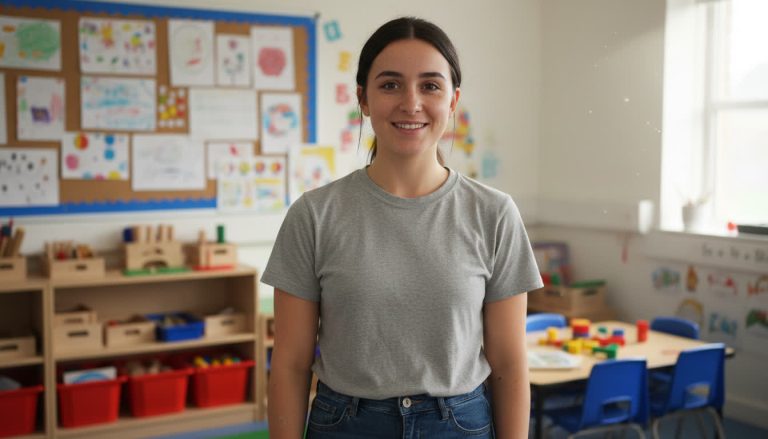
The Froebel Approach is an educational philosophy created by Friedrich Froebel, a German educator from the nineteenth century. He is often credited as the inventor of the kindergarten concept. His work greatly influenced how early childhood education is understood and practised. The approach places the child at the centre of the learning experience, focusing on their natural curiosity, creativity and capacity for play.
Froebel believed that children learn best through active exploration of the world around them. For him, play was not a break from learning, but the foundation of it. Through meaningful play activities, children can develop physically, mentally, emotionally and socially. His approach encourages adults to observe children closely, give them freedom to explore and offer guidance when needed.
Core Principles of the Froebel Approach
The Froebel philosophy rests on several key principles that guide practice in early years settings.
- Learning through play is the most natural and effective method for young children.
- Education should respect the individuality of each child.
- Connection with nature is vital for children’s growth and understanding of the world.
- Creativity and self-expression are central to learning.
- The role of the educator is to guide and support rather than instruct rigidly.
- Play materials, known as Froebel “Gifts” and “Occupations”, give children structured opportunities to discover concepts.
These principles combine to create a nurturing environment where children can follow their instincts to explore, build and imagine.
The Concept of “Kindergarten”
Froebel described the educational setting for young children as a “garden for children” – the kindergarten. The analogy of a garden is deliberate. Just as plants need sunlight, water and care, children need love, attention and suitable conditions for healthy growth. The Froebel kindergarten aims to provide a space where children can flourish through experiences that are rich, engaging and connected to their interests.
In a Froebel-inspired early years setting, there is often an emphasis on outdoor learning. Natural materials are used and children spend time exploring gardens, woodlands or open spaces. This reflects Froebel’s firm belief in the importance of nature for development.
Play as the Foundation of Learning
Play is central to the Froebel approach. It is considered active, purposeful and productive. Through play, children develop fine and gross motor skills, language, social awareness and problem-solving abilities. Froebel viewed play as a serious and valuable activity, not simply leisure.
There are different types of play encouraged within the approach:
- Free play – where children have full choice over what they do with no adult direction.
- Guided play – where an adult may set up a scenario or suggest a theme, but the child shapes the activity.
- Structured play – where children use materials provided by the adult to explore specific ideas linked to learning goals.
These forms of play help children make sense of their experiences. Play turns abstract ideas into something tangible, allowing children to test and refine their understanding.
Froebel’s “Gifts” and “Occupations”
One of the most distinctive features of Froebel’s approach is the use of his “Gifts” and “Occupations”. These are sets of play materials designed to nurture different aspects of learning.
Gifts are objects given to children in a specific sequence. They usually start with simple forms and gradually become more complex. Examples include soft balls, sets of wooden blocks, sticks and rings. These gifts encourage exploration of shape, size, weight, texture and pattern.
Occupations are activities based on manipulation of materials such as paper-folding, clay modelling, sewing, weaving and drawing. These activities develop fine motor skills, patience and the ability to follow a process from start to finish.
The sequence of gifts and occupations reflects Froebel’s idea that learning should progress in small, connected steps. Each stage builds on what the child has already discovered.
Importance of Nature in the Froebel Approach
Froebel believed that nature plays a fundamental role in children’s education. Contact with plants, animals, soil, water and other natural elements gives children a sense of wonder and teaches them about the cycles of life. Outdoor activities are as valued as indoor ones.
Children might plant seeds, care for flowers, observe insects or collect natural materials for creative projects. These experiences encourage responsibility, patience and respect for the environment. Nature-based learning also helps children develop sensory awareness – noticing the smell of soil after rain, the texture of bark on a tree, or the sound of birds near the playground.
The Role of the Educator
In the Froebel approach, the adult’s role is to observe and support rather than control. Educators offer materials, create an inviting environment, and help children reflect on their experiences. They allow children time to explore fully before stepping in with suggestions or questions that deepen thinking.
Adults model curiosity and care. They engage in play alongside children without directing how it should proceed. By listening closely to children’s ideas and feelings, they help shape activities that match the interests and developmental level of each child.
Learning Through Everyday Life
The Froebel approach sees education not as something separate from daily life, but woven into it. Activities such as gardening, cooking, caring for animals or building with natural materials are rich in learning potential. They teach practical skills while offering opportunities for thinking, problem-solving and cooperation.
Simple daily routines are part of learning too – setting the table, tidying toys or preparing for outdoor time. These give children a sense of responsibility and belonging. Froebel saw this connection between everyday tasks and education as essential for helping children understand and value their place in the community.
Creativity and Self-Expression
Creativity is valued highly in Froebel’s philosophy. Self-expression through art, music, movement and storytelling is seen as a way for children to communicate their thoughts and emotions. The activities involved are open-ended and encourage imagination. There is no pressure on children to produce a perfect replica of something; instead, they are invited to explore and experiment.
By offering a wide range of creative opportunities, educators help children discover individual interests and talents. Clay modelling, free drawing, imaginative role-play and singing are all common in a Froebel-inspired setting.
Social Development
The Froebel approach recognises that relationships are central to learning. Children develop empathy, cooperation and communication skills through shared activities. Group play, collaborative projects and collective discussions are important. Educators encourage children to listen to each other, share materials and work together towards a common aim.
This social interaction helps children learn how to express feelings, respect differences and find solutions when conflicts arise. Froebel saw education as preparation for life in a community, where people must work cooperatively.
Adaptation for Different Ages
Although Froebel’s approach was originally focused on very young children, his ideas can be adapted for a range of ages within early childhood. The principles of respect for individuality, learning through play, and connection with nature remain constant, but activities and materials change depending on developmental stages.
Toddlers benefit from sensory play and simple role-play. Older preschoolers might engage in more complex building projects, storytelling circles or gardening tasks. The sequencing of Froebel’s gifts and occupations gives a clear structure for progression.
Benefits Observed in Practice
Educators who use the Froebel approach often note a number of benefits for children:
- Increased curiosity and motivation to learn
- Stronger fine and gross motor skills
- Better awareness of nature and environment
- Greater confidence in creative self-expression
- Improved social interaction and cooperation
- Enhanced ability to think and solve problems independently
These outcomes stem from the combination of play-based learning, creative exploration, and connection to real-life experiences.
Practical Example of the Approach in Action
Imagine an early years setting where children arrive to find a basket of natural materials – pinecones, shells, smooth stones and leaves. An educator sits with the group and lets them handle and examine the items. Some children arrange them by size or colour, others use them to build patterns on the floor, and a few start creating imaginary games involving the objects.
Later, the educator takes the group outside where they collect more materials. Back indoors, they might use them for a collage, count them, or talk about where each item came from. Through one simple activity, children engage with sensory exploration, art, mathematics, language and science – all grounded in play and personal interest.
Final Thoughts
The Froebel Approach offers a rich and thoughtful way of supporting young children’s development. By valuing play, creativity, nature and relationships, it provides a learning environment that meets the needs of the whole child. The combination of free and guided experiences, meaningful materials and real-world connections allows children to grow confidently and joyfully. When educators observe carefully and respond to children’s interests, they create spaces where children can explore, create and connect in ways that build a strong foundation for future learning.
Subscribe to Newsletter
Get the latest news and updates from Care Learning and be first to know about our free courses when they launch.