In health and social care, Duty of Care is a fundamental principle that underpins everything professionals do. It ensures that every action taken supports the safety, rights, and wellbeing of individuals receiving care. This course explores what duty of care means in practice and how to balance responsibilities, legal obligations, and ethical considerations in everyday work.
Understanding your duty of care isn’t just about compliance — it’s about creating safe, respectful environments where people are protected and supported. Whether you’re new to care or looking to refresh your knowledge, this free duty of care online course helps you develop the confidence to make sound, ethical decisions in your role.
Why Take This eLearning Course?
Every health and social care worker has a duty to act in the best interests of those they support. This course will give you the practical understanding needed to apply this duty safely, ethically, and confidently.
Here’s why this course matters:
- Legal and ethical clarity: Understand your professional responsibilities under UK law, including the Care Act 2014, Health and Safety at Work Act 1974, and safeguarding legislation.
- Practical application: Learn how to handle real-life dilemmas, incidents, and complaints in line with best practice.
- Improved safety culture: Discover how duty of care contributes to safer workplaces and better outcomes for individuals.
- Confidence in complex situations: Build the skills to balance duty of care with individual rights, autonomy, and person-centred values.
- For all care settings: Whether you work in domiciliary care, residential settings, or healthcare environments, the course is relevant to your role.
Duty of Care in Health and Social Care Course Content Outline
Module 1: Understanding the Concept of Duty of Care
Learners will define the term duty of care and explore its central role in promoting safety and protecting individuals in health and social care settings. The module examines how duty of care shapes the responsibilities, decision-making, and professional conduct of care workers in everyday practice.
Module 2: Promoting Safe Practices
This module focuses on how duty of care underpins safe working environments. Learners will identify potential risks, outline ways to reduce them, and review how legal and organisational procedures ensure safety for both staff and people who use services.
Module 3: Managing Dilemmas and Conflicts
Learners will explore common dilemmas that may arise when balancing individual rights with the duty of care. They will review what can and cannot be done in such situations and identify sources of support, advice, and guidance to help resolve conflicts appropriately and ethically.
Module 4: Handling Comments and Complaints
This module explains how to respond to comments and complaints in line with legislation, organisational procedures, and good practice. Learners will understand how feedback provides valuable opportunities for reflection, service improvement, and maintaining public trust.
Module 5: Responding to Incidents and Errors
Learners will identify adverse events, near misses, and errors, and understand the correct procedures for reporting and responding to them. The module defines key terms such as harm, risk, and negligence, emphasising accountability, transparency, and continuous improvement.
Module 6: Developing a Duty of Care Policy
This module outlines the purpose, structure, and implementation of a Duty of Care policy. Learners will explore its key components, how it supports safe practice, and methods for reviewing and updating policies to reflect current legislation and best practice.
Module 7: Accessing Support and Resources
Learners will review internal and external sources of support available to help staff meet their duty of care. They will explore how fostering a “safety-first” culture encourages shared responsibility, confidence in reporting, and proactive risk management across the workforce.
Module 8: Duty of Care and Working Relationships
This module examines the link between duty of care and effective teamwork. Learners will define professional working relationships, understand boundaries, and explore how maintaining trust and communication contributes to collaborative and ethical care delivery.
Module 9: Addressing Difficult Situations
In the final module, learners will apply practical strategies for managing challenging situations involving conflict, risk, or ethical dilemmas. They will learn how clear communication, empathy, and reflective practice support safe and respectful outcomes for everyone involved.
Learning Outcomes
By the end of this course, you will be able to:
- Define Duty of Care and explain its role in ensuring safe practice.
- Describe how duty of care influences your professional responsibilities and conduct.
- Recognise how to identify, assess, and manage risks in your workplace.
- Address conflicts and dilemmas between duty of care and individual rights.
- Respond appropriately to comments, complaints, incidents, and near misses.
- Understand the procedures for reporting errors and learning from feedback.
- Develop, implement, and review an effective duty of care policy.
- Access sources of support and guidance when faced with ethical challenges.
- Promote a safety-first workplace culture through teamwork and collaboration.
- Communicate effectively and professionally in challenging situations.
Target Audience
This course is ideal for:
- Care workers, support workers, and healthcare assistants.
- Nurses, social workers, and allied health professionals.
- Managers, team leaders, and safeguarding officers.
- Anyone working in regulated health or social care settings in the UK.
No prior training is required — this is a foundation-level course suitable for both new and experienced professionals.
Every action you take as a care professional has an impact. Understanding your duty of care ensures that your practice is not only safe but compassionate, ethical, and accountable.
By completing this course, you’ll be better equipped to make sound professional judgements, prevent harm, and promote the wellbeing of those you support.
Join the Duty of Care Training Course today and strengthen your commitment to delivering safe, person-centred care.
FAQ
What does this course cover?
It covers the legal, ethical, and practical aspects of duty of care, including risk management, incident reporting, complaints handling, and developing safe working relationships.
Is this course compliant with UK standards?
Yes. It aligns with CQC Fundamental Standards, Skills for Care guidance, and national care frameworks, ensuring best practice across all care settings.
How long does it take to complete?
The course is self-paced and typically takes 2–3 hours to complete.
Will I receive a certificate?
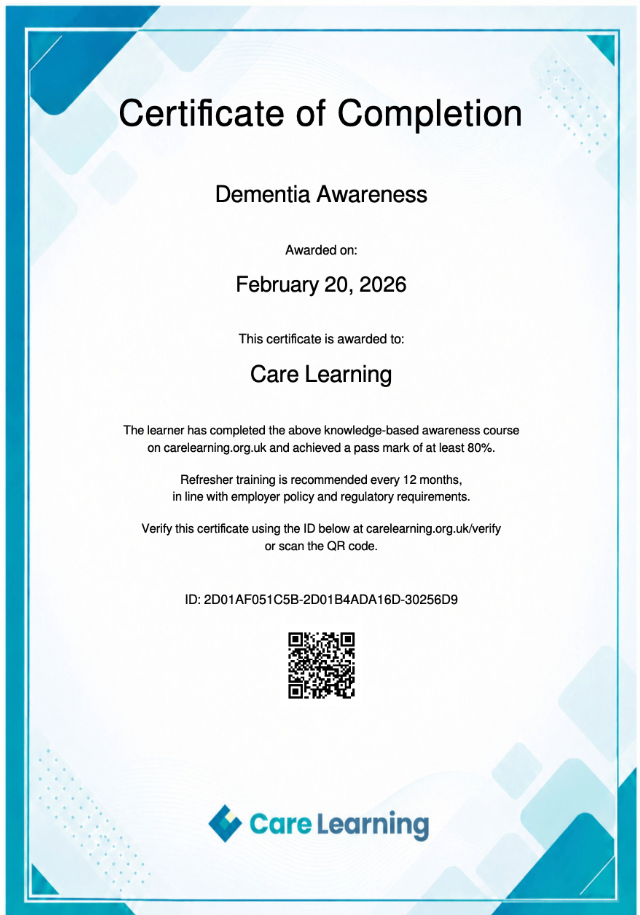
Yes — you’ll receive a digital certificate upon successful completion.
Do I need any prior knowledge?
No previous experience is required. The course introduces all key concepts in a clear and accessible format.