Speech, language and communication are closely linked, but they describe different parts of how children share meaning with others. Speech refers to the sounds children make and how clearly they speak. Language is about understanding and using words, sentences and concepts. Communication is the wider process of sharing messages through speech, gesture, facial expression, eye contact and turn-taking.
This free speech, language and communication online course covers how communication develops from birth to five, why it is important for learning and relationships, how practitioners can support it through play and routines, and how to recognise when a child may need additional support.
Why Take This eLearning Course?
Speech, language and communication are central to children’s learning, wellbeing and participation. They affect how children understand routines, express needs, join play, build friendships and engage with early literacy. When practitioners understand communication development well, they are better able to create language-rich environments, notice concerns early and work effectively with families and other professionals.
This course will help you to:
- Understand the difference between speech, language and communication.
- Recognise why speech and language development is important in the early years.
- Understand the role of early years practitioners in supporting communication.
- Explore the stages of speech and language development from birth to five.
- Recognise expected milestones and age-appropriate communication skills.
- Identify common factors that can support or delay development.
- Understand how environment, interaction and play affect communication growth.
- Recognise how additional needs or bilingualism may influence development.
- Understand what speech, language and communication needs (SLCN) are.
- Identify common signs of speech and language delay.
- Learn when concerns should be raised and how to respond appropriately.
- Explore practical strategies to support communication through play and routines.
- Recognise activities that promote listening, understanding and talking.
- Understand the importance of positive adult-child interaction.
- Learn how to observe, record and share speech and language development.
- Understand when and how to seek additional support.
- Strengthen partnership working with parents, carers and other professionals.
- Recognise the role of speech and language therapists and other agencies.
Learning Outcomes
By the end of this course, you will be able to:
- Define speech, language and communication and explain the differences.
- Describe why speech and language development is important in early years.
- Identify the role of early years practitioners in supporting communication.
- Outline the stages of speech and language development from birth to five.
- Describe expected milestones at different ages.
- Give examples of age-appropriate communication skills.
- Identify common factors that can support or delay development.
- Explain the impact of environment, interaction and play.
- Describe how additional needs or bilingualism may influence development.
- Define speech, language and communication needs (SLCN).
- List common signs of speech and language delay.
- Identify when concerns should be raised.
- Describe strategies to support communication through play and routines.
- Give examples of activities that promote listening, understanding and talking.
- Explain the importance of positive adult-child interaction.
- Outline how to observe speech and language development.
- Describe how to record and share observations.
- Identify when and how to seek additional support.
- Explain the importance of partnership with parents and carers.
- Describe how to share concerns sensitively.
- Identify the role of speech and language therapists and other agencies.
Speech, Language and Communication Development in Early Years Course Outline
Module 1: Understanding Speech, Language and Communication
Learners will explore what is meant by speech, language and communication, and why these areas are linked but different. This module explains speech as the sounds children make, including clarity, volume, voice and fluency; language as the words, sentences and concepts used to understand and express meaning; and communication as the wider process of sharing messages through speech, gesture, facial expression, eye contact and turn-taking. Learners will also examine receptive and expressive skills, along with social interaction, so that strengths and needs can be described more clearly. The module also explains why speech and language development is important in the early years, showing how it supports learning, thinking, relationships, behaviour and participation in the EYFS. The role of early years practitioners is also introduced, including modelling language, creating communication-friendly environments, adapting support, and working with families and other professionals.
Module 2: Stages and Milestones of Speech and Language Development
This module focuses on the broad stages of speech and language development from birth to five years. Learners will examine how children typically move from crying, facial expression and cooing in infancy, through babbling, gesture and first words, towards combining words, using short sentences, and later explaining, predicting and negotiating through language. The module also explains expected milestones at different ages, helping learners understand what many children are often able to do around one, two, three, four and five years of age. Learners will explore examples of age-appropriate communication skills linked to listening and attention, understanding language, expression and social interaction, so that development can be recognised across routines, play and adult-led activities. The emphasis throughout is on using milestones carefully as flexible guides rather than fixed standards.
Module 3: Factors That Influence Speech and Language Development
Learners will explore the common factors that can support or delay speech and language development. This module explains how responsive interaction, hearing and ear health, the home learning environment, emotional wellbeing, developmental profile, the quality and quantity of language heard, and timely access to support can all influence progress. Learners will also examine the impact of environment, adult interaction and play, showing how noise levels, layout, shared routines, pretend play, adult responsiveness, and the quality of everyday talk can affect children’s opportunities to hear, understand and use language. The module also explains how additional needs and bilingualism or multilingualism may influence development, helping learners understand that some children follow a different communication pathway and that learning more than one language does not in itself cause delay. A balanced and evidence-based view is emphasised throughout.
Module 4: Speech, Language and Communication Needs (SLCN)
This module focuses on understanding speech, language and communication needs and recognising when development may not be progressing as expected. Learners will examine SLCN as an umbrella term covering ongoing difficulties with speech sounds, understanding language, using language or social communication, whether these needs are temporary or more persistent. The module also explains common signs of speech and language delay, including limited response to sound or name, few attempts to communicate, difficulty understanding simple directions, limited vocabulary, unclear speech, and social communication difficulties. Learners will explore when concerns should be raised, particularly when progress remains limited over time, understanding affects learning or safety, speech clarity significantly affects participation, frustration or withdrawal increases, or parents and carers share concerns. The focus is on early recognition, careful observation and timely support.
Module 5: Supporting Communication Through Play, Routines and Interaction
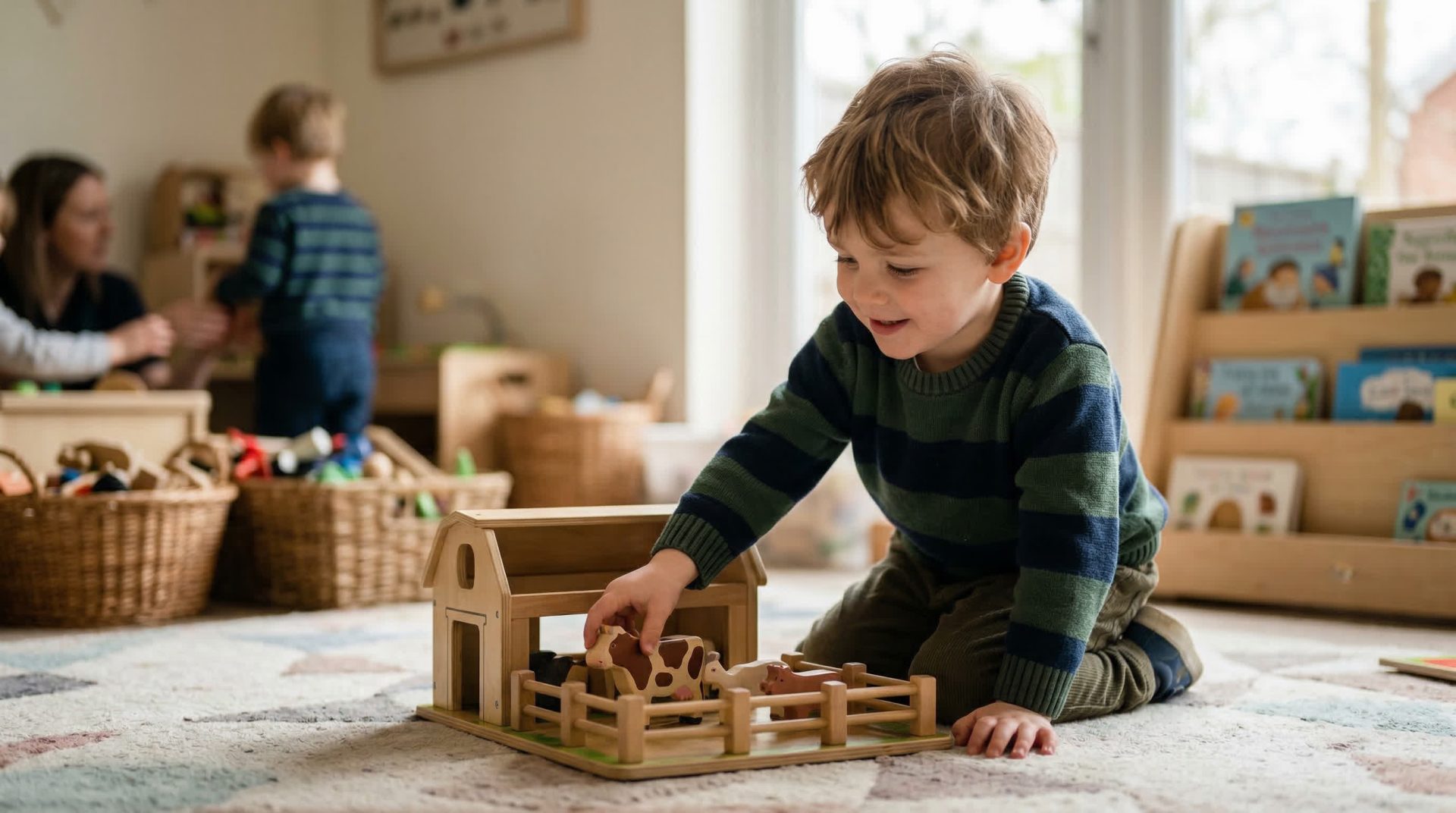
Learners will explore practical ways to support communication within everyday early years practice. This module explains how communication can be supported naturally through play and routines by developing shared attention, modelling and extending children’s communication, and using visual support and predictable sequences. Learners will also examine a range of activities that promote listening, understanding and talking, including song and rhyme games, listening walks, small-world play, shared book talk, barrier games, turn-taking games, and cooking or snack routines. The module also highlights the importance of positive adult-child interaction, showing how warmth, sensitivity, back-and-forth exchanges, following the child’s lead, clear speech models, time to respond, and celebrating communication attempts all help children feel safe and motivated to communicate. The emphasis throughout is on keeping communication support natural, repeated and enjoyable.
Module 6: Observation, Recording and Seeking Additional Support
This module focuses on how to observe, record and respond to children’s speech and language development in a structured and professional way. Learners will examine how to observe communication across routines, group times, free play, outdoor play, and interactions with adults and peers, noting listening and attention, understanding, vocabulary, sentence use, speech clarity, gesture and social interaction. The module also explains how to record and share observations clearly and sensitively, using factual, non-judgemental language and a balanced picture of strengths and needs. Learners will explore when and how to seek additional support, including reviewing current strategies, discussing concerns with the setting SENCO, gathering evidence, working with parents and carers, using local pathways such as health visiting or speech and language therapy, and reviewing impact through assess–plan–do–review. The importance of confidentiality and lawful information sharing is also reinforced.
Module 7: Partnership Working and Multi-Agency Support
In the final module, learners will explore the importance of partnership with parents, carers and other professionals in supporting children’s communication development. This module explains how partnership with families supports shared knowledge of the child, consistent approaches across home and setting, early identification of needs, respect for home language and family culture, and better-informed planning. Learners will also examine how to share concerns sensitively by using clear examples, balancing strengths and needs, and choosing the right context for private and respectful conversations. The module also identifies the role of speech and language therapists and other agencies, including health visitors, GPs, audiology, educational psychologists, specialist teachers, early help services, SENCOs, and local inclusion teams. Learners will understand how joined-up working supports consistent advice, avoids duplication, and helps create a coordinated response around the child and family.
Target Audience
This course is suitable for:
- Early years practitioners.
- Nursery and preschool staff.
- Childminders and childminding assistants.
- Reception staff and teaching assistants.
- SENCOs and staff supporting communication development.
- Managers and supervisors.
- Anyone involved in supporting young children’s speech, language and communication.
No previous specialist knowledge of speech and language development is required.
FAQ
Is this course relevant to Early Years practice in England?
Yes. The course is designed for Early Years practice in England and reflects the EYFS, inclusive practice expectations and the graduated response within SEND arrangements.
Does the course explain the difference between speech, language and communication?
Yes. It clearly explains each area and shows how they relate to one another in children’s everyday development.
Will this course help me recognise speech and language delay?
Yes. It includes common signs of delay, age-related milestones, and guidance on when concerns should be raised and reviewed.
Does it cover children with additional needs or children learning more than one language?
Yes. The course explains how additional needs and bilingual or multilingual development may influence communication, without making unfair assumptions.
Is practical support included?
Yes. It includes strategies for supporting communication through play, routines, adult interaction and communication-friendly environments.
Does the course cover observation and referral?
Yes. It explains how to observe, record and share communication development, and when to seek additional support through the SENCO, health services or speech and language therapy routes.
How long does the course take?
The course is self-paced and typically takes 1 hour to complete.
Will I receive a certificate?
Yes. A certificate is issued after successful completion.
Is the course CPD accredited?
Courses are not currently CPD accredited, but accreditation is planned.
A strong understanding of speech, language and communication helps early years practitioners create environments where children can express themselves, understand others and take part more fully in everyday life. By using responsive interaction, careful observation and joined-up support, practitioners can help children build the communication foundations they need for learning, relationships and wellbeing.
Enrol now to build your understanding of speech, language and communication in Early Years practice.
You must log in and have started this course to submit a review.