This Deaf Awareness eLearning course is designed for workers who want to communicate more confidently, respectfully and inclusively with Deaf and hard of hearing people. It introduces key terms, cultural understanding, communication approaches and practical adjustments that support equality, dignity and participation.
This free course covers Deaf identity and Deaf culture, causes and types of hearing loss, communication barriers, British Sign Language, reasonable adjustments, accessibility practices, unconscious bias and ways to create Deaf-friendly environments. It supports learners to recognise individual communication preferences and respond appropriately in everyday, urgent and professional situations.
Why Take This eLearning Course?
Deaf awareness matters because communication affects access, choice, safety and inclusion. This course supports staff to understand the experiences of Deaf and hard of hearing people and to apply practical approaches that reduce barriers in health, social care and wider public-facing settings.
This course will help you to:
- Understand key terms linked to Deafness, deafness and hearing loss
- Recognise the difference between Deaf culture and hearing culture
- Identify common causes, types and signs of hearing loss
- Adapt communication for one-to-one, group, telephone, video and appointment settings
- Use respectful ways to gain attention and support visual communication
- Understand the role and value of British Sign Language and qualified interpreters
- Recognise legal and good practice responsibilities around accessible communication
- Support reasonable adjustments in everyday service delivery
- Challenge myths, stereotypes and unconscious bias
- Contribute to more Deaf-friendly and inclusive environments
Learning Outcomes
By the end of this course, you will be able to:
- Define Deaf, deaf, hard of hearing and hearing loss accurately
- Explain how Deaf culture differs from hearing culture
- Describe why Deaf awareness is important in health, social care and everyday life
- Identify causes, types, degrees and signs of hearing loss
- Explain common communication barriers faced by Deaf and hard of hearing people
- Apply effective communication methods across different settings
- Describe the importance of eye contact, visibility and clear visual access
- Explain the role of BSL, Deaf identity and qualified interpreters
- Outline relevant UK duties, including reasonable adjustments and accessible information
- Recognise and challenge assumptions, stereotypes and bias relating to Deafness
Deaf Awareness eLearning Course Course Outline
Module 1: Understanding Deafness, Identity and Awareness
Learners will explore key terms including Deaf, deaf, hard of hearing and hearing loss, with attention to how language reflects identity, culture and communication preferences. The module introduces the difference between Deaf culture and hearing culture, showing how visual communication, community links and shared experience shape Deaf identity. It also explains why Deaf awareness is important in health, social care and everyday life, including the need for reasonable adjustments, accessible communication and respectful support.
Module 2: Hearing Loss, Causes and Everyday Impact
Learners will consider the main causes of hearing loss, including genetic factors, illness, infection, environmental noise, ageing, injury and medication. The module explains conductive, sensorineural and mixed hearing loss, as well as common signs that someone may be experiencing hearing loss. It also looks at how different degrees of hearing loss can affect communication, confidence, appointments, work, social contact and daily living.
Module 3: Communication Barriers and Effective Communication
Learners will examine the environmental, social and service-based barriers that Deaf and hard of hearing people may face, including background noise, poor lighting, fast-moving group conversations, telephone-only systems and lack of interpreters. The module introduces practical communication methods such as lip-reading support, gestures, plain written information, visual aids and basic BSL awareness. It also explains how communication can be adapted across one-to-one conversations, telephone alternatives, video calls, group settings, appointments and urgent situations.
Module 4: Deaf Culture, British Sign Language and Respectful Support
Learners will develop a clearer understanding of Deaf culture as a shared identity shaped by BSL, visual communication, community belonging, storytelling, equality and respect for choice. The module explains the role and status of British Sign Language in the UK Deaf community and challenges common myths, such as the belief that all Deaf people lip-read fluently or that sign language is universal. It also covers the importance of qualified BSL interpreters, confidentiality, professional boundaries and respecting how each person chooses to communicate.
Module 5: Legal Duties, Accessibility and Reasonable Adjustments
Learners will review key UK expectations linked to accessible communication, including the Equality Act 2010, reasonable adjustments and the NHS Accessible Information Standard. The module explains the responsibilities of employers, service providers and frontline staff in identifying, recording and meeting communication needs. It also introduces assistive technologies and accessibility practices such as hearing loops, captioning, visual alerts, video relay and remote interpreting, alongside practical steps for removing attitudinal and practical barriers.
Module 6: Inclusive Practice and Deaf-Friendly Environments
Learners will explore respectful ways to gain a Deaf person’s attention, including visual prompts, gentle tapping where appropriate and avoiding shouting. The module covers inclusive behaviours such as facing the person, speaking clearly, using plain English, checking understanding and allowing time. It also explains how staff can create more Deaf-friendly environments through good lighting, reduced background noise, clear sightlines, accessible formats, visual signage and consistent recording of communication preferences.
Module 7: Bias, Stereotyping and Positive Deaf Awareness
Learners will consider how unconscious bias, stereotyping and assumptions can affect communication, decision-making and access to information. The module explains how assumptions about ability, lip-reading, sign language or independence can lead to exclusion and misunderstanding. It also gives practical approaches for challenging bias, promoting acceptance of Deaf identity, listening to individual preferences and supporting equality, autonomy and self-determination.
Target Audience
This course is suitable for:
- Health and social care workers in the UK
- Frontline staff who communicate with people using services
- Managers and team leaders responsible for inclusive practice
- Support workers, care workers and community-based staff
- Reception, administration and appointment-booking teams
- Volunteers or staff in public-facing service roles
No previous specialist knowledge is required.
FAQ
Who is this course suitable for?
This course is suitable for health and social care workers, frontline staff, managers, support workers, reception teams and volunteers who want to improve communication and inclusion for Deaf and hard of hearing people.
Do I need any previous experience?
No previous specialist knowledge is required. The course provides an introductory overview of Deaf awareness, communication needs, accessibility and respectful practice.
What will I learn on this Deaf Awareness course?
You will learn about Deaf identity, Deaf culture, hearing loss, communication barriers, British Sign Language, reasonable adjustments, assistive technology, inclusive behaviours and ways to challenge bias.
Will this course help with day-to-day practice?
Yes. The course focuses on practical actions that can be used in everyday interactions, including how to gain attention respectfully, support lip-reading, improve visibility, check understanding and adapt communication methods.
Does the course cover practical skills?
Yes. It covers practical communication techniques, environmental adjustments, use of written and visual information, interpreter support, hearing loops, captioning, video relay and approaches for urgent or emergency situations.
Does it cover relevant responsibilities or good practice?
Yes. The course introduces relevant UK responsibilities such as reasonable adjustments under equality law and accessible information expectations in NHS and adult social care settings. It also supports good practice around dignity, choice, confidentiality and inclusive communication.
How long does the course take?
The course is self-paced and usually takes around 1 hour to complete.
Will I receive a certificate?
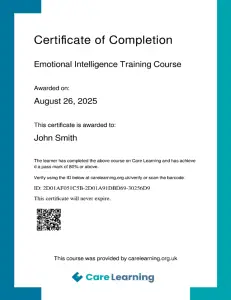
Yes. A certificate is issued after successful completion.
This Deaf Awareness eLearning course gives learners a practical foundation for communicating more confidently and inclusively with Deaf and hard of hearing people. It supports respectful practice, better access to information and more consistent approaches across health, social care and public-facing services.
Enrol now to build your understanding of Deaf awareness.
You must log in and have started this course to submit a review.