This Emotional Dysregulation awareness course is designed for workers who support people experiencing intense, overwhelming or fast-changing emotional responses. The course helps learners understand emotional dysregulation without blame, recognise signs of distress and respond in ways that promote safety, dignity and recovery.
This free course explores the nervous system basis of dysregulation, common presentations across different settings, trauma-informed practice, neurodiversity-aware support, co-regulation, de-escalation, post-incident learning, role boundaries and when to seek further advice.
Why Take This eLearning Course?
Emotional dysregulation can affect communication, behaviour, relationships and safety. This course supports staff to look beyond visible behaviour, reduce avoidable pressure and respond with calm, structured and person-centred practice.
This course will help you to:
- Understand the difference between emotional regulation and dysregulation.
- Recognise common signs of fight, flight, freeze and shutdown responses.
- Respond to distress without assuming behaviour is deliberate.
- Use supportive communication to reduce escalation.
- Apply trauma-informed and neurodiversity-aware approaches.
- Understand how dysregulation may present in different settings.
- Support emotional recovery through co-regulation and practical strategies.
- Maintain safe, respectful and consistent boundaries.
- Record observations factually and recognise patterns.
- Know when to seek advice, escalate concerns or involve other professionals.
Learning Outcomes
By the end of this course, you will be able to:
- Define emotional regulation and emotional dysregulation.
- Explain how stress and threat responses can affect behaviour and communication.
- Identify visible and less visible signs of dysregulation.
- Describe conditions and needs that may be linked with dysregulation.
- Recognise how sensory, communication and transition needs can contribute to distress.
- Apply trauma-informed principles in everyday support.
- Use calm communication and co-regulation techniques during escalation.
- Identify responses that may unintentionally increase distress.
- Explain the role and limits of nervous system models, including polyvagal theory.
- Describe when concerns should be escalated through local procedures.
Emotional Dysregulation eLearning Course Outline
Module 1: Understanding Emotional Dysregulation
Learners will explore what emotional regulation means and how dysregulation can affect a person’s ability to think, communicate and respond calmly. This module explains that dysregulation is not the same as deliberate rudeness, opposition or non-cooperation. It also introduces the nervous system basis of dysregulation, including how threat responses can reduce thinking capacity and change behaviour. Learners will consider common signs such as shouting, avoidance, pacing, silence, shutdown, crying, agitation and changes in body language, as well as how distress can affect relationships and staff perceptions.
Module 2: Conditions, Needs and Settings Linked with Dysregulation
Learners will consider how dysregulation may occur with or without a formal diagnosis, and why staff should stay curious rather than making assumptions. This module covers neurodevelopmental needs such as ADHD and autism, trauma and PTSD, borderline personality disorder, anxiety, depression, learning disabilities, ARFID and eating-related distress. Learners will also explore how dysregulation may present differently in education, youth, health and social care settings, and why factual observation and pattern recognition are important for support planning.
Module 3: Trauma-Informed and Supportive Practice
Learners will examine trauma-informed principles including safety, trust, choice, collaboration, empowerment and awareness. This module explains how staff can hold safe boundaries while avoiding blame, shame or confrontation. Learners will compare dysregulation with “bad behaviour”, consider responses that may unintentionally escalate distress, and practise thinking about communication that helps recovery, such as calm tone, simple language, safe choices, validation and time before problem-solving.
Module 4: Nervous System Frameworks and Co-Regulation
Learners will develop a practical understanding of autonomic nervous system responses, including connection, fight, flight, freeze and shutdown. This module introduces polyvagal theory as one framework for thinking about safety and threat, while also recognising that parts of the theory are debated and should not be used as diagnosis. Learners will explore co-regulation, including steady presence, calm voice, open posture, gentle pace, emotional steadiness and predictable support, while recognising the limits of nervous system models.
Module 5: Reducing Escalation and Supporting Recovery
Learners will focus on immediate steps that can reduce escalation, including using fewer words, creating space, offering safe choices and considering basic needs such as hunger, pain, tiredness, sensory overload or medication issues. This module also covers practical regulation supports such as grounding, sensory tools and coping plans. Learners will understand how DBT fits into the wider picture of emotion regulation support, while recognising that frontline staff should not deliver therapy unless trained and authorised. The module also covers post-incident support, recovery time, non-blaming reflection, trigger review, plan updates, family involvement and appropriate timing of questions.
Module 6: Escalation, Boundaries and Collaborative Working
Learners will consider when dysregulation requires further advice, referral or escalation, including safeguarding concerns, risk of harm, suicidal thoughts, physical health concerns, severe eating restriction and repeated crises. This module explains the role boundaries of frontline staff, including what is within role and what should be referred to managers or specialists. Learners will also explore collaborative working with CAMHS, mental health teams, social care, education partners, families, carers and multidisciplinary teams. The module ends by highlighting common mistakes to avoid, including labelling, blame, control, over-talking and ignoring sensory needs.
Target Audience
This course is suitable for:
- Health and social care workers supporting adults, children or young people.
- Frontline care, support and residential staff.
- Mental health, learning disability and autism support teams.
- Social care, youth support and community service staff.
- Education, CAMHS or multidisciplinary staff who work alongside care services.
- Managers, supervisors and safeguarding leads who support frontline practice.
No previous specialist knowledge is required.
FAQ
Who is this course suitable for?
This course is suitable for staff who support people who may experience emotional distress, overwhelm, agitation, withdrawal or difficulty coping. It is particularly relevant to health and social care workers, support staff, youth workers, residential teams and services working with neurodivergent people, trauma histories or mental health needs.
Do I need any previous experience?
No. The course is written for frontline staff and does not require previous specialist knowledge of emotional dysregulation, therapy models or nervous system theory.
What will I learn on this emotional dysregulation course?
You will learn what emotional dysregulation is, how it can affect behaviour and communication, how to recognise signs of distress, and how to respond using calm, supportive and structured approaches.
Will this course help with day-to-day practice?
Yes. The course focuses on practical workplace responses, including reducing pressure, using fewer words, offering safe choices, avoiding escalation, supporting recovery and knowing when to seek advice.
Does the course cover practical skills?
Yes. It covers practical regulation supports such as grounding, sensory adjustments, coping plans, co-regulation, supportive communication and post-incident reflection.
Does it cover relevant responsibilities or good practice?
Yes. The course covers safe boundaries, role limits, factual recording, escalation routes, safeguarding concerns, collaborative working and the importance of following local procedures.
Does this course train staff to deliver DBT or therapy?
No. The course explains where DBT fits into the wider picture, but it does not train learners to deliver therapy. Staff should only support agreed strategies within their role, training and supervision.
How long does the course take?
The course is self-paced and usually takes around 1 hour to complete.
Will I receive a certificate?
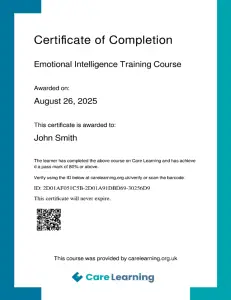
Yes. A certificate is issued after successful completion.
This Emotional Dysregulation eLearning Course gives staff a clear and practical foundation for recognising distress, reducing escalation and supporting safer, more respectful interactions. It supports calm, person-centred practice while reinforcing professional boundaries and appropriate escalation.
Enrol now to build your understanding of emotional dysregulation.