The Activities Worker Essentials course is designed for people who plan, organise or support meaningful activities within adult social care services in England. It provides practical guidance on promoting choice, independence, wellbeing and social connection while respecting each person’s identity, abilities and current wishes.
This free course covers person-centred activity planning, inclusive participation, communication, risk management, community trips, record keeping, safeguarding and professional boundaries. Learners will also explore how to work effectively with colleagues, families, advocates, volunteers and external activity providers.
Why Take This eLearning Course?
Meaningful activity can support confidence, relationships, enjoyment and quality of life. This online activities worker course helps learners provide opportunities that are relevant, accessible and safely organised while remaining within their role, training and workplace procedures.
This course will help you to:
- Understand the purpose and responsibilities of an activities worker
- Plan activities around individual interests, strengths and choices
- Provide individual, group and community-based opportunities
- Adapt sessions for different communication, physical and sensory needs
- Identify common risks and use proportionate safety measures
- Encourage participation without pressure or compulsory attendance
- Communicate respectfully with people who use services
- Work effectively with families, advocates, colleagues and suppliers
- Record relevant information accurately and securely
- Recognise safeguarding concerns and maintain professional boundaries
Learning Outcomes
By the end of this course, you will be able to:
- Define the role of an activities worker in adult social care
- Describe the main responsibilities associated with activity provision
- Explain why meaningful and person-centred activities matter
- Identify the information required before planning an activity
- Plan accessible sessions that reflect individual needs and preferences
- Recognise common risks linked to activities, food and community trips
- Apply inclusive communication and participation-support techniques
- Explain how to involve families, carers and advocates appropriately
- Describe safe recording, information-sharing and safeguarding practices
- Identify professional boundaries and opportunities for reflective development
Activities Worker Essentials Course Outline
Module 1: Understanding the Activities Worker Role
Learners will explore the purpose of an activities worker and the role’s main planning, participation, safety, teamwork and review responsibilities. This module examines the range of settings in which activities workers may operate, including care homes, supported living, day services, extra care housing, people’s homes and community venues. It also explains how meaningful activity can support identity, wellbeing, independence and social connection when participation remains voluntary and person-centred.
Module 2: Person-Centred Activity Provision
Learners will examine how to develop activities around each person’s current wishes, interests, relationships, culture, abilities and support needs. The module covers gathering information from the person and agreed records, supporting decision-making, considering decision-specific mental capacity and following appropriate procedures where capacity is in doubt. It also introduces individual, small-group and larger-group activities and explains how communication, physical, sensory and environmental adaptations can remove barriers to participation.
Module 3: Planning Safe and Inclusive Activities
Learners will develop an understanding of activity-session planning, including intended outcomes, suitable locations, staffing, resources, equipment and alternative arrangements. They will consider common risks involving mobility, falls, fatigue, food allergies, swallowing needs, equipment, distress and community access. The module also explains the duty to make reasonable adjustments for disabled people and describes practical ways to welcome, reassure, prompt, demonstrate and adjust support without taking away choice or independence.
Module 4: Communication, Motivation and Positive Relationships
Learners will explore communication techniques that support understanding, consent, trust and inclusion. This includes listening carefully, using accessible language, recognising non-verbal communication and avoiding approaches that may rush, embarrass or exclude people. The module explains how to build interest without pressuring someone to participate, how families, carers and advocates may contribute appropriately, and how positive conversation, encouragement, shared decision-making and respectful assistance can improve the activity experience.
Module 5: Partnership Working, Community Trips and Records
Learners will consider the range of colleagues, professionals, volunteers and community organisations involved in activity provision. The module covers booking and managing external suppliers, checking suitability and agreeing supervision, access and emergency arrangements. It also provides a structured approach to organising community trips, including transport, staffing, consent, capacity, medicines support and contingency planning. Learners will examine how to record attendance, engagement, preferences, changes, incidents and feedback while sharing information lawfully, fairly and proportionately.
Module 6: Safeguarding, Dignity and Professional Development
Learners will explore adult safeguarding within the Care Act 2014 framework and consider different forms of abuse, neglect and self-neglect. They will learn how to respond to immediate danger, report concerns, make factual records and use alternative escalation routes when required. The module also covers dignity, privacy, voluntary participation, photographs and personal information. It concludes with professional boundaries involving money, gifts, private contact, social media and role limits, alongside reflection, supervision, training and continuous improvement.
Target Audience
This course is suitable for:
- New or aspiring activities workers in adult social care
- Existing activities coordinators seeking to refresh their knowledge
- Care workers who support people during organised activities
- Staff working in care homes, supported living or day services
- Volunteers involved in social, creative or community activities
- Managers responsible for overseeing activity provision
No previous specialist knowledge is required.
FAQ
Who is this course suitable for?
The course is suitable for new and existing activities workers, activities coordinators, care staff, volunteers and managers involved in planning or supporting activities within adult social care services.
Do I need any previous experience?
No previous experience is required. The course introduces the essential knowledge needed to support meaningful, inclusive and person-centred activities. Experienced staff may also use it to refresh their understanding.
What will I learn on the Activities Worker Essentials course?
You will learn how to plan activities, gather relevant information, support individual choice, adapt sessions, manage common risks, communicate effectively and work with colleagues and community partners. The course also covers safeguarding, record keeping, dignity, privacy and professional boundaries.
Will this course help with day-to-day practice?
Yes. The guidance can be applied when organising individual sessions, group activities, celebrations, external visits and community trips. It also supports more confident communication, observation, recording and review.
Does the course cover practical skills?
The course explains practical processes for planning sessions, preparing resources, checking accessibility, supporting participation, managing suppliers and organising trips. Any specialist support must still be provided within the learner’s role, training, competence and workplace procedures.
Does it cover relevant responsibilities and good practice?
Yes. The course addresses person-centred care, equality, reasonable adjustments, consent, decision-specific mental capacity, information sharing, safeguarding, dignity and professional boundaries within an England-focused adult social care context.
How long does the course take?
The course is self-paced and usually takes around 1 hour to complete.
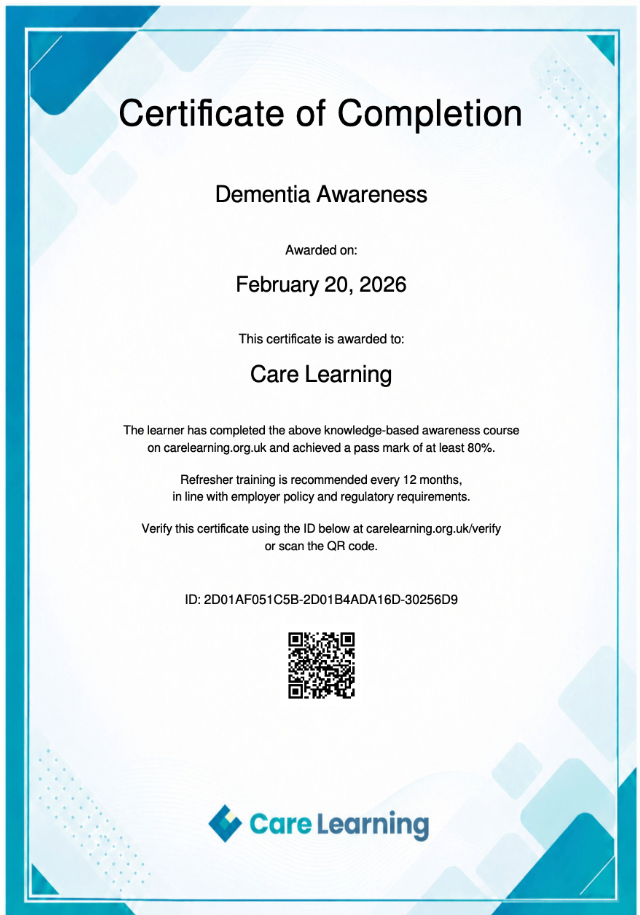
Will I receive a certificate?
Yes. A certificate is issued after successful completion.
The Activities Worker Essentials course provides a clear introduction to planning and delivering meaningful activity in adult social care. It supports learners to promote choice and participation while managing responsibilities safely, respectfully and consistently.
Enrol now to build your understanding of person-centred activity provision.