This values and ethics in social care course is designed for adult social care workers, support staff, supervisors and others who help people make choices and take part in everyday life. It explains how professional values guide respectful, fair and accountable practice across care homes, supported living and domiciliary care.
This free course covers professional conduct, dignity, autonomy, informed consent, equality, diversity and ethical decision-making. Learners will consider realistic situations involving personal beliefs, family involvement, conflicting rights, limited resources, possible safeguarding concerns and decisions about risk.
Why Take This eLearning Course?
Values and ethics influence how workers communicate, make decisions and respond when there is no simple solution. This training supports learners to protect people’s rights, recognise the limits of their role and make reasoned decisions that reflect professional standards, agreed ways of working and person-centred care.
This course will help you to:
- Separate personal beliefs from professional responsibilities
- Communicate without judgement and support lawful personal choices
- Protect dignity, privacy and respect during everyday care
- Offer meaningful choices without taking control away from the person
- Support informed consent through clear and accessible communication
- Recognise assumptions and service barriers that can lead to unfair care
- Respond appropriately to disrespectful or discriminatory behaviour
- Manage disagreements involving relatives, shared environments or competing needs
- Distinguish an ethical dilemma from a possible safeguarding concern
- Record, communicate and review decisions clearly and accountably
Learning Outcomes
By the end of this course, you will be able to:
- Define personal values, professional values, ethics and professional conduct
- Describe how Skills for Care and BASW principles inform ethical practice
- Explain the differences between ethics, law, policy and safeguarding
- Identify how personal beliefs, assumptions and emotional reactions can affect support
- Demonstrate actions that protect dignity, privacy, identity and personal preferences
- Explain how to support autonomy, meaningful choice and informed consent
- Identify when advice is required about capacity, consent, risk or family involvement
- Describe how to reduce barriers and challenge discriminatory practice
- Analyse ethical dilemmas involving rights, resources, family views and possible harm
- Apply a five-step ethical decision-making process and record the agreed action
Values and Ethics in Social Care Course Outline
The course is organised into six modules. It moves from the foundations of professional values and conduct through dignity, autonomy and equality, before applying these principles to ethical dilemmas, safeguarding concerns and accountable decision-making.
Module 1: Values, Ethics and Professional Conduct
Learners will define personal values, professional values, ethics and professional conduct, and consider how each can influence care interactions. The module explains the expectations described in the Skills for Care Code and the wider ethical principles reflected in the BASW Code, while recognising the different roles of these codes. Learners will also distinguish ethical reasoning from legal duties, organisational policies and safeguarding procedures. Practical examples show how personal assumptions, beliefs and emotional reactions can affect language, decisions and relationships, and how reflective supervision can support fairer practice.
Module 2: Dignity, Respect and Personal Identity
Learners will explore dignity as recognition of a person’s inherent worth and respect as consideration for their rights, identity, privacy, feelings and preferences. The module covers everyday actions such as knocking before entering, protecting privacy during personal care, using preferred names and pronouns, explaining support and holding sensitive conversations discreetly. It also examines respectful support for culture, appearance, relationships, communication and personal routines. Learners will consider how to challenge disrespectful language calmly, protect the person immediately and use reporting, complaints, whistleblowing or safeguarding procedures when required.
Module 3: Autonomy, Choice and Informed Consent
Learners will examine how autonomy, meaningful choice and informed consent help people retain control over their lives. They will consider how information can be made accessible through plain language, pictures, signing, communication aids, interpreters or additional time. The module explains how to support everyday decisions without steering the person towards the quickest option or taking over tasks unnecessarily. It also addresses disagreements between the person and their family, consent to share information, claims of legal decision-making authority and circumstances in which advice should be sought about capacity, consent, coercion, serious risk or actions outside the worker’s role.
Module 4: Equality, Diversity, Inclusion and Fair Support
Learners will define equality, diversity, inclusion and discrimination, and understand why identical support does not always provide fair access. The module examines stereotyping, inaccessible information, inflexible routines, language barriers, assumptions about identity and environmental obstacles. Learners will consider practical adaptations involving communication, daily routines, cultural or religious practices, transport, physical access and staffing. They will also learn how to challenge discriminatory behaviour respectfully, support the affected person, make factual records and follow appropriate reporting, complaints, safeguarding or whistleblowing procedures.
Module 5: Ethical Dilemmas in Social Care Practice
Learners will consider dilemmas in which individual rights, preferences and wellbeing appear to conflict. Examples include competing needs in shared living environments, family requests that differ from the person’s wishes, requests for confidential information and decisions made under limited staffing or resource pressures. The module explains how to hear each person’s perspective, identify time-sensitive needs, explore proportionate alternatives and avoid favouritism. Learners will also distinguish ordinary disagreements from indicators of abuse, neglect, coercion, degrading treatment or avoidable harm, and understand when ethical concerns must lead to a formal safeguarding response.
Module 6: Ethical Decision-Making, Escalation and Accountability
Learners will identify the values, rights and risks involved in a difficult situation before considering possible responses. They will apply a five-step framework that involves naming the conflict, gathering relevant facts, checking wishes and responsibilities, considering proportionate options and agreeing action within the worker’s role. The module explains when to pause, seek advice, refer or escalate because of unclear consent, capacity concerns, safeguarding indicators, family pressure, care plan conflicts, resource shortages or professional boundaries. It concludes with guidance on factual recording, appropriate information-sharing and reviewing decisions when circumstances or risks change.
Target Audience
This course is suitable for:
- Adult social care workers and care assistants
- Support workers in supported living services
- Domiciliary and home care workers
- Staff working in residential and nursing care settings
- Team leaders, supervisors and service managers
- Social care learners, volunteers and people preparing for care roles
No previous specialist knowledge is required.
FAQ
Who is this course suitable for?
The course is suitable for people who provide, supervise or support adult social care services in England. This includes care assistants, support workers, domiciliary care staff, residential care staff, team leaders, managers, volunteers and learners preparing for a care role.
Do I need any previous experience?
No previous specialist experience is required. The course introduces the main concepts clearly and uses practical care situations to show how values and ethics affect everyday decisions.
What will I learn on this values and ethics in social care course?
You will learn about professional values, ethical conduct, dignity, respect, autonomy, informed consent, equality, diversity and inclusion. You will also explore how to respond to family disagreements, competing rights, resource pressures, discrimination and possible safeguarding concerns.
Will this course help with day-to-day practice?
Yes. The course applies ethical principles to common situations such as entering private spaces, supporting personal care, offering choices, sharing information, responding to relatives, adapting routines and challenging disrespectful behaviour.
Does the course cover practical decision-making skills?
Yes. You will learn a five-step framework for identifying the issue, gathering facts, considering rights and risks, comparing proportionate options and agreeing action within your role. The course also explains when to seek advice, refer a concern or escalate the situation.
Does it cover relevant responsibilities and good practice?
Yes. The content reflects person-centred care, dignity, consent, equality, confidentiality, accountability and adult safeguarding responsibilities. It explains how these responsibilities relate to the Skills for Care Code, BASW ethical principles, CQC fundamental standards, the Mental Capacity Act and the Care Act safeguarding framework.
How long does the course take?
The course is self-paced and usually takes around 1 hour to complete.
Will I receive a certificate?
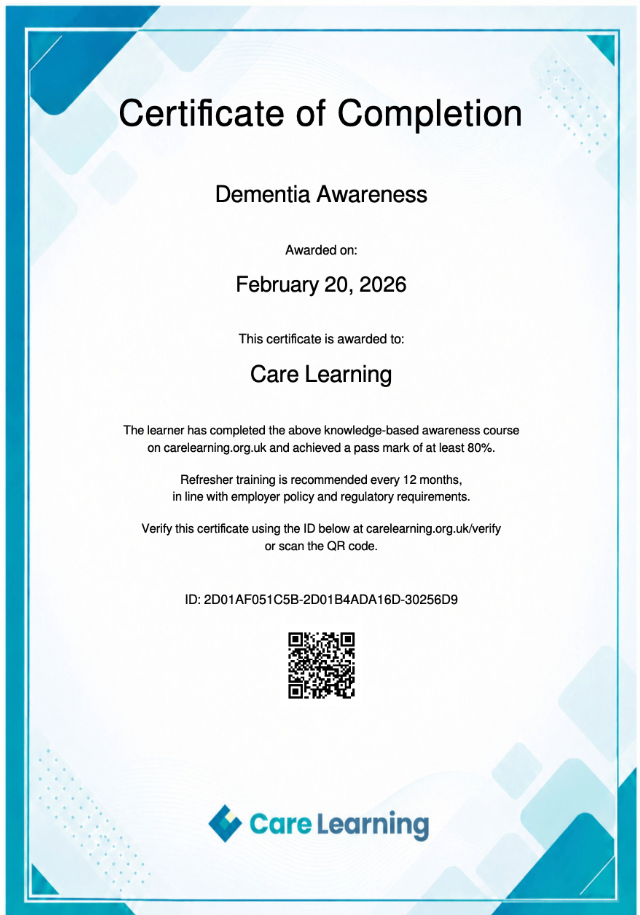
Yes. A certificate is issued after successful completion.
Values and ethics are demonstrated through everyday communication, choices and decisions. This course provides a practical foundation for recognising ethical concerns, protecting people’s rights and responding in a fair, respectful and professionally accountable way.
Enrol now to build your understanding of values and ethics in social care.