This course provides an introduction to Care Quality Commission requirements for domiciliary care services in England. It is designed for registered managers, providers, supervisors, care coordinators and others responsible for maintaining safe, effective and well-governed home care services.
This free course covers CQC registration and assessment, the five key questions, quality statements, fundamental standards, the duty of candour and evidence of compliance. It also explores the registered manager’s responsibilities, year-round inspection readiness and the practices that can support consistently high-quality, person-centred care.
Why Take This eLearning Course?
CQC compliance depends on the quality of everyday care, management oversight and evidence rather than preparation immediately before an assessment. This course will help learners understand how regulatory requirements connect with care delivery, workforce management, governance, reporting and continuous improvement.
This course will help you to:
- Understand the role, remit and regulatory powers of the CQC
- Recognise when domiciliary care services require registration
- Relate the five CQC assessment questions to everyday home care
- Apply quality statements and fundamental standards in practice
- Strengthen systems for safe, personalised and lawful care
- Respond appropriately to incidents that may engage the duty of candour
- Organise credible evidence of compliance across the service
- Understand the legal and operational responsibilities of registered managers
- Maintain year-round readiness for CQC assessment
- Develop a culture of learning, inclusion and service improvement
Learning Outcomes
By the end of this course, you will be able to:
- Define the role and remit of the Care Quality Commission
- Identify when domiciliary care activities require CQC registration
- Describe the legislation and guidance relevant to regulated home care
- Explain the five assessment questions, quality statements and ratings
- Apply the fundamental standards to care delivery, staffing and governance
- Determine when the formal duty of candour process may apply
- Describe the records and evidence used to demonstrate compliance
- Outline the legal status and responsibilities of a registered manager
- Plan a year-round approach to assessment and inspection readiness
- Distinguish minimum compliance from practices associated with outstanding care
CQC Requirements for Domiciliary Care Services Course Outline
The course is organised into eight modules covering the regulatory framework, CQC assessment expectations, fundamental standards, candour, evidence, registered management, inspection readiness and continuous improvement.
Module 1: Understanding CQC Regulation and Assessment
Learners will examine the CQC’s role in registering, monitoring, assessing and rating domiciliary care services, including the enforcement action available when legal requirements are breached. The module explains when providing personal care in people’s homes requires registration and why responsibility for arranging, managing and overseeing care is important. It also introduces the Health and Social Care Act 2008, the Regulated Activities Regulations 2014, the Registration Regulations 2009, the Care Act 2014 and relevant home care guidance. Learners will explore the current assessment framework, the five key questions, quality statements, people’s experience statements and the four CQC ratings.
Module 2: Applying the Five CQC Assessment Questions
Learners will consider how Safe, Effective, Caring, Responsive and Well-led services should operate in domiciliary care. The module covers needs and risk assessment, care planning, staff competence, reliable visits, medicines, infection control, safeguarding and outcome reviews. It also explores dignity, choice, independence, communication, cultural preferences, complaints and continuity of care. Learners will examine the role of leadership, accountability, governance and learning, together with the relationship between provider commitments, quality statements and the experiences reported by people receiving care.
Module 3: Meeting the Fundamental Standards
Learners will develop an understanding of the fundamental standards as minimum legal requirements for registered care. The module covers person-centred care, dignity, nutrition, hydration, consent and lawful decision-making, including the importance of the Mental Capacity Act 2005 where capacity is in doubt. It also addresses risk management, safeguarding, safe equipment, staffing levels, recruitment and workforce competence. Learners will explore effective governance, accurate records, complaints management, audits, the display of ratings and the responsibilities associated with openness and accountability.
Module 4: Understanding the Duty of Candour
Learners will examine the statutory duty of candour and the wider expectation that registered providers and managers act openly and transparently. The module explains the legal test for a notifiable safety incident, including the relationship between regulated activities, unexpected events, death, lasting harm and preventive treatment. Learners will review the required response, including timely contact, a truthful account, reasonable support, an apology, written confirmation and complete records. The module also distinguishes candour from safeguarding referrals, statutory notifications, police reports and other external reporting duties, while showing how incident review should lead to organisational learning.
Module 5: Demonstrating Compliance Through Evidence
Learners will explore the six CQC evidence categories and how different sources contribute to an informed assessment of quality. These include people’s experiences, staff and leader feedback, partner feedback, observation, processes and outcomes. The module identifies care delivery, workforce and governance records that may demonstrate compliance, such as care plans, risk assessments, medicines records, recruitment checks, competency records, audits, complaints and continuity plans. Learners will also consider how CQC may request information, gather views and observe practice, and why evidence should be current, accurate, consistent, outcome-focused and traceable.
Module 6: The Registered Manager’s Role and Accountability
Learners will examine the registered manager’s legal status, personal fitness requirements and responsibility for managing specified regulated activities. The module covers day-to-day oversight of care quality, safeguarding, medicines, incidents, complaints, staffing and care records, alongside governance systems, improvement plans and communication with the provider. Learners will review registration conditions, statements of purpose, service changes, statutory notifications and submission timescales. The module also explains how work may be delegated to competent staff while the registered manager retains responsibility for monitoring progress, checking evidence and taking action.
Module 7: Maintaining Year-Round Inspection Readiness
Learners will develop a practical approach to maintaining compliance through reliable daily systems rather than last-minute preparation. The module covers staff practice, record completion, risk review, business continuity, meaningful audits and improvement action. Learners will identify information that should be secure, current and readily accessible, including registration documents, policies, staff files, care records, notifications and action plans. The module also explains how to prepare staff to discuss their normal practice honestly, coordinate requests during an assessment, protect confidentiality, respond to emerging concerns and review draft findings for factual accuracy.
Module 8: Supporting Outstanding Home Care
Learners will distinguish the minimum legal standards from the sustained experiences, outcomes and leadership associated with outstanding care. The module explores truly person-centred support based on an understanding of each person’s routines, abilities, relationships, communication and goals. It also considers compassionate and inclusive leadership, psychological safety, staff empowerment and respect for diversity. Learners will examine how reflective practice, evidence-led change, partnership working and proportionate innovation can support continuous improvement when actions are clearly assigned, reviewed and connected to people’s experiences.
Target Audience
This course is suitable for:
- Registered managers of domiciliary care services
- Home care providers and nominated individuals
- Deputy managers, supervisors and care coordinators
- Quality assurance and compliance staff
- Senior care workers preparing for management responsibilities
- Professionals supporting governance or service improvement in home care
No previous specialist knowledge is required.
FAQ
Who is this course suitable for?
The course is suitable for people who manage, supervise, coordinate or monitor domiciliary care services in England. It may also support experienced care workers who are preparing for leadership, quality assurance or compliance responsibilities.
Do I need any previous experience?
No previous specialist knowledge of CQC regulation is required. Familiarity with domiciliary care practice may help learners relate the regulatory requirements to workplace situations.
What will I learn on this CQC domiciliary care course?
You will learn about registration, assessment, quality statements, fundamental standards, the duty of candour, evidence of compliance, registered manager responsibilities and inspection readiness.
Will this course help with day-to-day practice?
Yes. The course links CQC expectations to everyday activities such as care planning, visit monitoring, safeguarding, staff supervision, complaints, audits, notifications and improvement planning.
Does the course cover practical skills?
The course focuses on practical management and compliance knowledge rather than hands-on care techniques. It explains how to apply regulatory expectations, organise evidence, review systems and respond to concerns.
Does it cover relevant responsibilities and good practice?
Yes. It covers key legal, regulatory, professional and governance responsibilities affecting registered domiciliary care services, including lawful care, safeguarding, staffing, candour, records and accountability.
Does the course explain how CQC gathers evidence?
Yes. Learners will examine the six evidence categories and how CQC may use records, feedback, interviews, observations, processes and outcomes when assessing a service.
Will this course help my service prepare for a CQC assessment?
The course explains how to maintain year-round readiness, organise information, prepare staff, coordinate evidence requests and respond constructively to findings. It does not encourage rehearsed answers or last-minute document creation.
How long does the course take?
The course is self-paced and usually takes around 1 hour to complete.
Will I receive a certificate?
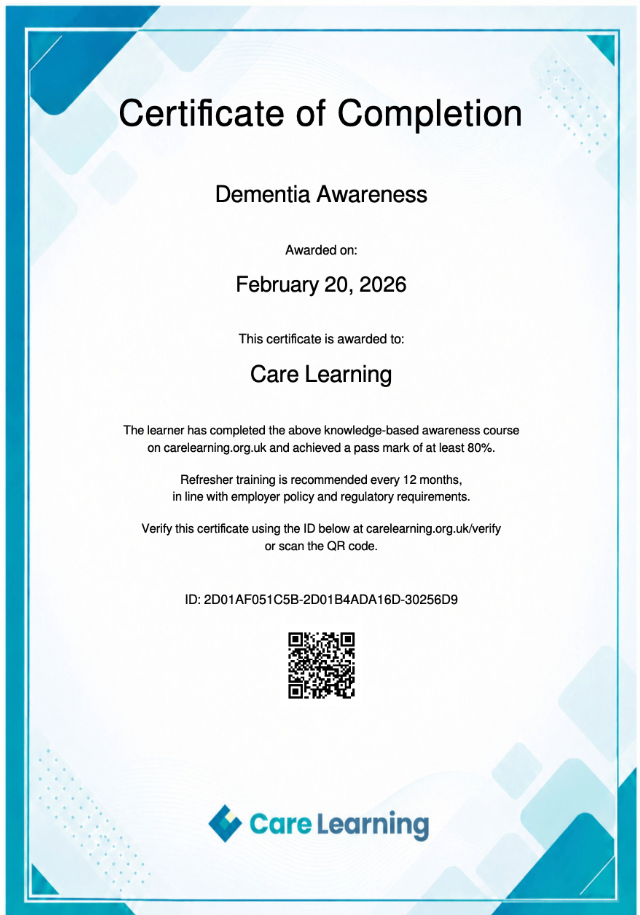
Yes. A certificate is issued after successful completion.
This course provides a structured overview of the CQC requirements that influence the delivery, management and improvement of domiciliary care services. It supports learners to connect regulation with everyday practice, maintain credible evidence and promote safe, person-centred care throughout the year.
Enrol now to build your understanding of CQC requirements for domiciliary care services.