This online course is designed for care and support workers who communicate with adults living with aphasia. It explains how aphasia can affect speaking, understanding, reading and writing, while reinforcing the importance of seeing the individual beyond their communication difficulty. Learners will develop practical knowledge to support communication, choice, dignity, independence and participation.
This free course covers common causes and patterns of aphasia, respectful communication, total communication approaches, accessible information and strategies for everyday conversations. It also explores emotional and social impacts, the Accessible Information Standard in England, professional boundaries and when sudden or ongoing changes should be reported or escalated.
Why Take This eLearning Course?
Communication difficulties can affect how a person participates in decisions, relationships, activities and everyday care. Understanding aphasia helps workers reduce avoidable barriers, respond respectfully and give people more opportunity to communicate their own wishes and preferences.
This course will help you to:
- Understand how aphasia can affect different areas of communication.
- Recognise common expressive, receptive and word-finding difficulties.
- Avoid assumptions about intelligence, personality or decision-making ability.
- Communicate respectfully without speaking over or taking over from the person.
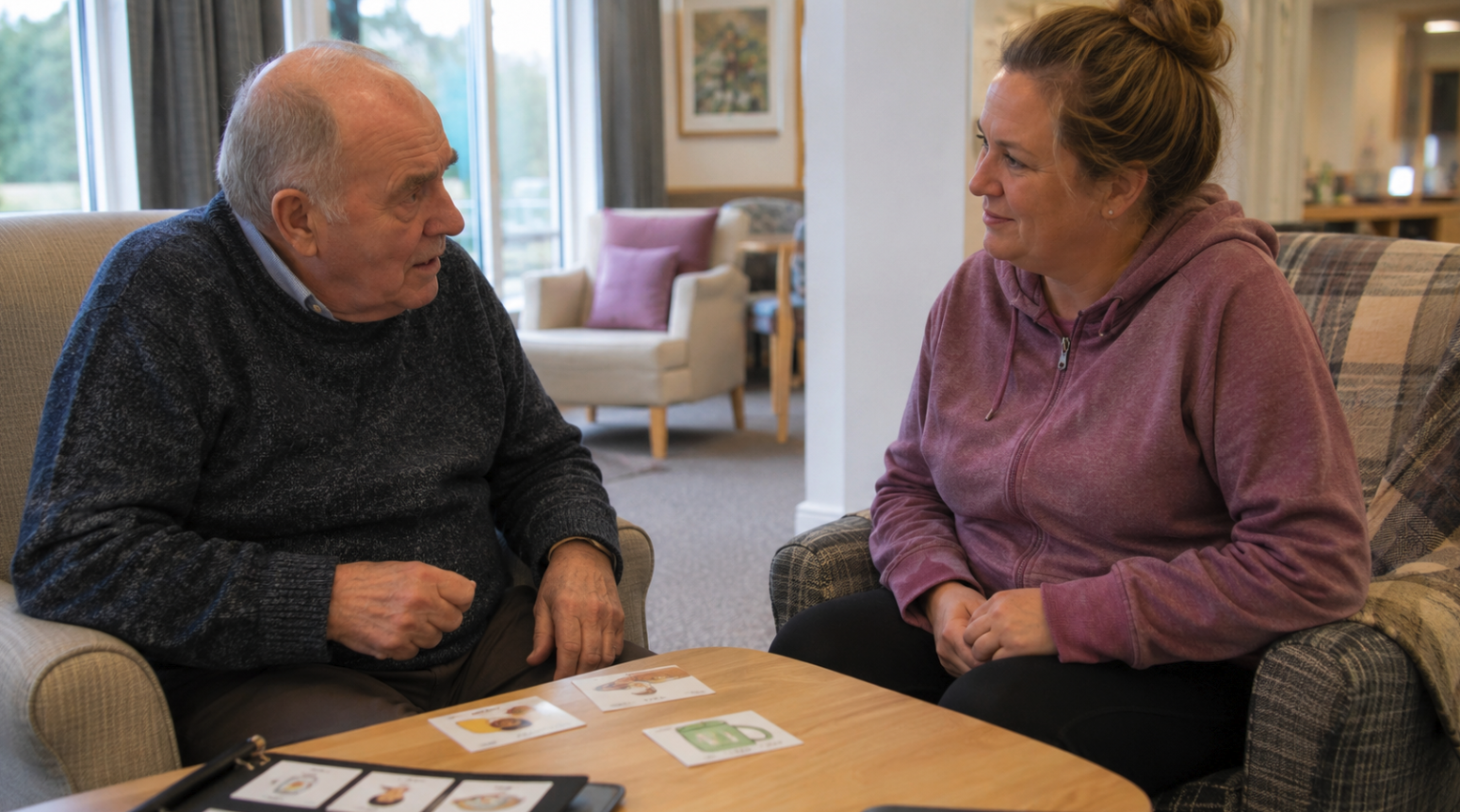
- Use practical communication methods such as gesture, pictures, writing and objects.
- Create calmer, more accessible conversations with appropriate response time.
- Support meaningful choices, independence and social participation.
- Make information easier to access and understand.
- Follow agreed communication plans and professional recommendations consistently.
- Recognise when communication or emotional changes require reporting or urgent action.
Learning Outcomes
By the end of this course, you will be able to:
- Define aphasia and identify common causes.
- Describe how aphasia can affect speaking, understanding, reading and writing.
- Distinguish common expressive, receptive and anomic communication patterns.
- Explain why aphasia should not be treated as evidence of reduced intelligence.
- Describe the difference between a language difficulty and unclear speech.
- Apply respectful total communication approaches in everyday interactions.
- Use clear speech, suitable questions and communication repair strategies.
- Describe how accessible information can be adapted to individual needs.
- Explain the key requirements of the Accessible Information Standard relevant to communication support.
- Identify communication, emotional or behavioural changes that should be reported or escalated.
Supporting Adults with Aphasia in Social Care Course Outline
Module 1: Understanding Aphasia and Recognising Change
Learners will develop a clear understanding of aphasia as an acquired language difficulty and explore how it can affect speaking, understanding spoken language, reading and writing. The module considers stroke and other forms of brain damage as possible causes and emphasises that aphasia varies considerably between individuals. Learners will also examine why knowing a person’s established communication pattern is important and how a sudden new difficulty with speech or understanding may indicate a medical emergency requiring immediate action, including a 999 response where stroke is suspected.
Module 2: Recognising Different Aphasia Patterns
Learners will examine common characteristics associated with expressive, receptive and anomic aphasia. They will explore how a person may know what they want to communicate while struggling to retrieve words or form sentences, and how another person may speak fluently while finding spoken or written language difficult to understand. The module also considers word-finding pauses, substitutions and descriptions, while making clear that communication patterns can overlap and change according to factors such as fatigue, health, environmental distractions and the complexity of a conversation.
Module 3: Challenging Assumptions and Protecting Dignity
Learners will explore why difficulty using or understanding language should not be treated as a measure of intelligence, personality or overall ability. The module explains how limited speech, unexpected words or long pauses can easily be misinterpreted and considers how other effects of stroke or brain injury should be assessed separately. Learners will also distinguish aphasia from dysarthria, recognise that both difficulties can occur together and consider how respectful adult-to-adult communication protects dignity, autonomy and involvement in decisions.
Module 4: Everyday Life, Relationships and Inclusion
Learners will consider how aphasia can affect everyday choices, community activities, appointments, social interaction and relationships. The module explores barriers to family conversations, friendships, group activities and new relationships, as well as the potential risk of withdrawal and isolation. Learners will examine how communication effort, fatigue and frustration can affect participation and how proportionate support can help a person remain involved in decisions and activities without unnecessary staff takeover.
Module 5: Total Communication and Individual Support Methods
Learners will understand total communication as the use of different methods alongside or instead of speech according to the individual’s needs. The module explores gesture, facial expression, pointing, drawing, writing, pictures, symbols, real objects, communication resources and suitable technology. Learners will consider why no single method works for everybody and how established preferences, support plans and speech and language therapy guidance should shape practice. Professional boundaries around diagnosis and specialist communication systems are also addressed.
Module 6: Supporting Successful Conversations and Choices
Learners will explore practical ways to prepare for and manage conversations with a person who has aphasia. This includes reducing distractions, gaining attention, allowing sufficient time, using clear adult language, presenting one idea at a time and selecting suitable questions. The module also covers ways to check understanding, confirm meaning, rephrase information and switch communication methods when a breakdown occurs. Learners will consider how genuine, manageable choices and adequate response time can support decision-making without taking control away from the person.
Module 7: Accessible Information and Communication Needs
Learners will examine how information can be made more accessible through short sections, familiar language, clear layouts, useful headings and appropriate visual support. The module considers Easy Read-style information, photographs, pictures, symbols and other visual formats while emphasising that these approaches should only be used when they are meaningful to the individual. Learners will also explore how to check whether information is working, record and share communication preferences appropriately and apply the Accessible Information Standard in England through the stages of identifying, recording, flagging, sharing, meeting and reviewing needs.
Module 8: Emotional Wellbeing, Relationships and Escalation
Learners will consider possible emotional responses associated with acquired communication difficulties, including frustration, sadness, anger, embarrassment, anxiety and low mood. The module explores the possible effects of aphasia on confidence, identity, relationships and established social roles. Learners will identify supportive responses that acknowledge feelings, encourage participation and maintain direct communication with the person. They will also examine when persistent changes should be reported, when additional professional support may be required and why sudden new communication difficulties, safeguarding concerns and other urgent issues must be escalated through the appropriate procedures.
Target Audience
This course is suitable for:
- Care workers and support workers assisting adults with communication needs.
- Residential and nursing care staff who support people following stroke or neurological illness.
- Domiciliary and community care workers.
- Personal assistants and other staff providing individualised adult support.
- Team leaders and supervisors who need an understanding of good communication practice.
- Staff who want to improve the accessibility and inclusiveness of everyday communication.
No previous specialist knowledge is required.
FAQ
Who is this course suitable for?
The course is designed for care and support workers who may communicate with adults living with aphasia. It is also useful for supervisors and other staff who need a practical understanding of accessible, respectful communication.
Do I need any previous experience?
No specialist knowledge of aphasia or speech and language therapy is required. The course introduces the subject clearly and focuses on practical responsibilities within the care and support worker’s role.
What will I learn on this aphasia course?
You will learn what aphasia is, how different communication difficulties may present and how aphasia can affect everyday life, relationships and emotional wellbeing. You will also explore total communication, accessible information, conversation strategies, professional boundaries and appropriate escalation.
Will this course help with day-to-day practice?
Yes. The course focuses on communication situations that can arise during choices, activities, conversations, appointments and other everyday interactions. It explains how workers can reduce barriers while keeping the person actively involved.
Does the course cover practical communication skills?
Yes. It explains practical approaches including allowing additional response time, reducing distractions, using short clear messages, asking manageable questions and using gesture, pictures, writing, objects or other agreed communication methods when appropriate.
How should staff respond to a sudden communication change?
A sudden new difficulty with speech or understanding should not automatically be attributed to existing aphasia. Where stroke is suspected, staff should treat the situation as a medical emergency, call 999 and follow workplace emergency procedures.
Does the course cover relevant responsibilities or good practice?
Yes. The course covers respectful communication, professional role boundaries, agreed support plans, appropriate information sharing and the Accessible Information Standard as it applies to relevant health and adult social care services in England. It also explains when concerns should be recorded, reported or escalated.
How long does the course take?
The course is self-paced and usually takes around 1 hour to complete.
Will I receive a certificate?
Yes. A certificate is issued after successful completion.
Supporting adults with aphasia requires more than simply giving people extra time to speak. Effective support recognises individual communication abilities, removes unnecessary barriers and keeps the person involved in conversations and decisions about their own life. This course provides care and support workers with practical knowledge they can apply to more respectful, accessible and person-centred communication.
Enrol now to build your understanding of supporting adults with aphasia.