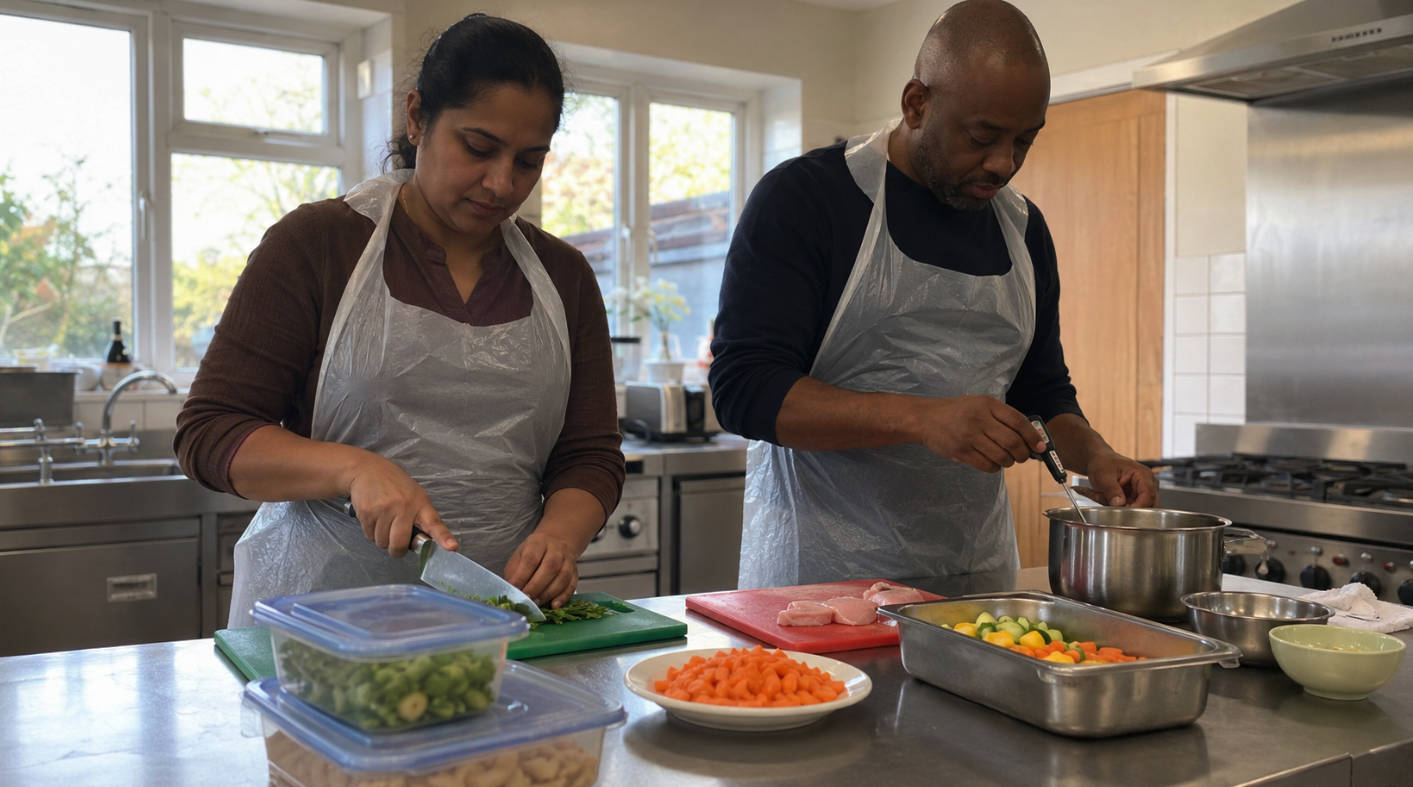
This Food Hygiene and Safety in Care Homes course is designed for care home staff, managers and support teams who handle, prepare, serve or support residents with food and drink. It explains why safe food practice is especially important in care settings, where residents may be more vulnerable to foodborne illness, dehydration, choking and allergen-related harm.
This free course covers practical food hygiene responsibilities, common food-borne pathogens, food safety law in England, HACCP-based systems, hand hygiene, illness reporting, temperature control, cross-contamination, allergens, Natasha’s Law, PPDS food, dysphagia and modified texture diets.
Why Take This eLearning Course?
Food safety in care homes depends on consistent everyday practice across catering, care, activities and management roles. This course supports staff to understand their responsibilities, follow safe procedures and recognise when concerns need to be reported.
This course will help you to:
- Understand the difference between food hygiene and food safety
- Recognise why care home residents may be at higher risk from unsafe food
- Identify common causes and signs of foodborne illness
- Understand key food business duties in England
- Follow safe hand hygiene, clothing and illness reporting routines
- Apply safe temperature control during storage, cooking, reheating and serving
- Reduce cross-contamination during preparation and mealtimes
- Understand allergen responsibilities and resident records
- Recognise PPDS food and Natasha’s Law requirements
- Support safer practice around dysphagia and modified texture diets
Learning Outcomes
By the end of this course, you will be able to:
- Define food hygiene, food safety, contamination and foodborne illness
- Explain why older and vulnerable residents are more affected by foodborne illness
- Identify common foodborne pathogens relevant to care settings
- Describe food business responsibilities and food safety management systems
- Explain the role of the FSA, local authorities and food safety officers
- Apply safe handwashing, clothing, wound and illness reporting procedures
- Identify safe chilling, freezing, cooking, reheating and hot holding practices
- Explain how to prevent bacterial, allergen and physical cross-contamination
- Identify the 14 major allergens and key allergen control measures
- Describe safe considerations for modified texture diets and dysphagia
Food Hygiene and Safety in Care Homes Course Outline
Module 1: Food Safety Responsibilities and Resident Risk
Learners will explore the meaning of food hygiene and food safety, including how contamination and foodborne illness can affect care home residents. This module explains why residents may face greater risk because of age, health conditions or reduced resilience, and introduces common pathogens such as Salmonella, Campylobacter, Listeria, Norovirus and E. coli O157. Learners will also consider signs of possible foodborne illness or outbreak and the importance of early reporting.
Module 2: Food Business Duties, HACCP and Inspection
Learners will examine the food business duties that apply when a care home stores, prepares, cooks, handles or serves food. This module introduces relevant England-focused food safety responsibilities, including local authority registration, food safety law, management systems and HACCP principles. It also explains the roles of the Food Standards Agency, local authority food safety officers and the Food Hygiene Rating Scheme, including how ratings support confidence but do not replace daily safe practice.
Module 3: Personal Hygiene, Clothing, Wounds and Illness Reporting
Learners will review the personal hygiene standards needed when handling food or supporting meals. This module covers effective handwashing, when hands should be washed, suitable clothing and appearance standards, and the safe management of cuts, wounds and skin concerns. It also explains illness reporting, when staff should stay away from food handling areas, and how the 48-hour symptom-free rule applies after diarrhoea or vomiting.
Module 4: Temperature Control and Safe Food Handling
Learners will develop their understanding of food temperature controls, including the danger zone, safe chilling, freezing, storage, cooking, reheating, probing, hot holding, cooling and serving. This module highlights the importance of accurate checks, clean equipment, safe timing and clear records. Learners will also consider how failed checks, delays or equipment concerns should be reported and acted on promptly.
Module 5: Cross-Contamination and Safe Mealtime Practice
Learners will learn how harmful bacteria, allergens and physical items can transfer between foods, surfaces, hands and equipment. This module explains how to separate raw and ready-to-eat foods, use colour-coded equipment correctly, clean and sanitise between tasks, and maintain safe habits during busy mealtimes. It also covers practical risks such as spills, dropped utensils, batch mixing, bare-hand contact and mistake reporting.
Module 6: Allergens, PPDS Food and Modified Texture Diets
Learners will identify the 14 major allergens and understand why accurate resident records, kitchen notes and meal information are essential. This module explains allergen cross-contamination controls, Natasha’s Law and prepacked for direct sale food in care homes. It also introduces extra risks linked to modified texture diets and dysphagia, including IDDSI levels, care plan instructions and the need to escalate concerns about choking, swallowing difficulty or refusal of food.
Target Audience
This course is suitable for:
- Care home staff who prepare, serve or support residents with food and drink
- Kitchen, catering and hospitality staff working in care homes
- Care assistants and support workers involved in mealtime support
- Activity staff who provide snacks, drinks or food-based activities
- Care home managers, deputies and team leaders
- New starters who need an introduction to food hygiene in care settings
No previous specialist knowledge is required.
FAQ
Who is this course suitable for?
This course is suitable for care home staff in England who handle food, serve meals, support residents with eating and drinking, or manage food safety procedures.
Do I need any previous experience?
No. The course is written as an accessible introduction and is suitable for new starters as well as existing staff who need to refresh their understanding of food hygiene and safety.
What will I learn on this course?
You will learn about food hygiene responsibilities, foodborne illness, legal duties, HACCP-based systems, personal hygiene, temperature control, cross-contamination, allergens, PPDS food and modified texture diets.
Will this course help with day-to-day practice?
Yes. The course focuses on practical situations staff may face in care homes, including handwashing, serving meals, reporting illness, checking temperatures, preventing contamination and responding to food safety concerns.
Does the course cover practical skills?
Yes. It covers practical food safety routines such as safe storage, cooking, reheating, hot holding, probing, cooling, cleaning, separating raw and ready-to-eat food, and checking allergen information.
Does this food hygiene course cover care home responsibilities?
Yes. It explains how food safety duties apply in care homes, including staff responsibilities, manager oversight, food safety records, local authority inspection and the importance of following local procedures.
Does the course include allergen safety?
Yes. The course covers the 14 major allergens, resident allergen records, allergen cross-contamination, Natasha’s Law and PPDS food requirements that may apply in care home settings.
Does the course cover dysphagia and modified texture diets?
Yes. It introduces key safety considerations for modified texture diets, thickened drinks, IDDSI levels, care plan instructions and escalation of concerns about choking or swallowing difficulty.
How long does the course take?
The course is self-paced and usually takes around 1 hour to complete.
Will I receive a certificate?
Yes. A certificate is issued after successful completion.
Food Hygiene and Safety in Care Homes training gives staff a clear foundation for safer food handling, better communication and more consistent practice across the care home. It supports confidence in everyday routines while helping teams protect residents from avoidable food-related risks.
Enrol now to build your understanding of food hygiene and safety in care homes.