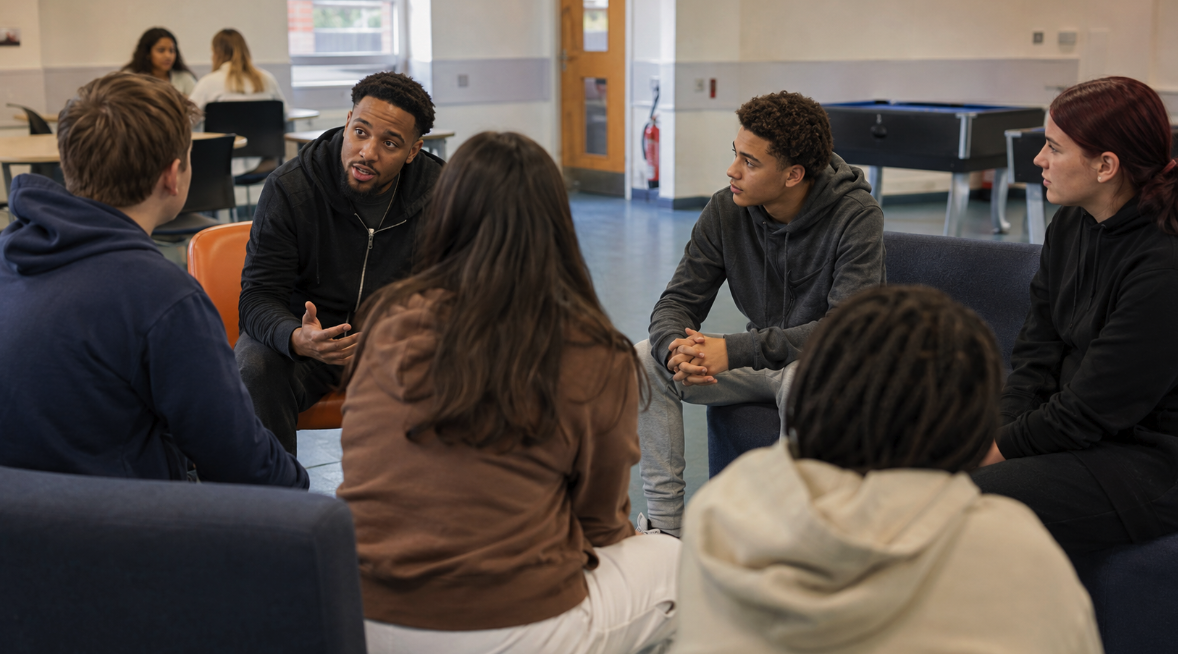
Groupwork is an important part of effective youth work, giving young people opportunities to learn, participate, build relationships and develop through shared experiences. This online course is designed for youth workers and others who plan, facilitate or support group activities with young people.
This free course explores purposeful groupwork from initial planning through to evaluation and improvement. It covers group development, facilitation skills, participation, group dynamics, SEND inclusion, conflict, peer influence, safeguarding responsibilities, evidence gathering and reflective practice.
Watch the course trailer

Captions are available in the player (CC). The video plays from YouTube, which only loads when you press play.
Why Take This eLearning Course?
Effective groupwork requires more than bringing young people together for an activity. Practitioners need to understand how groups develop, how relationships and influence affect participation, and how to create conditions that are purposeful, inclusive and safe. This course supports a considered approach to planning, facilitation and review.
This course will help you to:
- Plan group activities around clear aims and intended outcomes.
- Create meaningful opportunities for young people to participate and influence their experience.
- Recognise how group behaviour may change as relationships develop.
- Adapt your facilitation style to the needs and development of the group.
- Encourage quieter members to participate without placing them under unnecessary pressure.
- Identify unequal participation, exclusion and negative peer influence.
- Make group activities more accessible and inclusive for young people with SEND.
- Respond calmly and proportionately when disagreement or conflict develops.
- Recognise when welfare or safeguarding concerns require recording, reporting or escalation.
- Use feedback, observation and reflection to strengthen future groupwork.
Learning Outcomes
By the end of this course, you will be able to:
- Define groupwork and explain its purpose, benefits and limitations in youth work.
- Explain how youth work values influence group planning and facilitation.
- Describe the stages of Tuckman’s model and recognise behaviours associated with group development.
- Select appropriate facilitation approaches for different stages and group situations.
- Apply communication, observation, questioning and boundary-setting skills during groupwork.
- Identify patterns of influence, belonging, exclusion and participation within groups.
- Describe appropriate adaptations that can support young people with SEND.
- Recognise common causes and early signs of conflict and respond using practical de-escalation approaches.
- Explain how higher levels of risk or vulnerability can affect group composition, supervision and safeguarding decisions.
- Evaluate groupwork using aims, outcomes, participant evidence, records and facilitator reflection.
Groupwork in Youth Work Practice Course Outline
The course is organised into six modules, moving from the foundations of purposeful groupwork through group development, facilitation, inclusion and conflict management to evaluation and continuous improvement.
Module 1: Foundations and Purposeful Groupwork
Learners will explore what groupwork means in youth work and how planned shared activity can support learning, participation, relationships and personal and social development. The module considers both the potential benefits and limitations of working with groups, including peer learning, shared experiences, conflict, exclusion and negative influence. Learners will examine how youth work values such as voluntary participation, respect, inclusion, voice and empowerment should shape facilitation. They will also consider how clear aims, knowledge of participants, suitable activities, resources and review methods contribute to purposeful groupwork.
Module 2: Understanding Group Development
Learners will examine Tuckman’s forming, storming, norming and performing stages as a practical framework for observing how groups may develop. They will consider behaviours that can emerge as members become familiar with one another, including uncertainty, dependence on the facilitator, disagreement, boundary testing, cooperation and increasing independence. The module explains how facilitators can adapt the amount of direction, reassurance and shared responsibility they provide at different stages. It also considers factors such as attendance, changing membership, friendships, confidence, the physical environment, time pressures and events outside the group that may affect development.
Module 3: Core Facilitation Skills and Participation
Learners will develop their understanding of the preparation, communication, listening, questioning, observation, summarising, time management and professional boundary skills required for effective facilitation. The module explains how shared expectations can be developed with young people while maintaining boundaries arising from safeguarding duties, organisational procedures and professional responsibilities. Learners will consider practical ways to encourage quieter participants, including paired activities, thinking time, varied methods of contribution and sensitive invitations to participate. The module also explores the benefits of co-facilitation for complex groups and the importance of agreeing clear roles, communication arrangements and debriefing responsibilities.
Module 4: Group Dynamics and Inclusive Participation
Learners will explore group dynamics as changing patterns of relationships, influence and interaction, including informal leadership, alliances, belonging and exclusion. They will learn to identify signs of unequal participation and negative peer influence, such as dominant voices, closed cliques, pressure to conform, ridicule, bullying and reinforcement of unsafe behaviour. The module examines adaptations that can support young people with special educational needs and disabilities, including accessible communication, predictable routines, environmental adjustments, processing time and changes to group arrangements. Learners will also consider how flexible participation methods and responsive support can remove avoidable barriers while maintaining respectful expectations.
Module 5: Conflict, Risk and Safeguarding in Groups
Learners will examine common causes and early signs of conflict, including misunderstandings, competing views, perceived unfairness, existing peer disputes and challenges to boundaries. They will consider practical responses such as reducing escalation, referring back to group agreements, separating disagreement from personal criticism, pausing activities and changing the format where necessary. The module also explores the additional risks involved when grouping young people with higher levels of vulnerability or risk, including bullying, intimidation, harmful peer influence and peer contagion. Learners will distinguish routine group conflict from welfare or safeguarding concerns and consider factual recording, prompt reporting, organisational procedures and appropriate escalation.
Module 6: Evaluating and Improving Groupwork
Learners will consider how successful groupwork should be assessed against its original aims, intended outcomes and the needs of participants rather than attendance or enjoyment alone. The module explores simple ways to gather evidence, including observation, reflective questions, verbal or anonymous feedback, attendance information, engagement records and agreed goals. Learners will examine how facilitator reflection can identify patterns in participation, inclusion, group dynamics, safety and unexpected issues and turn those observations into practical improvements. The module also introduces the role of organisational standards and the National Youth Agency Quality Mark in supporting structured reflection and wider quality improvement.
Target Audience
This course is suitable for:
- Youth workers and youth support workers.
- Staff working in community youth projects and services.
- Volunteers supporting structured activities with young people.
- Practitioners who facilitate groups, workshops or youth programmes.
- Team leaders and supervisors responsible for the quality of group-based youth work.
- Staff who want to strengthen inclusive, safe and purposeful group facilitation.
No previous specialist knowledge is required.
FAQ
Who is this course suitable for?
The course is suitable for youth workers, support workers, volunteers and other practitioners who plan, deliver or support group activities with young people. It is also useful for those who supervise or review group-based youth work.
Do I need any previous experience?
No previous specialist knowledge is required. The course introduces core groupwork principles while also providing practical guidance that can support practitioners who already have some experience of facilitating young people.
What will I learn on this groupwork in youth work course?
You will learn how to plan purposeful groupwork, understand stages of group development, facilitate participation, recognise group dynamics, support inclusion, respond to conflict and risk, and evaluate the effectiveness of sessions.
Will this course help with day-to-day youth work practice?
Yes. The course focuses on situations that practitioners may encounter when planning and facilitating groups, including managing different levels of participation, adapting activities, responding to disagreement and reviewing whether a session achieved its aims.
Does the course cover practical facilitation skills?
Yes. It covers preparation, communication, active listening, questioning, observation, summarising, managing time, setting boundaries, encouraging participation and adapting your approach as the group develops.
How does the course address inclusion and SEND?
The course considers ways to remove avoidable barriers to participation, including accessible communication, predictable routines, environmental adjustments, additional processing time and appropriate changes to group size, activities or support. It also emphasises responding to individual needs rather than making assumptions based on a diagnosis.
Does the course cover conflict, peer influence and safeguarding responsibilities?
Yes. Learners explore causes and signs of conflict, practical de-escalation approaches, negative peer influence and risks that may arise within particular groupings. The course also explains when concerns should move beyond routine facilitation and be recorded, reported or escalated through organisational safeguarding procedures.
How long does the course take?
The course is self-paced and usually takes around 1 hour to complete.
Will I receive a certificate?
Yes. A certificate is issued after successful completion.
Developing effective groupwork skills can help practitioners create structured environments in which young people have genuine opportunities to participate, learn and build positive relationships. This course provides a practical foundation for planning, facilitating and reviewing groupwork in a way that is responsive, inclusive and focused on meaningful outcomes.
Enrol now to build your understanding of groupwork in youth work practice.