This Parenting a Child with ADHD course is designed for parents and carers who want a clear, practical introduction to ADHD in children and young people. It explains how ADHD can affect attention, impulsivity, activity levels, emotions, learning, sleep, friendships and everyday family life.
This free course covers ADHD-informed parenting principles, practical tools for home routines, emotional regulation, working with schools and understanding support routes, including NHS pathways, SEN support and EHCPs where these may be relevant.
Why Take This eLearning Course?
Parenting a child with ADHD can be rewarding, but it can also bring daily challenges around routines, behaviour, emotions and school expectations. This eLearning course helps parents and carers understand ADHD-related needs and use practical, consistent strategies that support calmer family life and better communication with schools and services.
This course will help you to:
- Understand how ADHD may present at different ages
- Recognise strengths as well as areas of need
- Respond more confidently to organisation, sleep and routine difficulties
- Use ADHD-informed approaches rather than relying on repeated correction
- Build clearer routines, boundaries and expectations at home
- Support emotional regulation and reduce conflict during difficult moments
- Identify when extra mental health or professional support may be needed
- Work more effectively with teachers, SENCOs and school staff
- Understand UK support routes, including parent programmes and local services
- Create a realistic family plan that supports consistency across caregivers
Learning Outcomes
By the end of this course, you will be able to:
- Define ADHD and describe its common features in children and young people
- Explain how ADHD can affect learning, behaviour, friendships and family routines
- Identify co-existing difficulties that may affect parenting approaches
- Describe the UK assessment, diagnosis and support pathway at a high level
- Apply ADHD-informed parenting principles to everyday family situations
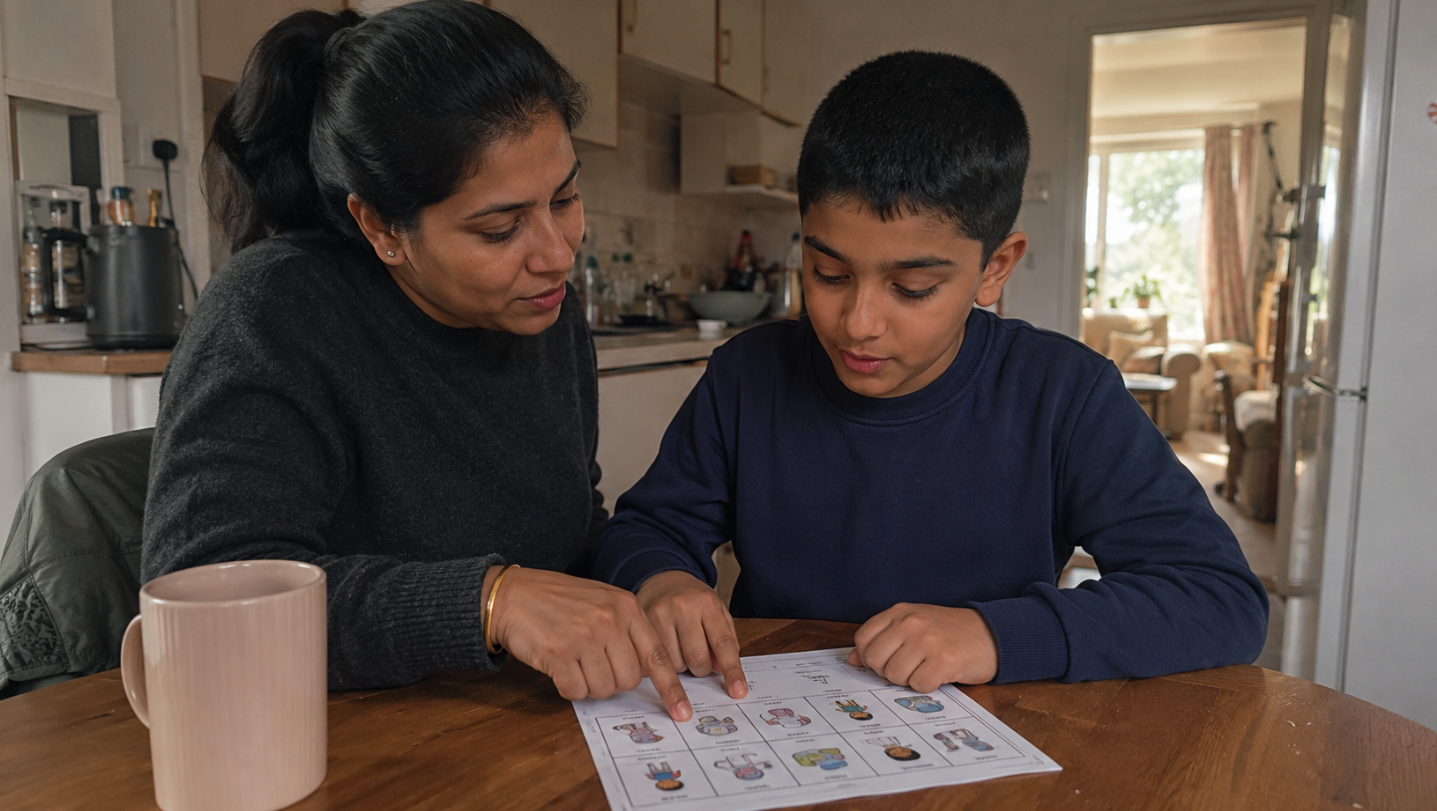
- Use practical strategies such as visual supports, routines and short prompts
- Explain how to support emotional regulation and repair after conflict
- Identify useful school adjustments and ways to speak with the SENCO
- Describe parent programmes and reputable UK support routes
- Outline a simple family plan for routines, rules and support
This course is structured around understanding ADHD, using practical strategies at home, supporting emotions, working with schools and planning for the future. It is designed to give parents and carers usable knowledge that can be applied in everyday family life.
Parenting a Child with ADHD Course Outline
Module 1: Understanding ADHD in Children and Young People
Learners will explore what ADHD is and how inattention, hyperactivity and impulsivity may appear at different ages. This module also looks at how ADHD can affect organisation, sleep, schoolwork, friendships and family routines, while encouraging a strengths-based view that recognises difference as well as difficulty. Learners will also consider common co-existing needs, including emotional dysregulation, anxiety, low mood and challenging behaviour.
Module 2: UK Assessment, Diagnosis and Support Pathways
Learners will understand what an ADHD assessment or diagnosis can help clarify and how it may support shared planning between home, school and professionals. This module introduces common NHS support options, including psychoeducation, behavioural approaches, talking therapies and medication at a general level. It also explains when parents and carers may need to seek further help through school, GP, CAMHS or community routes if concerns increase.
Module 3: ADHD-Informed Parenting Principles
Learners will consider why traditional approaches may be less effective when a child has executive-function difficulties. This module focuses on adapting expectations, using connection first, setting clear boundaries, staying consistent and applying predictable consequences. Learners will also look at scaffolding independence and identifying common triggers such as fatigue, hunger, overstimulation and transitions.
Module 4: Practical Tools for Home
Learners will examine everyday strategies that can make routines more manageable, including morning and evening checklists, visual timetables, timers, task chunking and giving one instruction at a time. This module also covers short prompts, choices, practice runs, immediate feedback and ADHD-friendly rewards and consequences. Learners will consider how to reduce conflict during common hotspots such as homework, bedtime and leaving the house.
Module 5: Emotions, Meltdowns and Self-Regulation
Learners will understand emotional dysregulation and how it can drive behaviour that may appear challenging. This module explains how to use calm-down plans, co-regulation, de-escalation language, safe spaces and repair after conflict. Learners will also explore how to teach emotional skills when a child is calm and how to recognise when additional mental health support may be needed alongside ADHD support.
Module 6: Working with Nursery, School and the Local Authority
Learners will look at how to speak with school about a child’s needs, including teacher meetings and SENCO involvement before or after diagnosis. This module covers common school adjustments such as seating choices, movement breaks, chunked tasks, prompts, visual supports and exam access arrangements where appropriate. Learners will also understand the basics of EHCPs and how home-school communication tools can support consistent planning.
Module 7: Parent Programmes and Wider Support
Learners will be introduced to structured parent programmes and ADHD-specific approaches used in the UK. This module explains what families may learn through parent programmes, such as understanding symptoms, improving routines, strengthening the parent-child relationship and working with school. Learners will also consider reputable UK support routes and how to evaluate online advice safely.
Module 8: Growing Up, Transitions and Parent Wellbeing
Learners will explore how ADHD-related needs can change during adolescence as demands around independence, relationships, schoolwork and risk increase. This module looks at building independence safely through responsibility ladders, organisation coaching and collaborative problem-solving. It also considers parent and carer stress, burnout and self-care, before guiding learners to outline a simple family plan based on key routines, rules and supports.
Target Audience
This course is suitable for:
- Parents of children or young people with ADHD
- Carers supporting a child with diagnosed or suspected ADHD
- Foster carers, kinship carers and guardians
- Family members who want to understand ADHD-informed support
- Parents preparing to work more closely with school or local services
- Adults seeking practical strategies for home routines and emotional support
No previous specialist knowledge is required.
FAQ
Who is this course suitable for?
This course is suitable for parents and carers who are supporting a child or young person with diagnosed or suspected ADHD. It is also useful for family members who want to better understand ADHD-related needs and practical support at home.
Do I need any previous experience?
No. The course is introductory and explains key ideas in clear, practical language. You do not need previous knowledge of ADHD, SEN support or parenting programmes.
What will I learn on this course?
You will learn what ADHD is, how it can affect children and young people, and how to use ADHD-informed parenting approaches. The course covers routines, communication, emotional regulation, school support, UK pathways and family planning.
Will this course help with day-to-day practice?
Yes. The course focuses on practical situations such as mornings, bedtime, homework, leaving the house, meltdowns, instructions, rewards and working with school. It is designed to help parents and carers apply learning in everyday family life.
Does this ADHD parenting course cover practical skills?
Yes. It includes practical strategies such as visual supports, one-step instructions, timers, calm-down plans, scaffolding, short prompts, transition planning and shared home-school communication tools.
Does it cover relevant responsibilities or good practice?
Yes. The course explains how parents and carers can work with schools, SENCOs, NHS routes and local support services. It also introduces SEN support and EHCPs where these may be relevant to a child’s level of need.
How long does the course take?
The course is self-paced and usually takes around 1 hour to complete.
Will I receive a certificate?
Yes. A certificate is issued after successful completion.
This course provides a clear and supportive introduction to parenting a child with ADHD. It helps parents and carers understand behaviour through an ADHD-informed lens and develop practical, consistent strategies for home, school and family life.
Enrol now to build your understanding of parenting a child with ADHD.