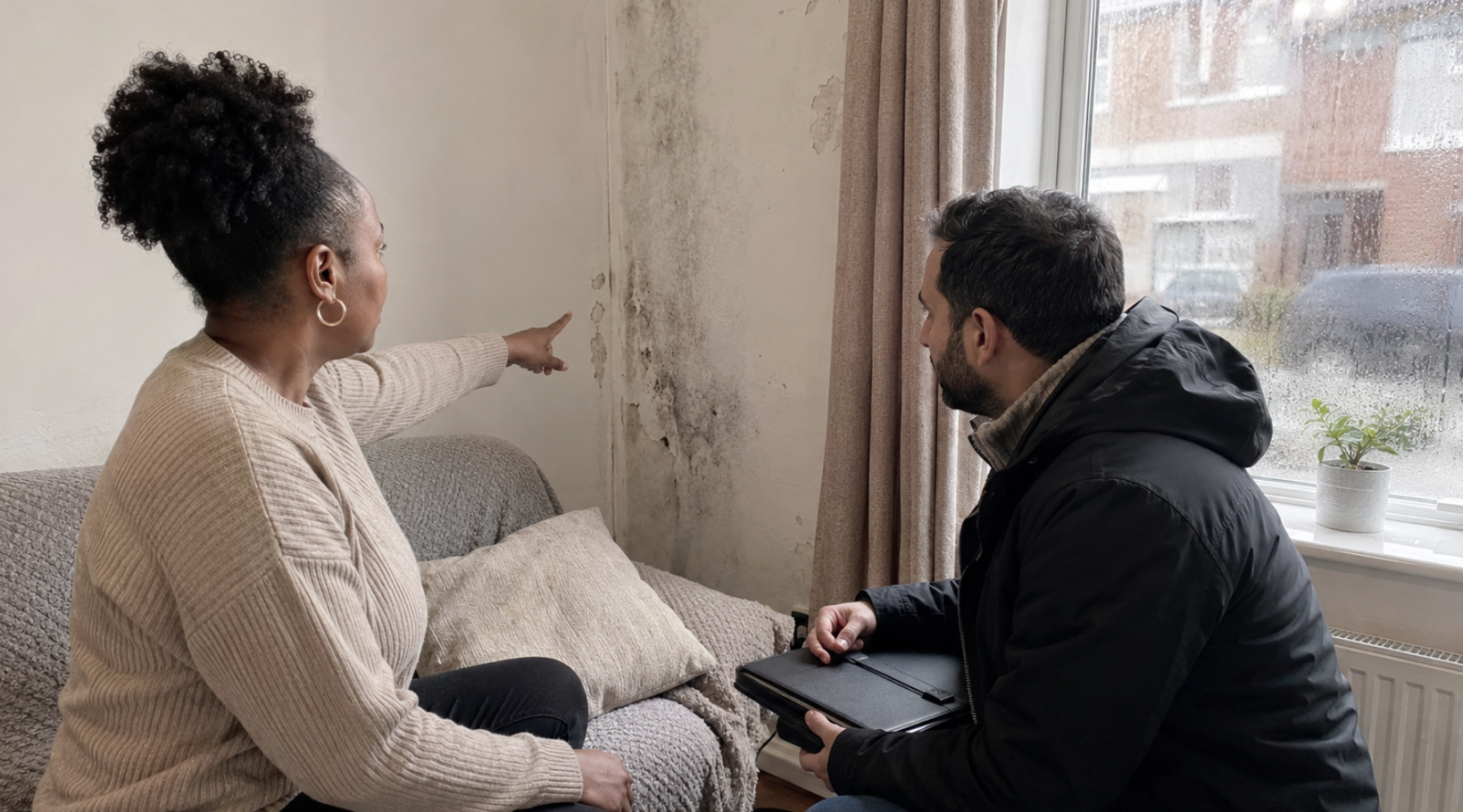
This Damp, Mould and Housing Health course is designed for housing professionals, repairs teams, support workers and other frontline staff who may receive reports of poor housing conditions. It explains why damp and mould require a prompt, respectful and person-centred response, particularly where household circumstances increase the risk of harm.
This free course covers common causes and health effects, relevant housing responsibilities in England, Awaab’s Law timescales, the revised Housing Health and Safety Rating System, effective triage, inspection, escalation, communication and follow-up. It also clarifies professional boundaries and the difference between making a home temporarily safe and resolving the underlying cause.
Why Take This eLearning Course?
Damp and mould cases can involve property defects, health concerns, legal duties and complex household needs. This course supports staff to recognise potential risks, gather useful information and coordinate an appropriate response without blaming tenants, making unsupported diagnoses or acting beyond their competence.
This course will help you to:
- Recognise common forms and possible causes of damp and mould
- Understand how poor housing conditions can affect health and wellbeing
- Identify household circumstances that may increase the risk of harm
- Respond appropriately when a potential housing hazard is reported
- Apply person-centred principles when assessing urgency
- Understand key duties affecting social and private rented housing
- Recognise when specialist assessment or emergency escalation is required
- Communicate clearly and respectfully with tenants
- Maintain accurate records, handovers and progress updates
- Support effective follow-up and organisational learning
Learning Outcomes
By the end of this course, you will be able to:
- Define key terms associated with damp, condensation, mould and water entry
- Describe common property defects and sources of indoor moisture
- Explain the possible physical, emotional and social effects of damp and mould
- Identify people and households that may face increased harm
- Outline relevant housing duties, regulatory expectations and statutory timescales
- Explain how HHSRS hazards are assessed and categorised
- Gather and record information needed for effective triage
- Distinguish routine action from specialist or emergency escalation
- Describe the stages involved in inspection, making safe and resolving causes
- Explain the importance of accessible communication, follow-up and redress
Damp, Mould and Housing Health Course Outline
The course is organised into six modules. It progresses from the causes and effects of damp and mould through legal responsibilities, hazard assessment, triage, inspection, remedial action, communication and case follow-up.
Module 1: Understanding Damp, Mould and Housing Health
Learners will examine the meaning of dampness, condensation, mould growth, penetrating damp, rising damp, leaks and water ingress. The module explains how building defects, cold surfaces, heating, insulation, ventilation and normal household activities can interact. It also explores possible respiratory, physical, emotional and social effects, while clarifying that housing staff should record concerns rather than diagnose illness. Learners will consider how age, pregnancy, health conditions, disability, mobility, financial hardship, time spent at home and communication needs may increase the potential for harm.
Module 2: Housing Duties and Awaab’s Law
Learners will explore responsibilities under the Homes (Fitness for Human Habitation) Act 2018 and the landlord’s continuing duty to keep relevant rented homes fit for occupation. The module explains Awaab’s Law Phase 1 requirements for registered providers of social housing in England, including emergency investigation and safety work within 24 hours, damp and mould investigations within 10 working days, written summaries, safety work, preventative action and alternative accommodation. It also covers the planned expansion of Awaab’s Law and distinguishes current social housing requirements from duties and enforcement arrangements in the private rented sector.
Module 3: Hazard Assessment, Regulation and Professional Boundaries
Learners will develop an understanding of the revised Housing Health and Safety Rating System and its risk-based approach to assessing residential hazards. The module explains the revised hazard groups, harm descriptions, scoring bands and the difference between Category 1 and Category 2 hazards. It also outlines local authority enforcement routes, the Regulator of Social Housing’s expectations for stock records, physical checks, repairs and tenant communication, and forthcoming competence requirements. Learners will identify which activities may fall within a frontline role and when formal assessment, technical diagnosis, legal judgement or specialist remediation must be escalated.
Module 4: Reporting, Awareness and Person-centred Triage
Learners will consider the information needed when a damp or mould concern is first reported, including the location and extent of the problem, property history, household needs, reported symptoms, access arrangements and communication preferences. The module explains how a landlord may become aware of a potential hazard through telephone calls, digital reports, visits, contractors, third parties or another organisational team. Learners will examine person-centred triage, emergency indicators, Awaab’s Law thresholds and the need to review priorities when circumstances change. It also covers accurate case records, handovers, appointments, referrals and accessible tenant updates.
Module 5: Inspection, Safe Action and Resolving the Cause
Learners will explore the elements of a thorough damp and mould inspection, beginning with the tenant’s account and progressing through systematic internal and external checks. The module explains the limitations of remote evidence and identifies situations requiring specialist advice, safe systems of work or controls for hidden contamination. Learners will distinguish immediate measures used to make an area safe from the longer-term work needed to remove moisture, repair defects and prevent recurrence. The module also outlines when alternative accommodation may be required, how suitability should be assessed and why the original property must continue to be investigated and repaired.
Module 6: Communication, Support, Follow-up and Redress
Learners will examine how respectful, clear and accessible communication supports effective housing responses. The module covers listening without blame, explaining decisions and timescales, adapting communication and providing appropriate health, welfare or safeguarding signposting without delaying repairs. Learners will consider how completed work should be checked, why follow-up inspections are important and how recurring problems may reveal incomplete repairs or wider stock issues. The module concludes by distinguishing repair reports from complaints and explaining how complaints, redress routes and case reviews can improve services, staff competence, contractor management and preventative maintenance.
Target Audience
This course is suitable for:
- Housing officers and tenancy management staff
- Repairs, maintenance and property services teams
- Customer service, complaints and contact-centre staff
- Support workers, advocates and community-based professionals
- Health and social care workers who may encounter housing-related concerns
- Managers, supervisors and contractors involved in housing responses
No previous specialist knowledge is required.
FAQ
Who is this course suitable for?
The course is suitable for professionals who receive, assess, inspect, manage or support responses to damp and mould concerns. This includes housing staff, repairs teams, support workers, managers and frontline professionals who may identify poor housing conditions during their work.
Do I need any previous experience?
No previous specialist knowledge is required. The course introduces the main terminology, risks, responsibilities and response processes in clear language. It is suitable for new starters as well as experienced staff who need to refresh or update their understanding.
What will I learn on the Damp, Mould and Housing Health course?
You will learn about the causes and effects of damp and mould, people who may face increased harm, relevant housing duties, Awaab’s Law timescales, HHSRS assessment, person-centred triage, inspections, escalation, communication, follow-up and complaints.
Will this course help with day-to-day practice?
Yes. The course explains how to receive reports, identify relevant household information, record observations, assess possible urgency, arrange appropriate referrals and provide clear updates. It also highlights common service failures that can delay action or leave underlying defects unresolved.
Does the course cover practical skills?
The course covers practical workplace skills such as gathering information, recording conditions, recognising emergency indicators, supporting inspections, escalating specialist concerns and checking that action has been completed. It does not qualify learners to undertake formal HHSRS assessments, diagnose complex building defects or carry out specialist mould removal.
Does it cover relevant housing responsibilities and good practice?
Yes. The course introduces the Homes (Fitness for Human Habitation) Act 2018, Awaab’s Law Phase 1, the Housing Health and Safety Rating System, local authority enforcement routes and the Regulator of Social Housing’s consumer standards. It also explains the importance of checking which legal requirements apply to the property, tenure and date of the report.
How does the course address tenants’ health concerns?
The course explains how housing staff can record reported symptoms, consider household circumstances and advise people to contact an appropriate healthcare professional. It makes clear that housing action should continue without waiting for medical evidence and that staff should not diagnose illness or decide whether mould caused a health condition.
Does the course explain when alternative accommodation may be needed?
Yes. Learners will consider when a social landlord may need to provide suitable alternative accommodation because a home cannot be made safe within an applicable emergency or safety-work deadline. The course also explains that arrangements must reflect the household’s circumstances and that different procedures may apply to other tenures.
How long does the course take?
The course is self-paced and usually takes around 1 hour to complete.
Will I receive a certificate?
Yes. A certificate is issued after successful completion.
This course provides a structured introduction to identifying and responding to damp, mould and housing health concerns. It supports informed decisions, timely escalation and respectful communication while helping staff understand the limits of their role and the importance of resolving underlying property defects.
Enrol now to build your understanding of damp, mould and housing health.