The Managing Violence and Aggression at Work course is designed for health and social care workers, managers and other frontline employees who may encounter abuse, threats or aggressive behaviour during their work. It explains how to recognise risk, respond safely and contribute to effective workplace prevention arrangements.
This free course covers legal responsibilities, warning signs, de-escalation, emergency action, lone-working precautions, incident reporting, employee wellbeing, risk assessment and zero-tolerance policies. It emphasises that violence and aggression should never be accepted as a normal part of frontline work.
Why Take This eLearning Course?
Violence and aggression can affect employees’ physical safety, psychological wellbeing and confidence at work. This training supports a calm, proportionate and safety-focused response while helping learners understand the limits of their role and the importance of following local procedures.
This course will help you to:
- Recognise physical, verbal, threatening and online forms of work-related abuse.
- Understand the responsibilities of employers, employees and managers.
- Identify early signs that tension or aggression may be increasing.
- Carry out a dynamic check of immediate risks and available escape routes.
- Use calm communication and active listening appropriately.
- Maintain safe posture, personal space and positioning.
- Recognise when de-escalation is unsafe or no longer effective.
- Follow safer withdrawal, alarm and emergency arrangements.
- Record and report incidents clearly and accurately.
- Contribute to risk assessments and improved workplace controls.
Learning Outcomes
By the end of this course, you will be able to:
- Define work-related violence and aggression.
- Describe key employer duties under health and safety law.
- Explain employee responsibilities and professional role boundaries.
- Distinguish between physical violence, verbal abuse, threats, harassment and stalking-related behaviour.
- Identify changes in speech, behaviour and body language that may indicate rising tension.
- Apply appropriate de-escalation communication techniques.
- Decide when to continue an interaction, withdraw or escalate the response.
- Outline emergency precautions for frontline, lone and community work.
- Produce a factual incident record and identify suitable reporting routes.
- Explain how risk assessment, management action and workplace policies support prevention.
Managing Violence and Aggression at Work Course Outline
The course is organised into eight modules, progressing from the definition and recognition of workplace violence through to prevention, reporting, risk assessment and organisational responsibilities.
Module 1: Responsibilities, Procedures and Role Boundaries
Learners will define work-related violence and aggression, including physical attacks, verbal abuse, threatening behaviour and abuse through telephone, email, messaging or social media. The module explains employers’ duties to assess foreseeable risks and provide suitable controls, information, training and supervision. It also covers employee responsibilities, the correct use of safety equipment, prompt reporting of incidents and near misses, and the importance of working within authorised roles and levels of competence. Learners will consider how to locate local policies, activate alarms and contact managers, colleagues, security teams or emergency services.
Module 2: Forms of Violence and Aggression
Learners will identify physical violence, including hitting, kicking, pushing, grabbing, biting, spitting, throwing objects, using weapons and causing serious property damage. They will examine verbal abuse, discriminatory language, intimidation, direct threats and abusive remote contact. The module also explains how stalking, following, monitoring and repeated unwanted communication may form a concerning pattern. Examples from care, healthcare, education, retail and community settings demonstrate how local procedures, risk assessments and safety controls should guide the response.
Module 3: Warning Signs, Triggers and Dynamic Risk Checks
Learners will recognise changes in speech, tone, demands and willingness to listen that may indicate rising tension. They will consider body-language signals such as clenched fists, pacing, staring, sudden movements, invasion of personal space and blocked exits, while avoiding assumptions based on a single behaviour. The module explores common pressures such as waiting, uncertainty, limits, distress, substance use, noise, crowding and lack of privacy. Learners will also practise a dynamic check of exits, support, environmental hazards, behaviour and immediate danger to decide whether it remains safe to continue.
Module 4: Communication and De-escalation
Learners will explore how calm words, short explanations and active listening may reduce tension while maintaining personal safety. The module covers steady tone, visible hands, relaxed posture, controlled movement, appropriate personal space and safe positioning near an accessible exit. Learners will consider how realistic choices, clear boundaries and practical solutions can support cooperation. They will also identify actions that may increase hostility, including shouting, sarcasm, unnecessary touching, blocking exits, making threats or offering promises that cannot be kept, and understand the limits of de-escalation and physical intervention.
Module 5: Withdrawal, Lone Working and Immediate Danger
Learners will identify when de-escalation is unsafe or ineffective, including situations involving direct threats, attempted assault, weapons, serious property damage, blocked exits or multiple aggressors. They will learn how to end an interaction briefly, create distance and move towards a secure or supported area without unnecessary confrontation. The module explains precautions for lone and community work, including checking visit information, selecting suitable staffing levels, agreeing check-in arrangements and carrying accessible communication equipment. It also covers alarm activation, contacting support, protecting others, calling emergency services and avoiding unauthorised re-entry.
Module 6: Support, Recording and Reporting
Learners will examine the immediate response following an incident, including moving to safety, arranging first aid or medical attention, informing a manager, checking other affected people and preserving available evidence. The module explains how to create a factual incident record containing dates, times, locations, descriptions, spoken words, actions taken, injuries, damage, witnesses and available evidence. Learners will review internal reporting systems, accident records, management and security routes, police reporting and the employer’s responsibility for deciding whether an incident is reportable under RIDDOR. Appropriate follow-up, confidentiality, occupational health support, counselling and workplace adjustments are also covered.
Module 7: Risk Assessment and Control Measures
Learners will define hazards, risks and control measures and apply these terms to workplace violence and aggression. The module considers employees and activities that may require added protection, including lone workers, community visitors, late workers, new starters, trainees, temporary staff and employees handling money or enforcing rules. Learners will explore practical controls such as suitable staffing, secure layouts, lighting, alarms, accessible exits, communication devices, check-in systems, training and clear public information. They will also understand how employee consultation, incident records, assigned actions and regular reviews support an effective violence risk assessment.
Module 8: Zero-Tolerance Policies and Management Action
Learners will understand the purpose and limitations of zero-tolerance policies, including the need to take abuse seriously without requiring employees to confront aggressive people or remain in danger. The module covers clear and accessible behaviour expectations, planned messages and calm reminders supported by consistent workplace procedures. Learners will consider how proportionate enforcement may involve management review, changed contact arrangements, security measures or external reporting. It also explains managers’ responsibilities for fair decision-making, non-blaming staff support, reviewing incident patterns, updating controls and communicating revised safety arrangements.
Target Audience
This course is suitable for:
- Health and social care workers in frontline or public-facing roles.
- Care home, domiciliary care and supported-living employees.
- Healthcare staff and community-based workers.
- Lone workers and employees completing home or community visits.
- Supervisors, team leaders and service managers.
- New starters, temporary workers and volunteers who may encounter challenging situations.
No previous specialist knowledge is required.
FAQ
Who is this course suitable for?
The course is suitable for health and social care workers, managers, lone workers and other frontline employees who may encounter violence, threats, abuse or aggressive behaviour during their work.
Do I need any previous experience?
No. The course introduces the main principles clearly and is suitable for new starters as well as experienced employees who need to refresh their knowledge.
What will I learn on the Managing Violence and Aggression at Work course?
You will learn how to recognise different forms of workplace violence, identify warning signs, use safer communication, assess immediate danger, withdraw appropriately and follow reporting and risk-management procedures.
Will this course help with day-to-day practice?
Yes. The course provides practical guidance that can be applied during public-facing work, care delivery, home visits, telephone contact and other situations where tension or aggressive behaviour may arise.
Does the course cover practical skills?
It covers practical principles such as calm communication, safe positioning, personal space, dynamic risk checks, withdrawal, alarm use and accurate reporting. Any physical intervention techniques require separate role-specific assessment and approved practical training.
Does it cover relevant responsibilities and good practice?
Yes. The course explains employer and employee responsibilities, local procedures, risk assessment, incident reporting, management follow-up and the importance of working within professional role boundaries.
Does the course cover lone and community working?
Yes. Learners will consider visit planning, staffing decisions, check-in systems, communication equipment, missed-contact arrangements and actions to take when required safety precautions are unavailable.
How long does the course take?
The course is self-paced and usually takes around 1 hour to complete.
Will I receive a certificate?
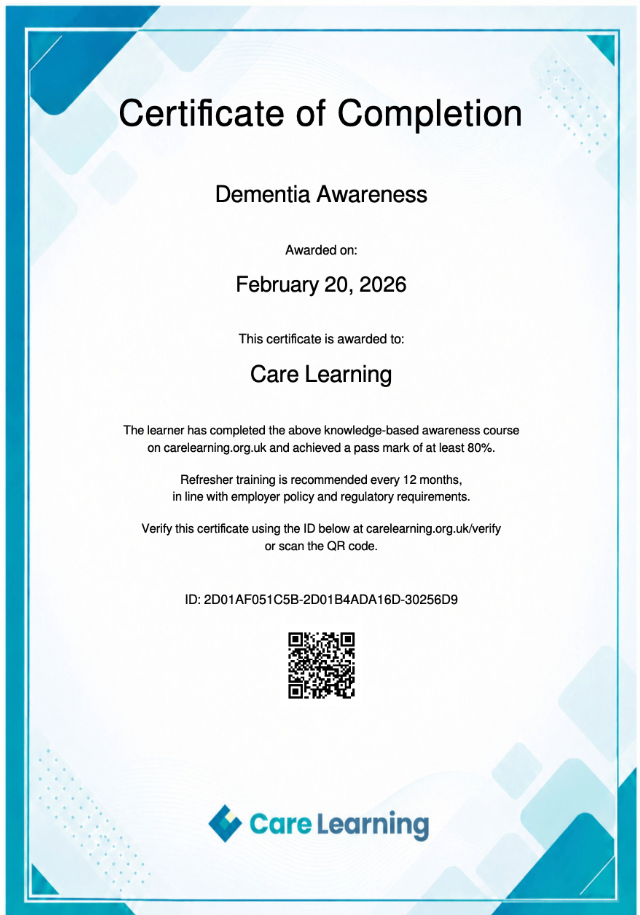
Yes. A certificate is issued after successful completion.
This course provides a clear foundation for preventing and responding to workplace violence and aggression. It helps learners protect themselves and others, follow appropriate procedures and contribute to safer, more supportive working environments.
Enrol now to build your understanding of managing violence and aggression at work.