
This Structured Problem Solving Skills Training Course develops a clear, practical approach to understanding and responding to workplace difficulties. It is suitable for people working across health and social care, housing, education, youth services, charities, community organisations and public services who may contribute to routine service or process improvements.
This free course covers how to define problems accurately, gather relevant evidence, identify possible causes and contributing factors, compare realistic options, test proportionate changes and review the results. It also addresses inclusive communication, information governance, ethical considerations, professional boundaries, escalation and learning from both successful and unsuccessful outcomes.
Why Take This eLearning Course?
Workplace problems are often more complex than they first appear. A structured approach helps you examine what is happening before deciding what action to take, making decisions clearer, more proportionate and easier to review.
This course will help you to:
- Approach workplace difficulties in a clear and organised way.
- Separate reliable evidence from assumptions and first impressions.
- Define problems without building untested causes or solutions into the description.
- Gather relevant information from appropriate people and sources.
- Recognise symptoms, possible causes and contributing factors.
- Compare realistic options before choosing a response.
- Plan proportionate tests with suitable measures and review points.
- Communicate respectfully and involve people appropriately.
- Work within professional, organisational and delegated boundaries.
- Use results, feedback and reflection to improve future problem solving.
Learning Outcomes
By the end of this course, you will be able to:
- Define structured problem solving and explain its purpose and limitations.
- Write a clear, factual and appropriately bounded problem statement.
- Agree a realistic scope and desired outcome for a problem-solving task.
- Identify relevant facts, affected people, information sources and practical constraints.
- Distinguish between visible symptoms, possible causes and contributing factors.
- Generate and compare more than one realistic option.
- Select proportionate tests, measures, approvals and decision points.
- Review results and decide whether to continue, adapt, repeat or stop an approach.
- Apply inclusive communication, ethical practice and information-governance principles.
- Recognise professional boundaries and identify when support or escalation is required.
Structured Problem Solving Skills Course Outline
The course follows a six-module structure, progressing from the foundations of structured problem solving through investigation, testing and review to professional responsibilities, workplace examples and continued skill development.
Module 1: Foundations of Structured Problem Solving
Learners will explore what structured problem solving means and how a deliberate, evidence-based process differs from reacting immediately to a workplace difficulty. The module covers problem definition, evidence gathering, option generation, proportionate action and review. Learners will also consider the benefits of clearer reasoning and decision-making, alongside the limitations of the approach, including uncertainty, incomplete information and the need to remain within professional competence and delegated authority. Practical situations such as routine delays, communication gaps and process problems illustrate where the method can be useful.
Module 2: Defining the Problem and Preparing for Action
Learners will develop a clear starting point for problem-solving work by writing factual problem statements that describe what is happening, where it occurs and its practical effect without assuming a cause or preferred solution. The module explains how to agree realistic boundaries and desired outcomes, recognise authority and resource constraints, and involve relevant people. Learners will also consider how observations, workplace records, process information and appropriate colleagues can provide useful evidence, as well as how simple tools such as notes, process maps, comparison tables and agreed measures can support proportionate decision-making.
Module 3: Analysing Causes, Comparing Options and Testing Solutions
Learners will examine the difference between observable symptoms, possible causes and contributing factors so that visible problems are not mistaken automatically for their underlying explanation. The module covers generating several realistic options, checking them against available resources, responsibilities and organisational requirements, and choosing manageable tests. Learners will consider suitable measures, required approvals, review points and possible unintended effects before examining how results can be compared with the original desired outcome to decide whether an approach should continue, change, be repeated or stop.
Module 4: Quality, Inclusion, Ethics and Professional Boundaries
Learners will consider what good-quality structured problem solving looks like, including reliable evidence, proportionate records and reasoning that others can understand and review. The module addresses accessible and respectful communication, suitable formats, active listening and fair consideration of different perspectives. It also covers legitimate information use, confidentiality, data minimisation, unequal influence and fair involvement. Learners will explore the importance of working within their role and competence and recognising when safeguarding concerns, health and safety matters, clinical decisions, legal issues, financial decisions or specialist technical problems require formal support or escalation.
Module 5: Structured Problem Solving in Different Services
Learners will apply the problem-solving process to realistic examples from health and social care, housing and homelessness, education, early years, youth work, charities, community organisations and public services. Examples include delayed handovers, slow repair or service updates, late-starting group activities and delayed responses to routine enquiries. Across each setting, learners will see how to define the issue, gather proportionate information, identify possible contributing factors, compare options, test manageable changes and review results while keeping safeguarding, legal, clinical, eligibility and specialist decisions within authorised procedures.
Module 6: Common Mistakes, Troubleshooting and Continued Development
Learners will identify common problems such as defining an issue too broadly, treating assumptions as facts, jumping to a preferred solution or testing a change on an unnecessarily large scale. The module explains how to respond when a test does not work by reviewing the original problem statement, checking evidence, reconsidering constraints and selecting a more appropriate next step. Learners will also consider how to stop or adjust unsuccessful approaches, communicate changes, record results and capture learning. Reflection, feedback and repeated practice are explored as ways to strengthen judgement and problem-solving skills over time.
Target Audience
This course is suitable for:
- Health and social care staff involved in routine service improvement.
- Housing and homelessness service teams.
- Education, early years and youth work staff.
- Employees and volunteers in charities and community organisations.
- Public service staff involved in operational or process improvement.
- Team leaders, supervisors and others who contribute to workplace problem solving.
No previous specialist knowledge is required.
FAQ
Who is this structured problem solving course suitable for?
The course is suitable for staff, volunteers, supervisors and others who may need to understand or contribute to routine workplace problem solving. Its examples cover health and social care, housing, education, youth services, charities, community organisations and public services.
Do I need any previous experience?
No specialist problem-solving experience is required. The course introduces the process from the foundations and develops it through practical workplace examples.
What will I learn on this course?
You will learn how to define workplace problems clearly, gather relevant information, distinguish symptoms from possible causes, compare realistic options, plan proportionate tests and review results. The course also covers communication, ethical practice, information governance, professional boundaries and escalation.
Will this course help with day-to-day practice?
Yes. The course focuses on routine workplace difficulties such as delays, communication gaps and inefficient processes. It provides a practical structure for examining these issues and making reasoned decisions within your responsibilities.
Does the course cover practical skills?
Yes. Learners are shown how to create clear problem statements, define scope, gather evidence, compare alternatives, select measures, plan manageable tests and review outcomes. The emphasis is on applying these skills proportionately rather than using unnecessarily complex methods.
Does it cover relevant responsibilities or good practice?
Yes. The course explains the importance of delegated authority, confidentiality, data minimisation, inclusive communication and fair involvement. It also makes clear that structured problem solving does not replace safeguarding procedures, clinical or legal decisions, health and safety requirements or specialist professional responsibilities.
How long does the course take?
The course is self-paced and usually takes around 1 hour to complete.
Will I receive a certificate?
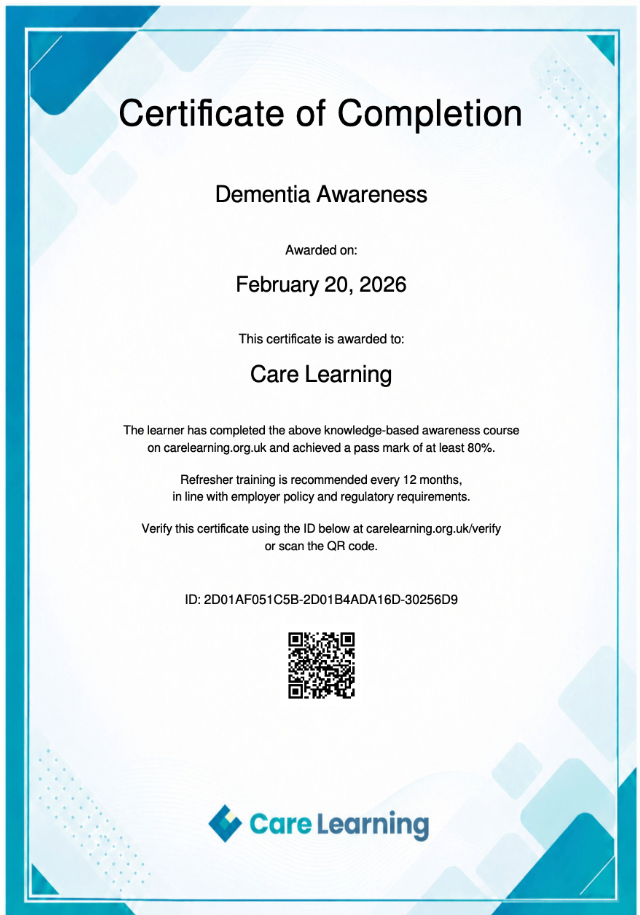
Yes. A certificate is issued after successful completion.
Structured problem solving provides a practical framework for examining workplace difficulties without relying on assumptions or rushing to the first available solution. This course supports clearer reasoning, proportionate action, responsible decision-making and continued learning across a range of workplace settings.
Enrol now to build your understanding of structured problem solving.