This online course is designed for early years practitioners who want to create inclusive environments where children and families feel recognised, respected and able to participate. It explores cultural diversity, belonging and representation, with a practical focus on avoiding assumptions, stereotypes and tokenistic approaches.
This free course covers working respectfully with families, choosing and reviewing inclusive resources, planning meaningful cultural and faith celebrations, responding positively to children’s questions about difference, and addressing stereotypes or exclusion. It also considers relevant safeguarding responsibilities, including the Prevent duty, and how reflective practice can support continuous improvement.
Why Take This eLearning Course?
Children encounter ideas about identity, culture, family and difference from an early age. Thoughtful early years practice can help them develop a secure sense of belonging while learning to approach other people’s experiences with curiosity and respect. This course provides practical guidance for making diversity part of everyday provision rather than limiting it to occasional celebrations or activities.
This course will help you to:
- Create an environment where children and families feel recognised and included.
- Represent different cultures, languages, families, beliefs and experiences more meaningfully.
- Work with parents and carers to understand individual family preferences.
- Reduce stereotypes, assumptions and tokenistic approaches within provision.
- Select books, play resources, images and materials that reflect diversity positively.
- Plan cultural and faith celebrations with greater accuracy and sensitivity.
- Respond confidently to children’s questions about difference.
- Address exclusion, stereotypes and prejudiced comments appropriately.
- Understand how inclusive practice works alongside safeguarding and Prevent responsibilities.
- Review and improve representation across everyday early years practice.
Learning Outcomes
By the end of this course, you will be able to:
- Define cultural diversity, inclusion, belonging, equality, representation and tokenism.
- Explain why belonging, equality and wider cultural experiences matter in early childhood.
- Distinguish meaningful cultural representation from tokenistic practice.
- Identify appropriate ways to learn about children’s family backgrounds, languages, beliefs and preferences.
- Describe how families can contribute to accurate and respectful representation.
- Review early years resources and environments for stereotypes, imbalance and missing representation.
- Plan cultural and faith celebrations using family knowledge and reliable information.
- Respond positively and appropriately to children’s questions and comments about difference.
- Explain how safeguarding and the Prevent duty can be applied without stereotyping culture or faith.
- Identify practical ways to reflect on and improve inclusive practice.
Cultural Celebrations and Diversity in Early Years Course Outline
Module 1: Understanding Diversity, Inclusion and Belonging
Learners will explore the meaning of cultural diversity, inclusion, belonging, equality, representation and tokenism within early years provision. The module considers how children’s family lives, languages, beliefs, relationships and everyday experiences contribute to identity. Learners will examine why children benefit from seeing their own experiences valued while also encountering people and communities beyond their immediate world, and will distinguish ongoing, meaningful representation from superficial or occasional cultural activities.
Module 2: Working Respectfully with Families
Learners will consider how conversations with parents and carers can build a more accurate understanding of children’s cultural backgrounds, home languages, faiths, beliefs and individual preferences. The module explores ways to co-create representation with families through photographs, words, stories, music, objects and everyday experiences while avoiding pressure on families to participate. It also explains why practitioners should avoid assumptions based on a person’s name, appearance, language, religion or cultural background and recognise variation within communities.
Module 3: Creating an Inclusive Early Years Environment
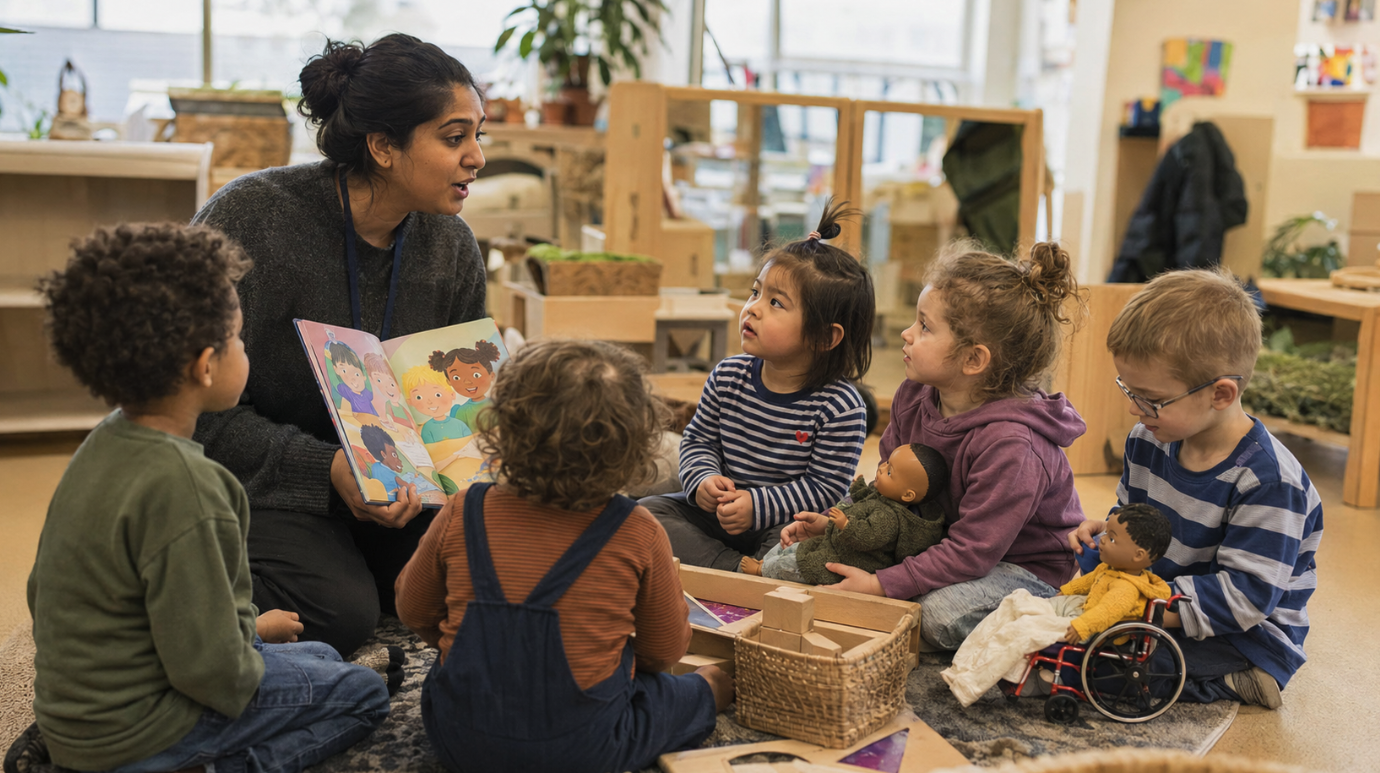
Learners will examine how books, dolls, small-world figures, creative materials, photographs, music and other everyday resources can represent varied families, cultures, abilities and ways of life positively. The module considers how visual environments can help children recognise their own lives while introducing them to experiences different from their own. Learners will also explore how to review provision for missing representation, stereotypes, imbalance and tokenism and use findings to make practical improvements.
Module 4: Planning Meaningful Cultural and Faith Celebrations
Learners will explore how to plan celebrations using both family knowledge and carefully checked information. The module considers cultural and faith practices that may affect areas such as food, clothing, observance, important dates and family routines, while emphasising that individual requirements should always be discussed with families. Learners will also examine how context, accuracy and choice can make celebrations meaningful and how to avoid activities that simplify, stereotype or generalise cultural and faith experiences.
Module 5: Talking with Children About Difference
Learners will consider how to answer young children’s questions about identity and difference in calm, honest and age-appropriate ways. The module provides examples of language that acknowledges children’s observations, uses respectful vocabulary, explains similarities and differences and allows practitioners to admit when information needs to be checked. It also explores appropriate responses to stereotypes, exclusion and prejudiced comments, including supporting children who may have been affected and following setting procedures where concerns need to be recorded or escalated.
Module 6: Safeguarding, Prevent and Reflective Inclusive Practice
Learners will explore the Prevent duty as part of wider safeguarding responsibilities within relevant early years education and childcare settings. The module explains how practitioners can focus on factual safeguarding information without treating culture, race, religion or other characteristics as indicators of risk. Learners will also consider how staff reflection, family feedback and awareness of current inspection expectations can support ongoing improvements to resources, interactions, celebrations, representation and safeguarding practice.
Target Audience
This course is suitable for:
- Early years practitioners and nursery staff.
- Childminders and other early years childcare professionals.
- Nursery room leaders and supervisors.
- Early years managers and setting leaders.
- Teaching and support staff working with younger children.
- Staff or volunteers who contribute to inclusive early years provision.
No previous specialist knowledge is required.
FAQ
Who is this course suitable for?
This course is suitable for people working with young children in nurseries, early years settings and other childcare environments. It is particularly useful for practitioners, childminders, room leaders and managers who want to strengthen inclusive everyday practice and cultural representation.
Do I need any previous experience?
No specialist knowledge of cultural diversity is required. The course introduces key concepts clearly and develops them through practical examples relevant to early years practice.
What will I learn on the Cultural Celebrations and Diversity in Early Years course?
You will learn about inclusion, belonging, representation and tokenism, as well as ways to work with families, review resources, plan meaningful celebrations and respond to children’s questions about difference. The course also introduces relevant safeguarding and Prevent responsibilities.
Will this course help with day-to-day practice?
Yes. The course focuses on decisions practitioners make during everyday provision, including choosing resources, talking with families, responding to children’s questions, planning activities and reviewing how different people and experiences are represented.
Does the course cover practical skills?
The course develops practical approaches that can be applied within early years settings. These include reviewing resources for stereotypes, gathering family information respectfully, planning inclusive celebrations, using appropriate language with children and responding to exclusion or prejudiced comments.
How can early years settings avoid tokenistic cultural celebrations?
The course explains how to move beyond occasional activities based mainly on festivals, food, flags or costumes. It encourages settings to represent different cultures, families, languages and experiences throughout everyday provision and to give celebrations appropriate meaning and context.
Does it cover relevant safeguarding responsibilities and good practice?
Yes. The course considers how inclusive practice connects with safeguarding responsibilities, including the Prevent duty in relevant early years settings. It emphasises factual, proportionate responses to concerns and the importance of following established safeguarding and reporting procedures without making assumptions about culture or faith.
Does the course explain how to work with families respectfully?
Yes. Learners consider how open conversations with parents and carers can help practitioners understand individual languages, beliefs, routines, cultural experiences and preferences. The course also explains why no individual family should be expected to represent an entire cultural or faith community.
How long does the course take?
The course is self-paced and usually takes around 1 hour to complete.
Will I receive a certificate?
Yes. A certificate is issued after successful completion.
Cultural Celebrations and Diversity in Early Years provides a practical foundation for creating environments in which children can recognise their own identities while developing respectful awareness of the wider world. It supports thoughtful work with families, balanced representation and confident responses to children’s natural curiosity about people and difference.
Enrol now to build your understanding of cultural celebrations and diversity in early years.