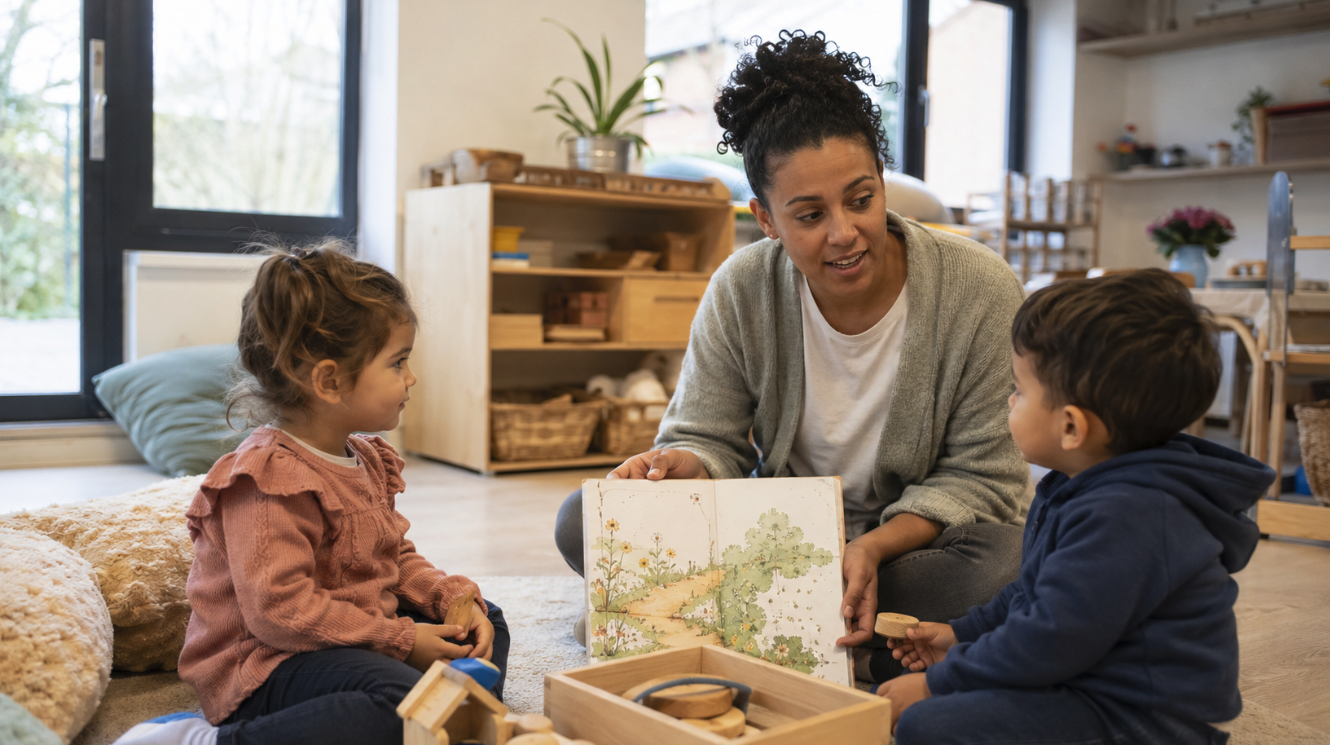
This child language development course is designed for early years practitioners and other professionals who support babies, young children and families. It develops a clear understanding of how speech, language, communication and interaction emerge, why development varies between children and how responsive adults can support progress through everyday experiences.
This free course follows communication development from babies’ earliest signals through first words, sentences, conversations and storytelling. It also covers the Early Years Foundation Stage, inclusive support for bilingual and multilingual children, practical interaction strategies, proportionate observation, respectful work with families and appropriate routes for seeking specialist advice.
Why Take This eLearning Course?
Communication supports children’s relationships, play, emotional expression and learning. Understanding how these abilities develop helps practitioners respond effectively, recognise individual strengths and provide suitable support without relying on rigid comparisons or isolated milestones.
This course will help you to:
- Understand the differences between speech, language, communication and interaction
- Recognise how relationships and everyday experiences support language learning
- Respond more confidently to babies’ early communication signals
- Support vocabulary, sentence development and speech clarity through natural interaction
- Use practical strategies during play, routines, stories and conversations
- Create inclusive communication opportunities for children using different languages
- Consider screen use sensitively when working with children and families
- Observe communication across activities, settings and languages
- Discuss concerns with families clearly and respectfully
- Follow proportionate support, monitoring and referral processes
Learning Outcomes
By the end of this course, you will be able to:
- Define speech, language, communication and interaction
- Explain how children learn language through relationships and everyday experiences
- Describe communication and language within the Early Years Foundation Stage
- Identify factors that can influence individual patterns of development
- Describe pre-linguistic communication, serve-and-return interaction, cooing and babbling
- Explain how first words, vocabulary, sentences and speech clarity develop
- Describe the development of conversation, storytelling and connected speech
- Apply responsive and inclusive language-supporting strategies
- Recognise patterns that may require closer observation or professional advice
- Explain how to record observations, involve families and follow local referral pathways
Child Language Development Course Outline
The course is organised into six modules, progressing from the foundations of communication development to practical support, observation and referral.
Module 1: Understanding Communication and Individual Development
Learners will distinguish between speech, language, communication and interaction, considering how each area contributes to a child’s overall development. The module explains how children learn through warm relationships, shared attention and meaningful everyday experiences, including play, routines, songs, stories and conversation. It also explores Communication and Language as a prime area within the Early Years Foundation Stage and examines how hearing, health, neurodevelopment, multilingual experience, culture and interaction opportunities can influence individual development. Learners are encouraged to consider the child’s complete communication profile rather than judging progress through one skill or milestone.
Module 2: Communication Before First Words
Learners will explore the meaningful ways babies communicate before recognisable words emerge, including crying, facial expressions, eye gaze, body movements, gestures and vocalisations. The module introduces the serve-and-return model and explains how adults can notice a baby’s signal, respond warmly, pause and continue an exchange while respecting signs that the baby needs a break. It also covers the early development of attention, turn-taking and shared interest, together with the role of cooing and babbling in practising sounds, rhythm and social communication.
Module 3: First Words and Early Sentences
Learners will examine how children connect early spoken forms with consistent meanings and how gestures continue to support communication as first words emerge. The module explains the relationship between understanding and expressive vocabulary, including how children learn words through shared attention, repetition and familiar experiences. It follows development into two-word combinations, longer sentences and early grammar, while recognising that errors may reflect active learning. Learners will also consider how speech clarity develops during the toddler years and why unclear speech should not be treated as evidence of limited understanding or ability.
Module 4: Communication from Three to Five Years
Learners will explore how children between three and five begin to use longer sentences and connected speech to describe events, organise ideas and talk about experiences beyond the immediate situation. The module covers conversation skills, asking and answering questions, staying on topic, taking turns and developing stories with an increasingly clear sequence. It also considers growth in vocabulary, grammar and speech sounds, including the continued simplification of some complex words. Learners will examine how communication enables children to participate in play, form relationships, negotiate with others, follow routines and contribute to learning.
Module 5: Practical Strategies for Supporting Language
Learners will understand the adult’s role in responsive communication, including observing before directing, following the child’s focus and responding to words, sounds, gestures, expressions and movements. Practical strategies include commenting, modelling useful language, repeating and expanding a child’s message, offering manageable choices and allowing sufficient time for a response. The module also explains inclusive support for bilingual and multilingual children, emphasising the value of home languages, family knowledge and observation across every language used. It concludes by examining how screen use can affect opportunities for conversation, play and shared attention, and how practitioners can discuss screen routines constructively and without blame.
Module 6: Monitoring Development and Seeking Support
Learners will identify communication patterns that may benefit from closer monitoring, including persistent difficulties with understanding, expression, gesture, interaction, shared attention or speech clarity. The module explains how to gather proportionate observations across activities and settings, recognise strengths, consider hearing and record the effect on everyday participation. It provides guidance on discussing concerns respectfully with families by using specific observations, listening to their knowledge and agreeing manageable next steps. Learners will also understand when to follow local advice or referral routes, the possible involvement of a special educational needs co-ordinator and health professionals, and the limits of the practitioner’s role in assessment and therapy.
Target Audience
This course is suitable for:
- Early years practitioners and nursery staff
- Childminders and early years assistants
- Reception staff and learning support professionals
- Family support and community workers
- Health and social care professionals working with young children and families
- Managers, supervisors and special educational needs co-ordinators seeking a development overview
No previous specialist knowledge is required.
FAQ
Who is this child language development course suitable for?
The course is suitable for people who work with babies, young children or families, particularly in early years, education, family support, health and social care settings. It is also relevant to managers and supervisors who support inclusive communication practice.
Do I need any previous experience?
No previous specialist knowledge is required. The course introduces key concepts clearly and is suitable for both new practitioners and experienced staff who want to refresh or strengthen their understanding.
What will I learn on this course?
You will learn how communication develops from babies’ earliest signals through first words, sentences, conversation and storytelling. You will also explore responsive interaction, multilingual development, practical support strategies, observation and referral processes.
Will this course help with day-to-day practice?
Yes. The course connects development knowledge with everyday situations such as play, mealtimes, personal care routines, stories, group activities and conversations with families.
Does the course cover practical communication skills?
Yes. It explains how to follow a child’s lead, comment and model language, repeat and expand messages, offer choices, pause for responses and create natural opportunities for interaction.
How does the course support bilingual and multilingual children?
The course explains why a child’s communication should be considered across every language they hear and use. It promotes continued use of home languages, partnership with families and inclusive opportunities that add to rather than replace the child’s existing language experience.
Does the course cover relevant responsibilities and good practice?
Yes. It covers proportionate observation, factual recording, respectful communication with families, consent and information-sharing procedures, professional boundaries and the importance of following local support and referral pathways.
Does the course explain when to seek further advice?
Yes. You will learn to consider the pattern, persistence and everyday effect of a communication difficulty. The course explains how practitioners can involve families, apply suitable strategies, review progress and seek advice through local services when appropriate.
How long does the course take?
The course is self-paced and usually takes around 1 hour to complete.
Will I receive a certificate?
Yes. A certificate is issued after successful completion.
This course provides a structured and practical introduction to child language development. It supports informed observation, responsive interaction and inclusive practice, helping professionals create communication opportunities that reflect each child’s strengths, needs and circumstances.
Enrol now to build your understanding of child language development.