The Schemas in Early Years Course is designed for early years practitioners who want to understand the repeated patterns of play that young children use to explore ideas and make sense of the world. It explains how recognising schematic play can support child-centred learning, sustained engagement and responsive early years practice.
This free course explores common schemas, including transporting, trajectory, rotation, positioning, connecting, enveloping and enclosure. Learners will develop practical skills in observation, planning, adapting provision, supporting behaviour and regulation, recording learning and working in partnership with families.
Why Take This eLearning Course?
Repeated actions in play can sometimes appear inconvenient, puzzling or without purpose. Understanding schemas helps practitioners look beneath the activity, recognise the learning taking place and provide suitable opportunities that build on each child’s interests.
This course will help you to:
- Recognise repeated patterns of action and thought in children’s play
- Understand how schemas support children in constructing knowledge
- Interpret familiar play behaviours with greater confidence
- Plan resources and experiences around children’s current interests
- Extend play without taking over or interrupting the child’s enquiry
- Respond constructively when schematic behaviour presents practical challenges
- Create richer indoor and outdoor learning environments
- Use observations to identify meaningful next steps
- Communicate clearly with colleagues, parents and carers
- Support children’s involvement, development and emotional regulation
Learning Outcomes
By the end of this course, you will be able to:
- Define schemas and explain the purpose of schematic play
- Identify common schemas through real examples of children’s behaviour
- Recognise repetition, persistence, variation and underlying meaning in play
- Distinguish possible schematic play from routine, comfort or sensory needs
- Use proportionate observation methods without applying fixed labels
- Select prompts and open-ended resources that extend different schemas
- Adapt environments and routines to support repeated exploration
- Link schema observations to assessment, planning and review
- Describe the developmental learning that may occur through schemas
- Share observations and practical ideas effectively with families
Schemas in Early Years Course Outline
Module 1: Understanding Schemas and Schematic Play
Learners will explore what schemas are and how repeated patterns of action and thought help young children investigate movement, objects, space and relationships. The module explains how children construct understanding through active play and why repetition, variation, persistence and deep involvement can indicate purposeful learning. It also considers how recognising schemas supports child-centred provision, engagement, development and respectful adult responses.
Module 2: Recognising Common Schemas in Practice
Learners will examine transporting, enveloping, enclosure, trajectory, rotation, positioning and connecting schemas. They will consider how these patterns may appear through carrying, wrapping, hiding, throwing, rolling, spinning, arranging or joining objects. Examples show how one underlying idea can be expressed across construction, sand, outdoor play, sensory experiences and mark making, helping practitioners recognise continuity in children’s learning.
Module 3: Observing and Interpreting Repeated Play
Learners will develop a thoughtful approach to identifying schemas by looking for repetition, persistence, variation, high involvement and transfer across different areas of provision. The module covers short narrative observations, photographs, learning stories, team discussion and review over time. It also explains why practitioners should describe behaviour before interpreting it and use professional curiosity when considering whether an action relates to a schema, routine, comfort or sensory need.
Module 4: Extending Schemas Through Adult Support
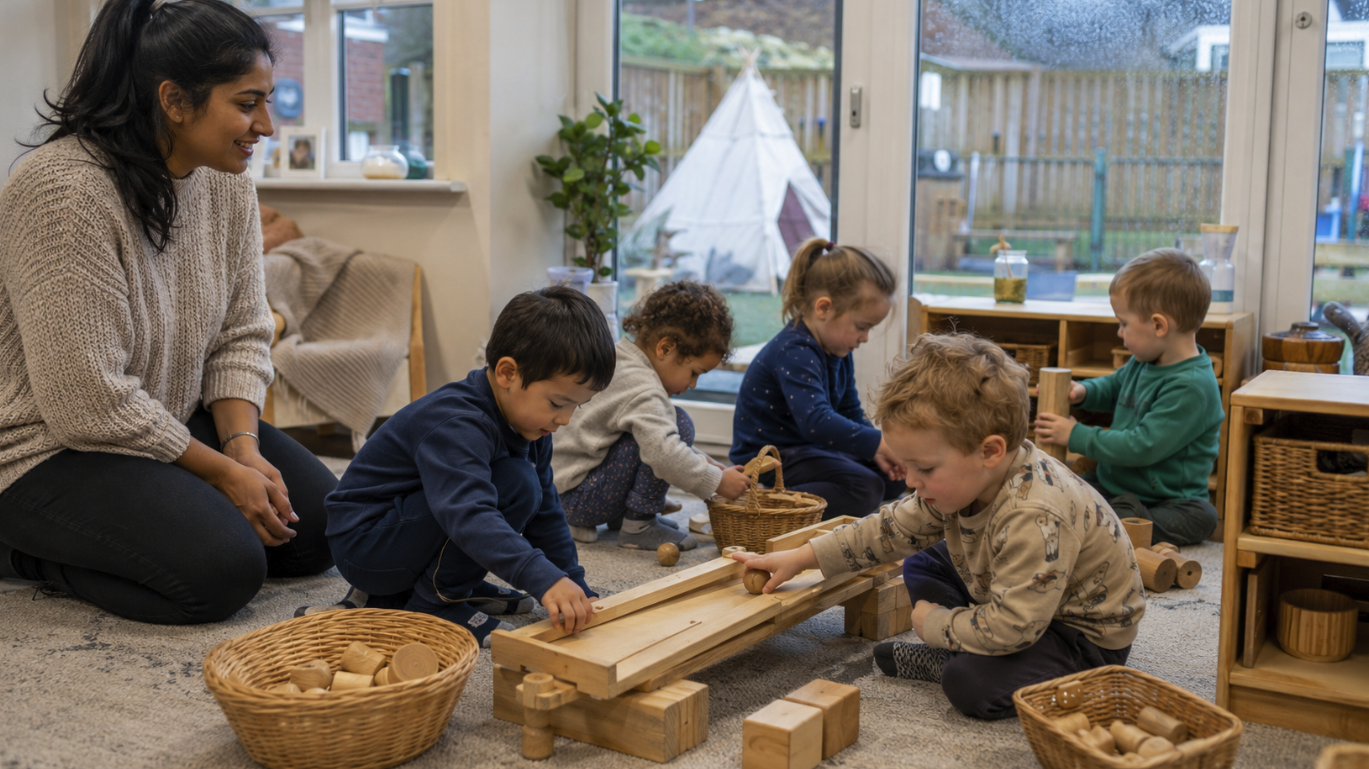
Learners will consider how adults can join play sensitively, narrate children’s actions, introduce useful language and offer prompts without taking control. Practical examples demonstrate how ramps, fabrics, baskets, loose parts, construction materials, wheels and other open-ended resources can deepen exploration. The module also explains how suitable alternatives, clear boundaries, repeated access and consistent team responses can support positive behaviour and emotional regulation.
Module 5: Creating Schema-Enriched Provision
Learners will explore how indoor and outdoor spaces can support movement, carrying, building, wrapping, arranging, climbing and repeated investigation. The module considers the value of open-ended resources, uninterrupted play and opportunities to revisit ideas. It also addresses common barriers such as restricted space, limited time, rigid tidying expectations, noise, mess and uneven staff understanding, with realistic adjustments that can be made across construction, role play, creative, sensory and mark-making provision.
Module 6: Assessment, Planning and Recording
Learners will understand how information about schemas can support an assess–plan–do–review approach. They will consider how repeated interests can inform resources, adult interaction and appropriate next steps without creating unnecessary paperwork. The module also links schematic play with broad gains in language, physical development, problem solving and social interaction, and explains how to produce brief, purposeful records that are shared with the team, connected to planning and reviewed over time.
Module 7: Working in Partnership with Families
Learners will develop practical ways to explain schemas to parents and carers using clear, positive language and familiar examples. The module includes simple home activities for transporting, posting, wrapping, enclosing, rolling, climbing and trajectory play. It also considers how settings and families can share observations, use consistent language, recognise changes in children’s interests and celebrate progress in concentration, communication, coordination, confidence and shared play.
Target Audience
This course is suitable for:
- Early years practitioners working in nurseries and pre-schools
- Childminders and childminding assistants
- Nursery managers, room leaders and early years team leaders
- Teaching assistants supporting children in the early years
- Students and apprentices preparing for early years roles
- Volunteers or family support workers working with young children
No previous specialist knowledge is required.
FAQ
Who is this course suitable for?
This course is suitable for practitioners, childminders, managers, assistants, students and volunteers who support young children’s learning and development. It is particularly useful for anyone who observes repeated patterns in children’s play and wants to respond more effectively.
Do I need any previous experience?
No previous knowledge of schema theory is required. The course introduces the subject in plain language and uses practical early years examples to build understanding.
What will I learn on the Schemas in Early Years Course?
You will learn what schemas are, how to recognise common patterns, how to observe children without labelling them too quickly and how to use resources, environments and adult interaction to extend learning.
Will this course help with day-to-day practice?
Yes. The course provides a practical framework for understanding repeated play, adapting provision, planning next steps, responding to challenging situations and discussing children’s interests with colleagues and families.
Does the course cover practical skills?
Yes. It includes observation methods, resource ideas, adult prompts, environmental adjustments, recording approaches and home-learning suggestions that can be applied in everyday practice.
Does it cover relevant responsibilities or good practice?
The course supports reflective, child-centred early years practice. It emphasises careful observation, proportionate recording, professional curiosity, appropriate boundaries, teamwork and respectful partnership with parents and carers.
How long does the course take?
The course is self-paced and usually takes around 1 hour to complete.
Will I receive a certificate?
Yes. A certificate is issued after successful completion.
Understanding schemas helps practitioners recognise the purpose within repeated play and make more informed decisions about interaction, resources and provision. This course provides the knowledge and practical approaches needed to support children’s interests while promoting engagement, development and positive relationships.
Enrol now to build your understanding of schemas in early years.