
This Critical Thinking Skills Course is designed for study and workplace learners who want to make better judgements, assess information more carefully and communicate decisions with greater clarity. It supports learners who need to question evidence, separate facts from opinions, and reach balanced conclusions in education, employment and everyday decision-making.
This free course covers the foundations of critical thinking, argument analysis, source credibility, bias, logical fallacies, questioning techniques, structured problem-solving, clear reasoning, constructive dialogue and practical application through reflection and action planning.
Why Take This eLearning Course?
Critical thinking matters because learners and staff are often expected to make decisions using information from reports, online sources, conversations, workplace updates and study materials. This course supports a more structured, fair and evidence-based approach to judgement.
This course will help you to:
- Make more balanced decisions in study, work and everyday situations
- Separate facts, opinions, assumptions and interpretations more confidently
- Analyse claims, reasons and conclusions in written and spoken communication
- Assess whether information is credible, current and relevant
- Spot weak evidence, misleading statistics and one-sided arguments
- Recognise how bias and emotions can affect judgement
- Challenge ideas constructively without creating unnecessary conflict
- Compare options using a clear framework
- Present conclusions with appropriate evidence and uncertainty
- Build practical thinking habits through reflection and action planning
Learning Outcomes
By the end of this course, you will be able to:
- Define critical thinking and explain how it supports better judgement
- Distinguish between facts, opinions, assumptions and interpretations
- Identify situations where critical thinking is needed in education and work
- Recognise claims, reasons and conclusions within an argument
- Assess the credibility of sources using clear review criteria
- Identify weak evidence, including anecdotes, cherry-picking and misleading statistics
- Explain how cognitive biases and emotions can influence judgement
- Recognise common logical fallacies and describe their impact
- Use a structured process to clarify, question, evaluate, conclude and review
- Communicate a clear line of reasoning in writing, speaking and discussion
Critical Thinking Skills Course Course Outline
Module 1: Understanding Critical Thinking
Learners will explore what critical thinking means and how it supports better judgement and decision-making in UK study and workplace settings. This module explains how careful thinking helps people move beyond first impressions, check claims, review evidence, consider alternatives and reach conclusions that are more balanced and easier to justify.
Module 2: Working with Information Types
Learners will examine the difference between facts, opinions, assumptions and interpretations, and why these distinctions matter when making decisions. The module shows how confusing these categories can lead to unfair or unsupported conclusions, while separating them helps improve discussion, study tasks, workplace communication and everyday reasoning.
Module 3: Recognising Critical Thinking in Practice
Learners will consider common education and workplace situations where critical thinking is required, including reading materials, completing assignments, comparing sources, responding to feedback, reviewing emails, taking part in meetings and assessing workplace updates. The module highlights how structured thinking supports fairer responses and clearer decision-making.
Module 4: Understanding Arguments and Reasoning
Learners will develop their ability to identify arguments by recognising claims, supporting reasons and conclusions. This module explains how arguments appear in texts, conversations, news, social media and workplace updates, and shows how learners can check whether reasons genuinely support the conclusion being presented.
Module 5: Checking Credibility and Evidence
Learners will review practical ways to assess whether information is trustworthy before accepting or sharing it. The module covers credibility checks such as author, evidence, purpose, bias, currency, consistency and clarity, alongside common weaknesses including anecdotes, cherry-picking, misleading statistics, out-of-date material and unclear sources.
Module 6: Bias, Emotion and Fallacies
Learners will explore how cognitive biases, emotional reactions and flawed reasoning can affect judgement. This module introduces common biases such as confirmation bias, anchoring bias, availability bias, the halo effect and group bias, as well as fallacies including false dilemma, ad hominem, hasty generalisation, appeal to popularity and post hoc reasoning.
Module 7: Applying a Critical Thinking Process
Learners will practise using a simple process to clarify the issue, ask questions, evaluate evidence, reach a conclusion and review the result. The module also covers constructive questioning techniques, including how to ask for clarification, evidence, assumptions, alternatives, consequences and limits in a respectful and productive way.
Module 8: Comparing Options and Solving Problems
Learners will learn how frameworks can be used to break down broad problems and compare options more fairly. This module explains how to define a problem, set comparison criteria, review each option, consider strengths and limitations, and make a reasoned choice that can be explained clearly to others.
Module 9: Communicating Reasoning Clearly
Learners will focus on writing and speaking with a clear line of reasoning, including how to link points logically, use evidence appropriately and note uncertainty where needed. The module also covers constructive dialogue, active listening, checking understanding, responding to reasoning and disagreeing respectfully.
Module 10: Practical Application and Reflection
Learners will bring the course tools together by analysing a real-world claim and reviewing how critical thinking can improve over time. This module includes practical reflection on decisions, checking outcomes, adjusting future practice and creating a short action plan to apply critical thinking in study or work over the next two to four weeks.
Target Audience
This course is suitable for:
- Students and adult learners developing study and reasoning skills
- Employees who need to assess information and make sound decisions
- Apprentices, trainees and early-career professionals
- Team members who contribute to meetings, reports or workplace discussions
- Managers or supervisors who want staff to communicate reasoning clearly
- Volunteers or community workers who handle information and decisions
No previous specialist knowledge is required.
FAQ
Who is this course suitable for?
This course is suitable for UK learners, employees, apprentices, volunteers and professionals who want to improve how they assess information, make decisions and explain their reasoning.
Do I need any previous experience?
No. The course introduces critical thinking from the beginning and uses practical examples from study, work, online information and everyday decision-making.
What will I learn on this Critical Thinking Skills Course?
You will learn how to assess claims, identify arguments, check evidence, recognise bias and fallacies, ask constructive questions, compare options and present conclusions clearly.
Will this course help with day-to-day practice?
Yes. The course is designed to support everyday judgement in assignments, emails, reports, meetings, discussions, workplace updates and online information checks.
Does the course cover practical skills?
Yes. It covers practical techniques such as credibility checking, argument analysis, structured questioning, problem breakdown, option comparison, clear reasoning and reflective action planning.
Does it cover relevant responsibilities or good practice?
Yes. The course supports good practice by helping learners make fairer, more evidence-based decisions, avoid unsupported assumptions and communicate disagreement respectfully.
How long does the course take?
The course is self-paced and usually takes around 1 hour to complete.
Will I receive a certificate?
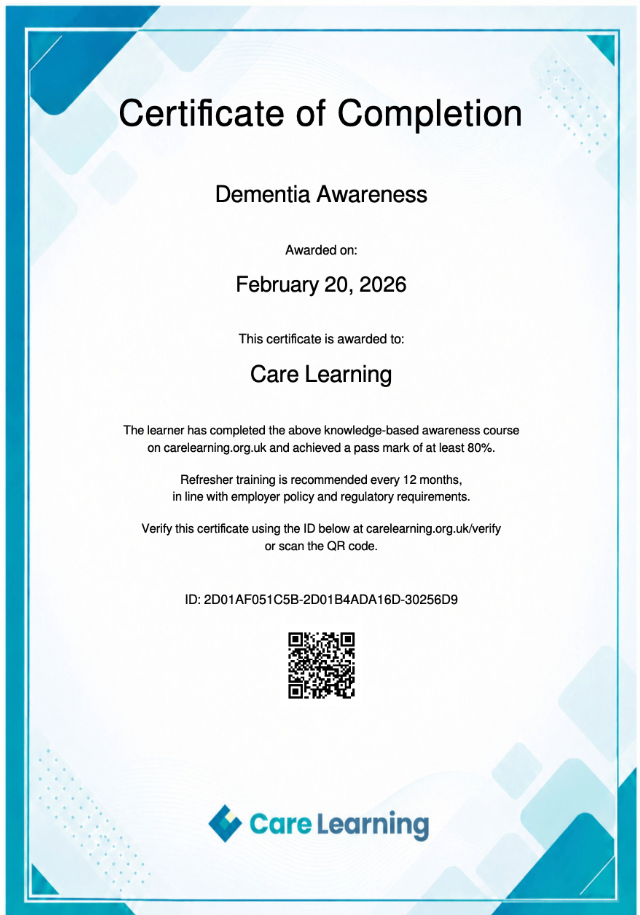
Yes. A certificate is issued after successful completion.
Critical thinking is a valuable skill for study, work and informed everyday decision-making. This course gives learners a clear, practical structure for questioning information, assessing evidence and communicating reasoned conclusions with confidence.
Enrol now to build your understanding of critical thinking skills.