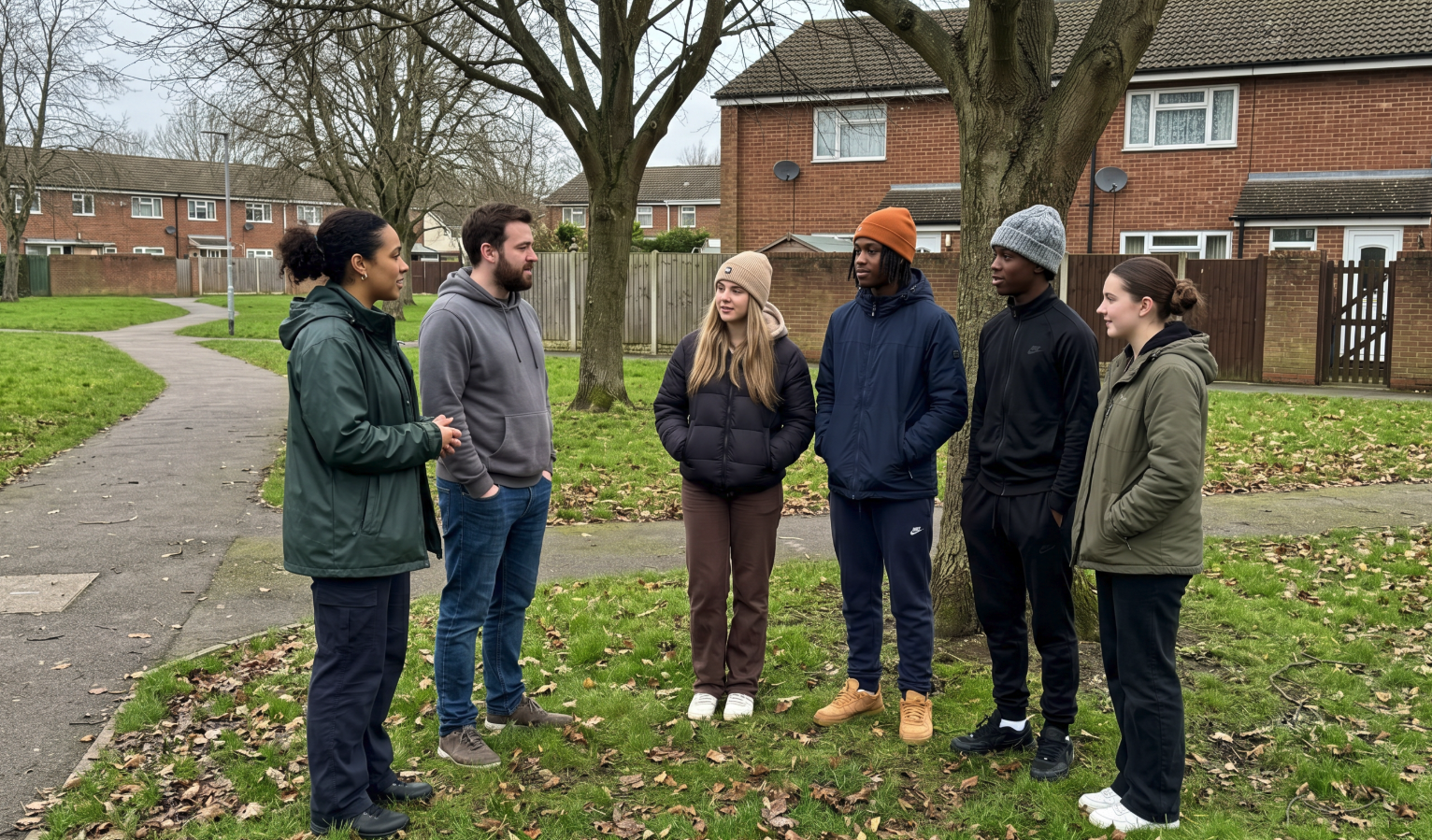
This detached and street-based youth work course is designed for professionals and volunteers who support young people in public and community spaces. It is suitable for youth workers, outreach teams, community practitioners, early help staff, safeguarding partners and those working in local services where young people gather outside formal provision.
This free course explains what detached youth work is, how it differs from centre-based and outreach delivery, and how to work safely, respectfully and effectively in streets, parks, estates, transport routes and other shared spaces. It covers youth work values, voluntary engagement, boundaries, safeguarding, risk assessment, local profiling, first contact, informal education, recording, review and partnership working.
Why Take This eLearning Course?
Detached youth work requires confidence, judgement and a clear understanding of professional responsibilities. This course supports learners to build safe, ethical and relationship-based practice when engaging young people in open community settings.
This course will help you to:
- Understand the purpose and principles of detached youth work.
- Recognise how street-based delivery differs from building-based provision.
- Approach young people in public spaces respectfully and without pressure.
- Build trust through dialogue, consistency and informal education.
- Maintain professional boundaries, consent and confidentiality.
- Respond appropriately to safeguarding concerns and immediate risk.
- Plan safer sessions using dynamic risk assessment and exit arrangements.
- Record contacts, themes, hotspots and outcomes proportionately.
- Work with local partners while keeping youth work identity clear.
- Explain the value and purpose of detached work to communities and commissioners.
Learning Outcomes
By the end of this course, you will be able to:
- Define detached youth work and street-based delivery.
- Explain why voluntary engagement and starting where young people are matters.
- Identify common locations, situations and reasons young people gather in public spaces.
- Describe the core values that guide detached youth work practice.
- Apply clear boundaries, consent, confidentiality and information-sharing principles.
- Use respectful first contact and relationship-building techniques.
- Recognise common issues raised in street-based work, including wellbeing, exploitation, conflict, substance use and housing.
- Explain safeguarding duties, thresholds and escalation routes.
- Plan, record and review detached youth work sessions effectively.
- Describe how partnership working, harm reduction, signposting and advocacy support young people.
Detached and Street-Based Youth Work Course Outline
Module 1: Understanding Detached Youth Work
Learners will explore what detached youth work means and how it is delivered in public and community spaces rather than in a building-based service. This module introduces street-based practice, including work in parks, estates, transport hubs and shopping areas, and explains why voluntary participation and starting from young people’s own experiences are central to effective youth work.
Module 2: Youth Work Values, Boundaries and Rights-Based Practice
Learners will consider the values that underpin detached practice, including relationship, dialogue, informal education, voluntary participation, respect and inclusion. The module also covers professional boundaries, consent, confidentiality, information sharing and anti-oppressive practice, with a focus on avoiding approaches that feel like surveillance, control or “soft policing”.
Module 3: Understanding Local Areas and Community Context
Learners will examine how to carry out local reconnaissance and community profiling in a factual and ethical way. This includes observing how spaces are used, identifying hotspots and travel routes, understanding why young people gather in public places, and linking with youth services, schools, community hubs, early help, police, health and wellbeing services to build a clearer local picture.
Module 4: First Contact, Engagement and Informal Education
Learners will develop understanding of cold contact and first conversations, including body language, tone, pacing and non-intrusive relationship-building. This module also explores common issues raised during detached work, such as wellbeing, exploitation, conflict, substance use, housing, money, education and transport, and shows how brief informal education conversations can support reflection and safer choices.
Module 5: Safeguarding, Risk and Safe Delivery
Learners will review safeguarding duties in detached youth work, including recognising thresholds, responding to immediate risk and escalating concerns through the correct routes. The module also covers dynamic risk assessment, travel planning, lone working, exit and withdrawal plans, communication systems, insurance, vetting, supervision, induction and UK differences such as DBS, PVG and local safeguarding procedures.
Module 6: Planning, Recording and Reviewing Practice
Learners will look at how to plan purposeful detached sessions while remaining flexible in changing community settings. This includes setting aims, agreeing routes, preparing resources, allocating team roles, planning contingencies, recording contacts and themes, protecting confidentiality, using debriefs and supervision, keeping learning logs and identifying meaningful measures of impact such as engagement, relationships, safety and participation.
Module 7: Partnership, Community Communication and Project Purpose
Learners will explore how to work with local agencies while keeping the youth work role clear and trusted. This module covers information sharing, referral and signposting routes, managing conflict with residents, businesses and enforcement professionals, using harm-reduction and advocacy approaches, and communicating the purpose, safety arrangements and outcomes of detached projects to communities and commissioners.
Target Audience
This course is suitable for:
- Detached youth workers and street-based youth work teams.
- Outreach workers and community engagement practitioners.
- Youth service staff, volunteers and project coordinators.
- Early help, family support and safeguarding practitioners.
- Voluntary sector, local authority and community organisation staff.
- Managers or commissioners involved in youth work provision.
No previous specialist knowledge is required.
FAQ
Who is this course suitable for?
This course is suitable for anyone involved in supporting young people in public or community settings, including detached youth workers, outreach staff, community practitioners, early help teams, volunteers, managers and local service partners.
Do I need any previous experience?
No previous specialist knowledge is required. The course introduces key concepts clearly, while also being useful for experienced practitioners who want to refresh their understanding of detached and street-based practice.
What will I learn on this detached youth work course?
You will learn what detached youth work is, how to engage young people voluntarily, how to build relationships in public spaces, how to manage professional boundaries, and how to plan, record, review and evaluate street-based sessions.
Will this course help with day-to-day practice?
Yes. The course focuses on practical situations that detached workers may face, including first contact, brief conversations, risk assessment, safeguarding concerns, local hotspots, partnership working and community tension.
Does the course cover practical skills?
Yes. It covers cold contact, body language, tone, pacing, relationship-building, informal education, de-escalation, session planning, recording, reflective practice, signposting and advocacy.
Does it cover relevant responsibilities or good practice?
Yes. The course covers safeguarding duties, information sharing, confidentiality, consent, professional boundaries, dynamic risk assessment, safer recruitment checks, supervision and the importance of following local safeguarding procedures.
How long does the course take?
The course is self-paced and usually takes around 1 hour to complete.
Will I receive a certificate?
Yes. A certificate is issued after successful completion.
Detached and street-based youth work can play an important role in reaching young people who may not access building-based services. This course gives learners a clear, practical foundation for engaging young people respectfully, responding to need and risk, and delivering purposeful work in open community settings.
Enrol now to build your understanding of detached and street-based youth work.