
This Direct Payments and Personal Budgets course is designed for people working in or supporting adult social care in England. It explains how personal budgets and direct payments fit within care and support planning, helping learners understand how funding can support greater choice, control and person-centred outcomes.
This free course covers the route from assessment to a direct-payment request, relevant Care Act 2014 conditions, appropriate use of funding, record keeping and review. It also explores employing Personal Assistants, employer responsibilities, payroll and brokerage support, safeguarding concerns and what happens when arrangements need to change or end.
Why Take This eLearning Course?
Direct payments can give people greater flexibility over how agreed care and support needs are met, but they also involve important responsibilities. This course supports learners to understand how direct payments should be planned, managed and reviewed while maintaining the person’s choice, rights and involvement.
This course will help you to:
- Understand the difference between a personal budget and a direct payment.
- Explain the different ways a personal budget can be managed.
- Support person-centred choices while recognising agreed funding purposes.
- Understand how assessment, eligibility and care planning relate to direct payments.
- Recognise the key conditions affecting direct-payment decisions.
- Support appropriate budgeting, record keeping and day-to-day administration.
- Understand the responsibilities involved in employing a Personal Assistant.
- Recognise how payroll, brokerage and other support services can reduce administration.
- Identify when changing circumstances should be reported or reviewed.
- Respond appropriately to monitoring, misuse and potential safeguarding concerns.
Learning Outcomes
By the end of this course, you will be able to:
- Define personal budgets and direct payments and explain how they are connected.
- Describe different personal budget management arrangements.
- Explain how direct payments can support choice, control and agreed outcomes.
- Outline the assessment, eligibility, planning and direct-payment request process.
- Explain the key conditions under sections 31, 32 and 33 of the Care Act 2014.
- Describe how direct payments can be used and administered within agreed arrangements.
- Identify the main responsibilities of an individual employer and Personal Assistant.
- Explain how support services can help with payroll, recruitment and administration.
- Describe proportionate monitoring and review requirements.
- Distinguish administrative problems from potential financial abuse and explain when concerns should be escalated.
Direct Payments and Personal Budgets Course Outline
The course is organised into six modules covering the foundations of personal budgets and direct payments, legal and care planning processes, practical management, employment responsibilities, available support and ongoing monitoring.
Module 1: Understanding Personal Budgets and Direct Payments
Learners will explore what personal budgets and direct payments are, how they relate to the care and support plan and the different ways a personal budget can be managed. The module explains how direct payments can promote choice, control and person-centred outcomes while remaining connected to assessed needs and agreed purposes. Learners will also consider the respective roles of the person, family members and workers, including the importance of clear boundaries, communication and appropriate referral when circumstances change.
Module 2: Assessment, Eligibility and Direct-Payment Decisions
Learners will follow the route from assessment and eligibility decisions through care planning, allocation of the personal budget and a request for a direct payment. The module explains the four section 31 conditions applying to adults with capacity, the section 32 arrangements where an adult lacks capacity and the safeguards surrounding authorised persons and best-interests decisions. It also examines section 33 restrictions and conditions, the importance of checking current requirements and the need for transparent local authority decision-making and clear records.
Module 3: Using and Managing a Direct Payment
Learners will examine how direct-payment funding can be used flexibly to meet the needs and outcomes recorded in a care and support plan. The module covers agreements, personal contributions, records, invoices, payroll information and other proportionate administrative requirements. Examples include purchasing support from a provider, employing a Personal Assistant, combining different forms of support and establishing contingency arrangements. Learners will also consider how to respond when costs, staffing, needs or management arrangements change and why significant changes should be discussed before moving outside the existing agreement.
Module 4: Employing Personal Assistants
Learners will explore the employment relationship between an individual employer and a Personal Assistant, including the responsibilities that remain with the employer even when specialist services provide administrative support. The module covers employment terms, pay, right-to-work checks, employers’ liability insurance, payroll and PAYE responsibilities, employment rights and workplace pension duties where applicable. It also examines safe recruitment, references, appropriate DBS routes, secure recruitment records, contingency planning for staff absence and the need to account for employment-related costs and liabilities.
Module 5: Brokerage, Payroll and Practical Support
Learners will examine how support brokers, direct-payment support organisations, payroll providers and other services can make personalised support arrangements easier to organise. The module explains how brokers can help people explore providers, Personal Assistants and community-based options without replacing the person’s decision-making or the local authority’s formal responsibilities. It also covers payroll calculations and administration, user-led organisations, employment advice, managed accounts and practical help with recruitment and records. The focus remains on reducing unnecessary administration while preserving meaningful choice and control.
Module 6: Monitoring, Safeguarding and Changing Arrangements
Learners will explore proportionate monitoring and review of direct payments, including the purpose of oversight, appropriate record requirements and review timing. The module distinguishes routine administrative errors or spending concerns from theft, fraud, coercion and other possible forms of financial abuse, with attention to appropriate safeguarding and escalation procedures. Learners will also consider how additional support, changed needs or management difficulties may affect an arrangement, how a person can choose to stop receiving a direct payment and how alternative support should be planned to prevent unmet needs. The module concludes by balancing the practical benefits of greater flexibility and continuity with responsibilities such as paperwork, staffing and employment administration.
Target Audience
This course is suitable for:
- Adult social care workers supporting people who receive or are considering direct payments.
- Social care practitioners involved in care planning, review or personalised support.
- Managers and supervisors who need an understanding of direct-payment arrangements.
- Direct-payment, brokerage and support-service staff.
- Workers supporting individual employers and Personal Assistants.
- Family members or others involved in helping a person manage agreed care and support arrangements.
No previous specialist knowledge is required.
FAQ
Who is this course suitable for?
The course is suitable for adult social care workers, practitioners, managers and support staff who need to understand personal budgets and direct payments in England. It may also be useful for people involved in supporting individual employers, Personal Assistants or families with direct-payment arrangements.
Do I need any previous experience?
No previous specialist knowledge of direct payments is required. The course introduces the main concepts before progressing to care planning, legal conditions, administration, employment responsibilities and review.
What will I learn on this direct payments course?
You will learn how personal budgets and direct payments work, how they fit into adult social care assessment and planning, the main Care Act conditions affecting requests and how payments can be used and managed responsibly. The course also covers Personal Assistant employment, practical support, monitoring and safeguarding concerns.
Will this course help with day-to-day practice?
Yes. The course provides practical knowledge that can help workers explain arrangements clearly, recognise professional boundaries, support informed choices, identify changes requiring review and know when concerns should be referred through the appropriate local process.
Does the course cover practical skills?
The course covers practical aspects of managing direct payments, including budgeting, records, recruitment, Personal Assistant arrangements, payroll support, contingency planning and responding to changes. It focuses on understanding and applying good practice rather than teaching specialist payroll, legal or financial procedures.
Does it cover relevant responsibilities and good practice?
Yes. The course explains responsibilities connected with the Care Act 2014 framework, individual employer duties, safe recruitment, record keeping, proportionate monitoring and safeguarding. It also emphasises checking current guidance and local procedures where rules, rates or arrangements may change.
Does the course explain employing a Personal Assistant?
Yes. Learners will explore the roles of the individual employer and Personal Assistant, along with employment terms, pay, right-to-work checks, insurance, payroll, employment rights, workplace pensions, recruitment and backup arrangements.
How long does the course take?
The course is self-paced and usually takes around 1 hour to complete.
Will I receive a certificate?
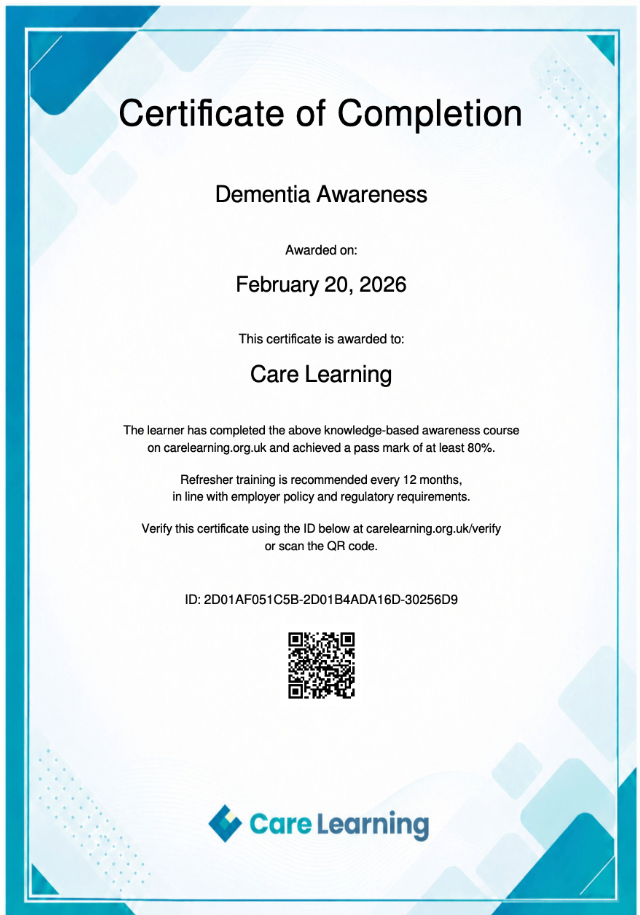
Yes. A certificate is issued after successful completion.
Direct payments can provide greater flexibility and personalised choice when people understand how the arrangements work and where responsibilities sit. This course provides a clear introduction to the legal, practical and person-centred principles that support effective direct-payment arrangements in adult social care.
Enrol now to build your understanding of direct payments and personal budgets.