This Telecare and Remote Monitoring Awareness course is designed for health and social care workers who support adults using alarms, sensors, assistive technology or remote health monitoring. It explains how these systems can promote independence and reassurance while ensuring that care remains person-centred, proportionate and responsive.
This free course covers common telecare devices, alert and response pathways, remote vital signs monitoring, equipment reliability, consent, privacy and secure information handling. Learners will also explore professional responsibilities, escalation procedures and appropriate responses to workplace scenarios in home, supported living, community and primary care settings.
Why Take This eLearning Course?
Telecare and remote monitoring can support safer and more independent living, but technology must be selected, used and reviewed carefully. This course develops the practical awareness needed to support people confidently, respond appropriately to alerts and recognise when an arrangement requires further assessment or professional advice.
This course will help you to:
- Understand the purposes and limitations of different monitoring technologies.
- Support technology use around the person’s agreed needs and outcomes.
- Explain how alerts move from a device to an appropriate responder.
- Recognise the boundaries between monitoring, assessment and clinical decisions.
- Support the safe use of alarms, sensors and medication dispensers.
- Respond appropriately to unusual readings, equipment faults and missed alerts.
- Promote dignity, autonomy, accessibility and digital inclusion.
- Handle monitoring and health information securely and responsibly.
- Follow agreed response, referral and escalation procedures.
- Maintain human contact alongside technology-enabled support.
Learning Outcomes
By the end of this course, you will be able to:
- Define telecare, remote monitoring, telehealth and assistive technology.
- Describe how technology can support person-centred care and agreed outcomes.
- Identify the main stages and responsibilities within an alert and response pathway.
- Distinguish monitoring from assessment and authorised clinical decision-making.
- Describe the uses and limitations of common alarms, sensors and monitoring equipment.
- Assess how personal needs, preferences and the home environment affect suitability.
- Explain routine testing, maintenance, fault reporting and temporary safety arrangements.
- Apply principles relating to dignity, consent, proportionality and accessibility.
- Outline secure information-handling practices and relevant data protection responsibilities.
- Identify when to seek advice, make a referral or escalate an urgent concern.
Telecare and Remote Monitoring Awareness Course Outline
The course is organised into six modules covering the foundations of telecare, commonly used equipment, person-centred suitability, reliable operation, ethical information handling and workplace responsibilities.
Module 1: Understanding Telecare and Monitoring Pathways
Learners will define telecare, remote monitoring, telehealth and assistive technology, including how their purposes and response arrangements may differ. The module explains how technology should support agreed person-centred outcomes and individual choice rather than determine how care is delivered. Learners will follow the stages of an alert and response pathway, from activation and transmission to triage, escalation and recording. It also clarifies the boundaries between collecting information, completing an assessment and making authorised clinical decisions.
Module 2: Common Devices and Remote Health Monitoring
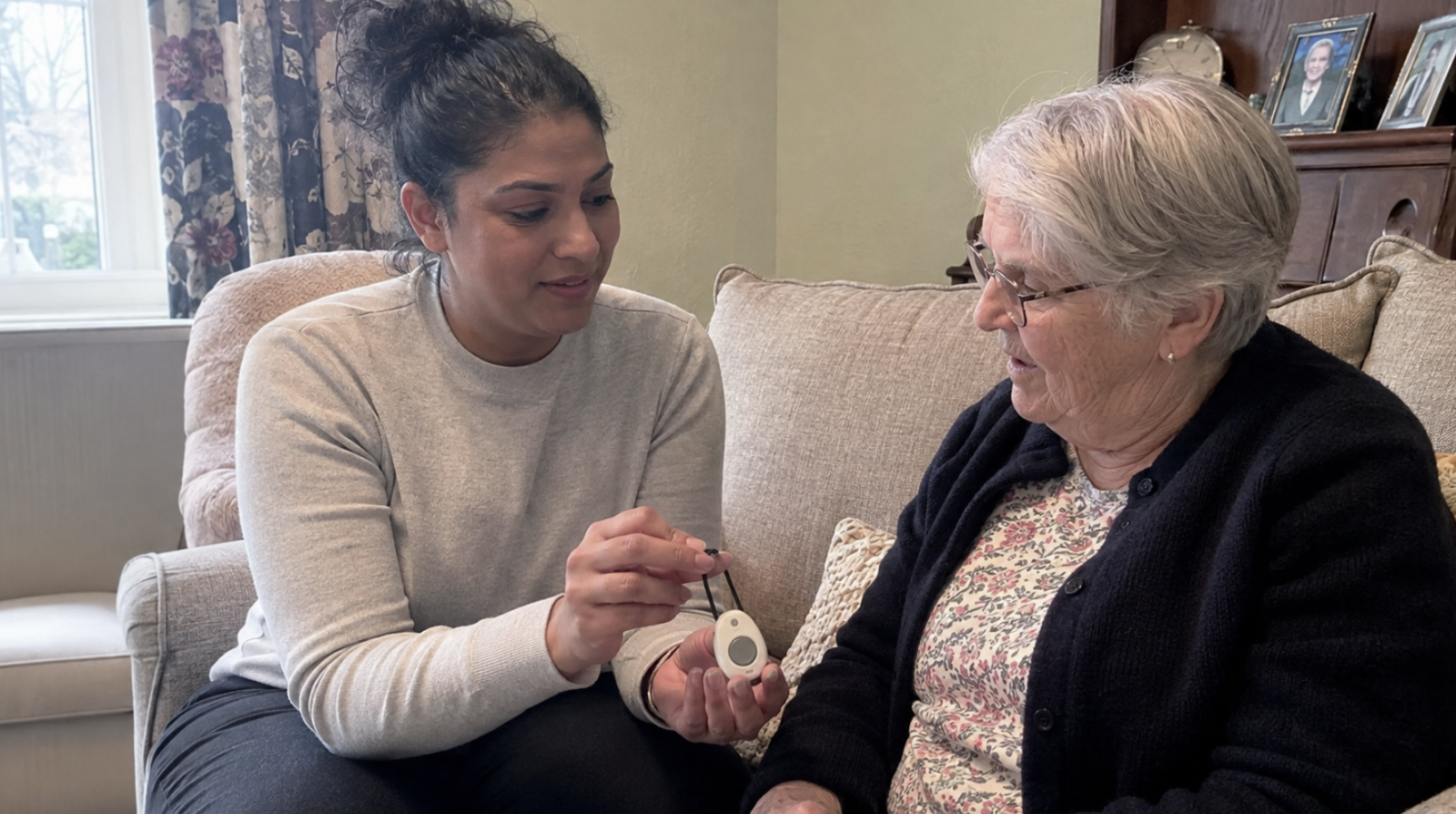
Learners will examine pendant alarms, wrist alarms, pull cords, mobile alarms and automatic alert functions, including the importance of accessibility, charging and reliable response arrangements. The module covers fall detectors, movement sensors, door sensors and environmental devices used to identify possible risks or changes in routine. Learners will also explore automated medication dispensers and their role in supporting an existing medication plan. Remote vital signs monitoring is introduced through the collection and professional review of agreed measurements such as blood pressure, pulse, oxygen saturation, temperature and weight.
Module 3: Benefits, Suitability and Evidence
Learners will consider how telecare may support independence, reassurance, established routines and more timely responses to concerns. The module explains how communication, mobility, cognition, sensory needs, digital confidence and personal preferences affect the suitability of an arrangement. It also examines practical factors such as the home layout, connectivity, equipment position, responder availability and access arrangements. Learners will evaluate why outcomes vary between technologies, users and service pathways, and why monitoring should strengthen rather than replace planned human contact.
Module 4: Reliability, Maintenance and Accessible Support
Learners will identify common reasons for unreliable alerts, including damaged equipment, low batteries, incorrect positioning, connectivity failures and outdated response information. The module explains routine test calls, power checks, equipment inspections, fault reporting and the importance of recording recurring problems. Learners will follow an agreed response procedure by checking the situation, contacting the correct responder, escalating emergencies and completing an accurate handover. Accessibility, equality and digital inclusion are also addressed, including adapted controls, accessible information, supported use and non-digital alternatives.
Module 5: Dignity, Consent and Information Governance
Learners will explore how monitoring can affect privacy, autonomy, daily routines and a person’s sense of control. The module explains proportionate monitoring, informed agreement, voluntary decision-making and the need to review consent when circumstances or equipment change. It outlines responsibilities under the UK General Data Protection Regulation and the Data Protection Act 2018, including purpose limitation, lawful processing, data minimisation, accuracy, security and retention. Learners will also identify secure methods for accessing systems, protecting passwords, recording events, sharing information and reporting suspected data incidents.
Module 6: Roles, Escalation and Workplace Application
Learners will examine the responsibilities of care workers, coordinators, social workers, occupational therapists and healthcare professionals within telecare and monitoring pathways. The module distinguishes situations requiring routine advice or planned referral from emergencies, safeguarding concerns, privacy breaches and other issues requiring prompt escalation. Learners will consider how to respond when equipment, information or care arrangements appear unsafe while maintaining appropriate human support. Practical scenarios demonstrate suitable responses in domiciliary care, supported living, community services and primary care.
Target Audience
This course is suitable for:
- Domiciliary care and home care workers.
- Supported living and residential care staff.
- Care coordinators, supervisors and service managers.
- Community health and social care workers.
- Staff supporting adults who use telecare or assistive technology.
- New employees requiring an introduction to remote monitoring practice.
No previous specialist knowledge is required.
FAQ
Who is this course suitable for?
The course is suitable for health and social care workers who support adults using alarms, sensors, medication dispensers, remote observations or other assistive technology. It is also relevant to coordinators and managers responsible for care plans, response arrangements and service reviews.
Do I need any previous experience?
No previous experience of telecare or remote monitoring is required. The course introduces the main terms, devices, responsibilities and good-practice principles in a clear and accessible way.
What will I learn on this telecare and remote monitoring course?
You will learn how common devices work, how alerts are received and acted upon, and how technology should support person-centred outcomes. The course also covers equipment reliability, consent, privacy, accessibility, information security and escalation.
Will this course help with day-to-day practice?
Yes. The course explains how to check equipment, support correct use, respond to alerts, record events and communicate concerns through agreed channels. It also helps learners recognise when an arrangement may be unsuitable or unsafe.
Does the course cover practical skills?
The course develops practical awareness of testing devices, following response plans, reporting faults and escalating unusual readings or unresolved welfare concerns. It does not train learners to install, repair or clinically interpret equipment beyond their role and competence.
Does the course explain the limitations of telecare devices?
Yes. Learners will examine missed events, accidental alerts, loss of connectivity, poor positioning, equipment faults and delays within the wider response pathway. The course emphasises that monitoring information does not replace direct contact or a complete assessment.
Does it cover relevant responsibilities and good practice?
Yes. The course covers dignity, autonomy, informed agreement, the Mental Capacity Act 2005, UK data protection requirements, secure information handling and professional role boundaries within England-focused health and social care practice.
How long does the course take?
The course is self-paced and usually takes around 1 hour to complete.
Will I receive a certificate?
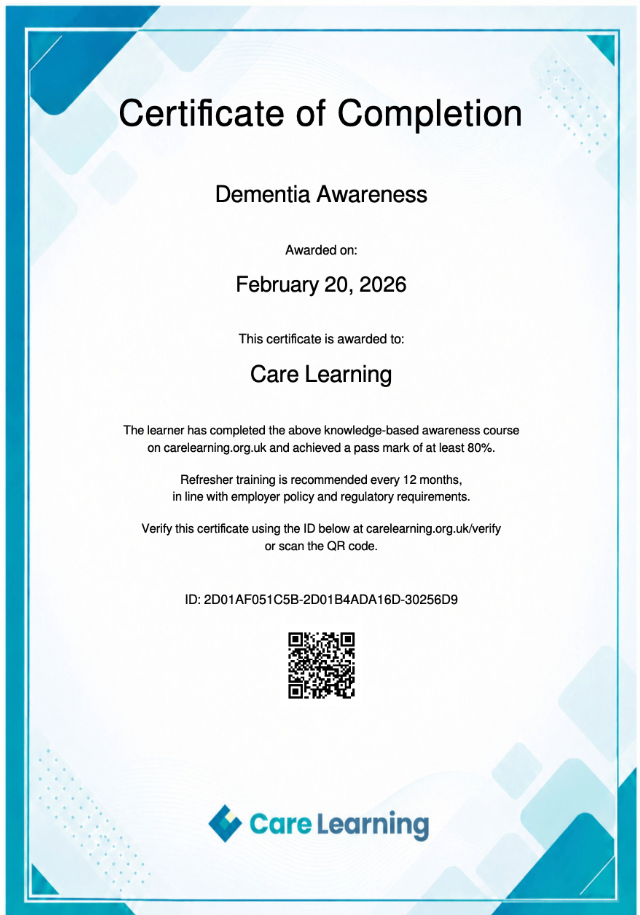
Yes. A certificate is issued after successful completion.
Telecare and remote monitoring can provide valuable support when they are appropriate for the person, connected to a dependable response pathway and reviewed regularly. This course helps staff use monitoring information responsibly while maintaining choice, privacy, professional boundaries and meaningful human support.
Enrol now to build your understanding of telecare and remote monitoring.