
This Tinnitus Awareness and Support in Care Settings course is designed for health and social care workers who may support older adults or other people experiencing tinnitus. It provides practical knowledge to help staff understand how tinnitus may be experienced, recognise its possible effects on everyday life and respond with respectful, person-centred support.
This free course covers common features and factors associated with tinnitus, its possible impact on sleep, mood, communication and daily routines, and ways staff can offer appropriate reassurance and practical support. Learners will also explore hearing-aid checks within the care worker’s role, environmental adjustments, warning signs requiring escalation, communication support where hearing loss is present, and the importance of professional referral when symptoms change or become concerning.
Why Take This eLearning Course?
Tinnitus can affect people in very different ways, from a sound that causes little disruption to persistent symptoms that interfere with sleep, concentration, communication and emotional wellbeing. Care workers who understand these differences are better placed to listen effectively, recognise changes and provide support that reflects the person’s individual needs and preferences.
This course will help you to:
- Understand what tinnitus is and the different ways people may experience it.
- Recognise how tinnitus can affect sleep, mood, concentration and communication.
- Respond sensitively when a person describes tinnitus or related distress.
- Support individual preferences rather than relying on one approach for everyone.
- Use simple environmental and comfort measures appropriately.
- Carry out basic hearing-aid checks within agreed role boundaries.
- Recognise new or worsening symptoms that should be reported.
- Identify warning signs that may require urgent medical attention.
- Communicate more effectively when tinnitus occurs alongside hearing loss.
- Support access to appropriate hearing, tinnitus and healthcare services.
Learning Outcomes
By the end of this course, you will be able to:
- Define tinnitus and describe how the experience can vary between individuals.
- Identify common factors that may be associated with tinnitus.
- Describe how tinnitus may affect sleep, mood, concentration, communication and daily activities.
- Explain why listening to the person’s own experience is central to effective support.
- Distinguish supportive communication from responses that may dismiss or increase distress.
- Describe simple coping, relaxation, environmental and hearing-support measures.
- Identify basic hearing-aid checks that may fall within the care worker’s role.
- Recognise tinnitus changes and associated symptoms that should be reported or escalated.
- Explain appropriate role boundaries when a person is experiencing severe distress.
- Describe how ongoing observation and professional support can contribute to wellbeing.
Tinnitus Awareness and Support in Care Settings Course Outline
The course is organised into six modules, progressing from an introduction to tinnitus through its effects, person-centred support, practical care measures, escalation and longer-term support.
Module 1: Understanding Tinnitus
Learners will develop a clear understanding of tinnitus as the perception of sound without a corresponding external source and explore the different ways it may be described, including ringing, buzzing, humming, hissing or whooshing. The module considers differences in timing, duration, volume and personal impact, as well as how tinnitus may affect one or both ears or appear to come from within the head. Learners will also consider how common persistent tinnitus is, particularly among older adults and people with hearing loss, and review factors that can be associated with tinnitus, including hearing changes, ear problems, previous noise exposure, health conditions and medicines. The emphasis remains on observation and appropriate reporting rather than attempting to identify a medical cause.
Module 2: Effects on Wellbeing and Daily Life
Learners will explore how tinnitus may influence different areas of everyday life. This includes the ways greater awareness of tinnitus during quiet periods can affect settling to sleep, night waking and next-day tiredness, as well as possible effects on frustration, worry, anxiety, low mood and distress. The module also considers difficulties with concentration, following conversations and coping in busy environments, particularly when hearing loss is also present. Learners will examine how these effects may become apparent during care routines, mealtimes, activities, rest periods and other parts of the day, helping them recognise individual patterns without assuming that every person is affected in the same way.
Module 3: Listening and Person-Centred Communication
Learners will consider why listening carefully to a person’s experience is an essential part of tinnitus support. The module covers asking about the effects on sleep, communication, concentration, activities and emotional wellbeing, accepting the person’s account and recognising signs that tinnitus is becoming more difficult to manage. Learners will examine examples of calm acknowledgement and realistic reassurance, alongside responses that should be avoided, such as disbelief, dismissal, excessive focus on symptoms or promises that a particular measure will provide a cure. The module also explains how preferences can be discussed, recorded and shared appropriately so that support remains consistent, respectful and centred on the person’s choices.
Module 4: Practical Support and Environmental Adjustments
Learners will examine straightforward measures that may help some people manage tinnitus more comfortably. These include optional gentle background sound, familiar relaxation activities, calm breathing, consistent bedtime routines and reducing avoidable stress where appropriate. The module emphasises that no single strategy works for everyone and that measures should reflect the person’s established preferences and care arrangements. Learners will also cover basic hearing-aid checks within their role, such as checking positioning, power, charge and visible condition, while recognising that repairs, fitting and programmed adjustments require appropriate professional support. Environmental adjustments are also considered, including balancing useful background sound with the need to reduce unnecessary competing noise during communication.
Module 5: Recognising Changes, Warning Signs and Escalation
Learners will understand how to recognise and report tinnitus that is new, sudden, worsening or different from a person’s usual pattern. The module explains how factual observations about timing, hearing changes, dizziness, weakness, pain or other symptoms can support accurate escalation without staff attempting a diagnosis. Learners will identify situations requiring urgent or emergency medical attention, including tinnitus associated with sudden hearing loss, new neurological symptoms, severe or uncontrolled vertigo, or a head injury. Other patterns that may require medical review, such as persistent pulsatile or one-sided tinnitus and symptoms that significantly affect everyday wellbeing, are also covered. The module concludes by examining role boundaries when a person is severely distressed, including the need for prompt escalation where there are concerns about self-harm, suicide or immediate safety.
Module 6: Ongoing Observation, Communication and Support
Learners will consider how changes in tinnitus, hearing, sleep, mood, communication and participation can be observed over time and recorded factually. The module covers practical communication techniques for people who also have hearing loss, including gaining attention before speaking, allowing the person to see the speaker, using a comfortable pace, checking understanding and reducing unnecessary background noise. Learners will also explore circumstances in which GP, audiology or other professional tinnitus and hearing support may be helpful, while maintaining appropriate boundaries around diagnosis and treatment. The module reinforces the importance of compassionate, flexible support, reliable information and involving the person in decisions about their ongoing care and wellbeing.
Target Audience
This course is suitable for:
- Care workers and support workers in adult social care.
- Residential and nursing care home staff.
- Supported living and domiciliary care workers.
- Senior care staff and team leaders who support day-to-day care practice.
- Staff who support older adults or people with hearing difficulties.
- Other health and social care workers who may encounter people experiencing tinnitus.
No previous specialist knowledge is required.
FAQ
Who is this course suitable for?
This course is suitable for care workers, support workers and other health and social care staff who may support people experiencing tinnitus. It is particularly relevant where staff work with older adults or people who also have hearing loss.
Do I need any previous experience?
No specialist knowledge of tinnitus or audiology is required. The course introduces the subject from a care worker’s perspective and focuses on awareness, observation, communication, practical support and appropriate escalation.
What will I learn on this tinnitus awareness course?
You will learn what tinnitus is, how people may experience it and how it can affect sleep, emotional wellbeing, concentration, communication and everyday routines. You will also learn about person-centred support, simple coping measures, hearing-aid checks, warning signs and when further professional support may be appropriate.
Will this course help with day-to-day care practice?
Yes. The course focuses on situations that staff may encounter during everyday care, including conversations, personal care, mealtimes, activities, bedtime routines and periods when a person is distressed or reports a change in their symptoms. It explains how to listen, observe, record and respond within the care worker’s role.
Does the course cover practical skills?
The course covers practical support measures that may form part of agreed care, such as reducing unnecessary competing noise, supporting preferred background sound, following established relaxation or bedtime routines and carrying out simple hearing-aid checks. It also makes clear when specialist assessment, adjustment or treatment should be left to appropriately qualified professionals.
What should care staff do if a person’s tinnitus suddenly changes?
Staff should listen to what the person reports, establish what has changed, record relevant observations and follow the organisation’s agreed reporting or escalation pathway. Sudden hearing loss, severe or uncontrolled vertigo, new neurological symptoms or tinnitus following a head injury require particularly prompt action in accordance with local procedures.
Does the course cover distress and emotional wellbeing?
Yes. The course explains how persistent tinnitus may contribute to frustration, anxiety, low mood, sleep difficulties and severe distress. It also covers compassionate communication, professional role boundaries and the importance of escalating concerns promptly when a person’s mental wellbeing or immediate safety is at risk.
Does it cover relevant responsibilities or good practice?
Yes. The course reinforces person-centred care, factual recording, appropriate information sharing, working within competence and following the person’s care plan and local procedures. It also makes clear that care workers should observe, support and escalate concerns rather than diagnose the cause of tinnitus or recommend specialist treatment.
How long does the course take?
The course is self-paced and usually takes around 1 hour to complete.
Will I receive a certificate?
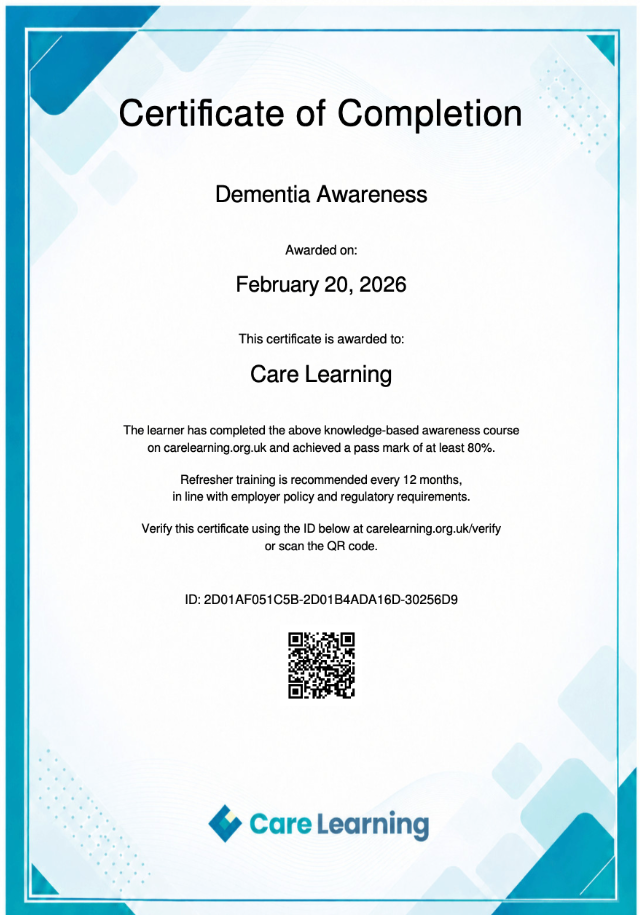
Yes. A certificate is issued after successful completion.
This course provides care staff with practical knowledge to recognise tinnitus, understand how it may affect an individual and provide calm, respectful and appropriate support. By combining person-centred communication with clear role boundaries and awareness of when concerns need escalation, learners can contribute to safer and more responsive day-to-day care.
Enrol now to build your understanding of tinnitus awareness and support in care settings.