This Reasonable Adjustments in Healthcare Training Course is designed for healthcare workers who need to understand how disability-related barriers can affect access to services and what can be done to reduce or remove those barriers. It focuses on person-centred, equitable access within NHS and publicly funded health and social care services in England.
This free course covers the Equality Act 2010 reasonable adjustment duty, the Accessible Information Standard, learning disability and autism, the Reasonable Adjustment Digital Flag and practical approaches to identifying, recording, sharing and reviewing individual needs. Learners will also consider responsibilities across different roles and when concerns or unresolved barriers should be escalated.
Why Take This eLearning Course?
Reasonable adjustments can make an important difference to whether a disabled person can access healthcare, understand information and participate in decisions about their care. This course supports staff to recognise barriers, respond appropriately within their role and contribute to more accessible and consistent services.
This course will help you to:
- Understand what reasonable adjustments are and why they matter in healthcare.
- Recognise physical, communication, sensory and organisational barriers.
- Respond to individual needs without making assumptions based on disability or diagnosis.
- Understand the reasonable adjustment duty under the Equality Act 2010.
- Apply the principles of the Accessible Information Standard.
- Recognise adjustments that may support people with a learning disability and autistic people.
- Understand the purpose of the Reasonable Adjustment Digital Flag.
- Record and share relevant adjustment information appropriately.
- Identify opportunities to discuss adjustments throughout a person’s healthcare journey.
- Know when an adjustment difficulty should be referred or escalated.
Learning Outcomes
By the end of this course, you will be able to:
- Define reasonable adjustments and substantial disadvantage.
- Describe health inequalities and barriers experienced by disabled people.
- Identify people who may require reasonable adjustments and common examples of support.
- Explain the Equality Act 2010 Section 20 reasonable adjustment duty and its anticipatory nature.
- Describe the purpose and key steps of the Accessible Information Standard.
- Identify suitable accessible information and communication support.
- Explain practical adjustments that may support people with a learning disability and autistic people.
- Describe the purpose and use of the Reasonable Adjustment Digital Flag.
- Explain how adjustment information should be recorded, reviewed and shared appropriately.
- Apply a consistent approach to identifying, agreeing, acting on and reviewing reasonable adjustments.
Reasonable Adjustments in Healthcare Training Course Outline
The course is organised into six modules, progressing from the principles of reasonable adjustments and legal responsibilities through accessible communication, learning disability and autism, digital recording and practical application across healthcare pathways.
Module 1: Understanding Reasonable Adjustments
Learners will explore what reasonable adjustments and substantial disadvantage mean and how disability-related barriers can affect access to healthcare. The module considers health inequalities, visible and non-visible disabilities and the importance of identifying individual needs rather than relying on assumptions. Learners will also examine practical examples involving communication, appointment arrangements, waiting environments and physical access.
Module 2: Equality Act Duties and Service Responsibilities
Learners will examine the Section 20 reasonable adjustment duty under the Equality Act 2010, including provisions, criteria and practices, physical features and auxiliary aids. The module explains why the duty is anticipatory for service providers and how accessibility should be considered when services are designed and reviewed. It also explores responsibilities across reception and administrative teams, clinical staff, leaders and commissioners, together with the relationship between reasonable adjustments, person-centred care, accessibility, governance and service quality.
Module 3: Accessible Information and Communication
Learners will explore the purpose and scope of the Accessible Information Standard in NHS services and publicly funded adult social care in England. The module covers the connected steps of asking, recording, flagging, sharing, acting and reviewing. Learners will consider accessible formats and communication support including easy read, large print, audio information, British Sign Language support and personalised communication aids, as well as the action staff should take when communication requirements cannot immediately be met.
Module 4: Learning Disability and Autism
Learners will consider barriers that may particularly affect people with a learning disability and autistic people, including communication difficulties, sensory environments, waiting, unpredictability and unfamiliar settings. The module explains the statutory learning disability and autism training requirement for CQC-registered providers and introduces the Oliver McGowan approach and Tier 1 and Tier 2 training. Learners will also examine practical adjustments and the importance of listening to the individual, involving appropriate support and avoiding assumptions based on diagnosis or behaviour.
Module 5: Reasonable Adjustment Digital Flag
Learners will explore the purpose of the Reasonable Adjustment Digital Flag and how it supports authorised services to identify, record, share and view reasonable adjustment information across publicly funded health and social care services in England. The module covers accurate recording, checking information with the individual where appropriate, reviewing changing needs and sharing relevant information through authorised routes. It also introduces the DAPB4019 information standard, organisational implementation requirements and the stated national full-conformance date of 30 September 2026.
Module 6: Applying Reasonable Adjustments in Practice
Learners will consider opportunities to ask about reasonable adjustments before appointments, during care and at transitions such as referral, transfer, discharge and follow-up. Practical examples are considered across primary and community care, NHS Talking Therapies, hospitals and mental health services. The module also explains when staff should seek clinical, managerial or specialist advice and introduces a concise approach based on asking, listening, identifying, agreeing, recording, sharing, acting, reviewing and escalating when necessary.
Target Audience
This course is suitable for:
- NHS clinical staff involved in assessment, treatment or ongoing care.
- Reception, administration and appointment-booking teams.
- Health and social care workers supporting disabled people.
- Managers and service leaders responsible for accessible service delivery.
- Staff working in primary, community, hospital or mental health services.
- Employees who need an awareness of reasonable adjustment responsibilities in publicly funded services in England.
No previous specialist knowledge is required.
FAQ
Who is this reasonable adjustments in healthcare course suitable for?
This course is suitable for clinical, administrative, managerial and support staff who may need to recognise or respond to disability-related access needs in health and social care services. It is particularly relevant to staff working within NHS and publicly funded services in England.
Do I need any previous experience?
No. The course provides an awareness-level introduction to reasonable adjustments and explains the key principles, responsibilities and practical processes needed for everyday work.
What will I learn on this course?
You will learn how to recognise disability-related barriers, understand the reasonable adjustment duty, identify suitable adjustments and support accessible communication. The course also covers learning disability and autism, recording and sharing needs, the Reasonable Adjustment Digital Flag and practical application throughout a healthcare pathway.
Will this course help with day-to-day practice?
Yes. The course focuses on how staff can ask about needs, identify barriers, agree appropriate action, record relevant information, make adjustments and review whether they have worked. It also explains when an issue needs to be referred to a manager, clinician or specialist service.
Does the course cover practical skills?
The course provides practical examples of adjustments involving appointments, waiting arrangements, accessible information, communication support, sensory environments and physical access. It also explains how these needs can be identified and managed through approved organisational processes.
Does it cover relevant responsibilities or good practice?
Yes. The course covers the Equality Act 2010 reasonable adjustment duty, the Accessible Information Standard and relevant NHS processes for recording and sharing reasonable adjustment needs. It also considers staff responsibilities, information governance, escalation and service-level accessibility.
Does this course cover reasonable adjustments for learning disability and autism?
Yes. The course considers communication, sensory, environmental and appointment-related barriers that may affect people with a learning disability and autistic people. It emphasises individual needs and explains why staff should not assume that people with the same diagnosis require the same adjustments.
Does this course replace statutory learning disability and autism training?
No. The course supports awareness of reasonable adjustments but does not replace learning disability and autism training assigned by an employer. It explains the statutory training requirement for CQC-registered providers and introduces the Oliver McGowan approach so learners understand the distinction.
How long does the course take?
The course is self-paced and usually takes around 1 hour to complete.
Will I receive a certificate?
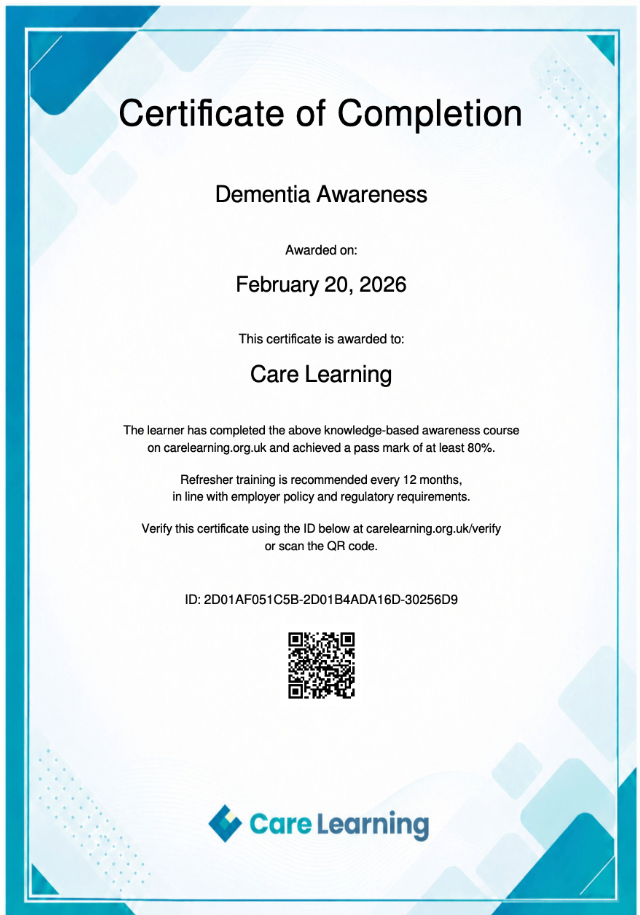
Yes. A certificate is issued after successful completion.
Understanding reasonable adjustments helps staff recognise where standard healthcare processes may create avoidable barriers for disabled people. This course provides a practical framework for identifying individual needs, improving accessible communication, recording relevant information and contributing to more responsive and person-centred services.
Enrol now to build your understanding of reasonable adjustments in healthcare.