This medication support in adult social care course is designed for care workers and support staff who help people with medicines in care homes, supported living and homecare settings. It explains how medicines support should be agreed, recorded and delivered safely within the person’s care plan.
This medication awareness course covers common medicine types, forms and routes, role boundaries, legislation and guidance, capacity and consent, safe storage, MAR and eMAR records, self-administration, homely remedies, missed doses, medication errors, side effects, reporting and escalation.
Why Take This eLearning Course?
Medicines support is a high-responsibility area of care practice. This eLearning course helps learners understand how to work safely, follow agreed procedures and know when to stop, record and seek advice.
This course will help you to:
- Understand what medication and medicines support mean in adult social care
- Recognise common medicine types, purposes, forms and routes
- Follow care plans, medicine labels and MAR or eMAR records correctly
- Understand the care worker’s role, limits and need for authorisation
- Support consent, choice, refusal and person-centred medicines practice
- Store and handle medicines safely in line with local procedures
- Use the six rights of administration to support safer checking
- Respond appropriately to missed doses, delays and medication errors
- Notice and report possible side effects or adverse drug reactions
- Know who to contact when medicines information or practice is unclear
Learning Outcomes
By the end of this course, you will be able to:
- Define medication, medicines support, reminding, assisting and administering
- Describe common medicines, medicine purposes, forms and routes
- Identify reliable sources of medicines information
- Recognise key legislation, guidance and local policy linked to medicines
- Explain role boundaries, delegation, competence and safe escalation
- Describe safe booking-in, checking, storage and record-keeping processes
- Apply the six rights when supporting or administering medicines
- Explain how consent, capacity, refusal and covert administration affect practice
- Respond safely to practical medicines difficulties, missed doses and errors
- Identify reporting routes for concerns, incidents, safeguarding risks and urgent help
Medication Support in Adult Social Care Course Outline
Module 1: Medicines Support, Medicine Types and Reliable Information
Learners will explore what medication and medicines support mean in adult social care, including the difference between reminding, assisting and administering. This module explains common medicine types and purposes, including prescribed medicines, over-the-counter medicines, controlled drugs, homely remedies and “when required” medicines. Learners will also consider common forms and routes, such as tablets, liquids, creams, patches, inhalers and drops, and will learn how care plans, MAR or eMAR records, medicine labels and professional advice support safe decision-making.
Module 2: Legal Frameworks, Role Boundaries and Consent
Learners will develop an overview of the legal, regulatory and guidance frameworks that shape safe medicines support, including medicines law, controlled drugs procedures, care regulations, data protection, NICE and CQC guidance. This module explains the care worker’s role and limits, including training, competence, delegation, care plan use and when tasks must not be carried out without authorisation. It also covers booking-in and checking medicines, as well as the importance of consent, mental capacity, refusal and escalation.
Module 3: Safe Storage, Administration Checks and Records
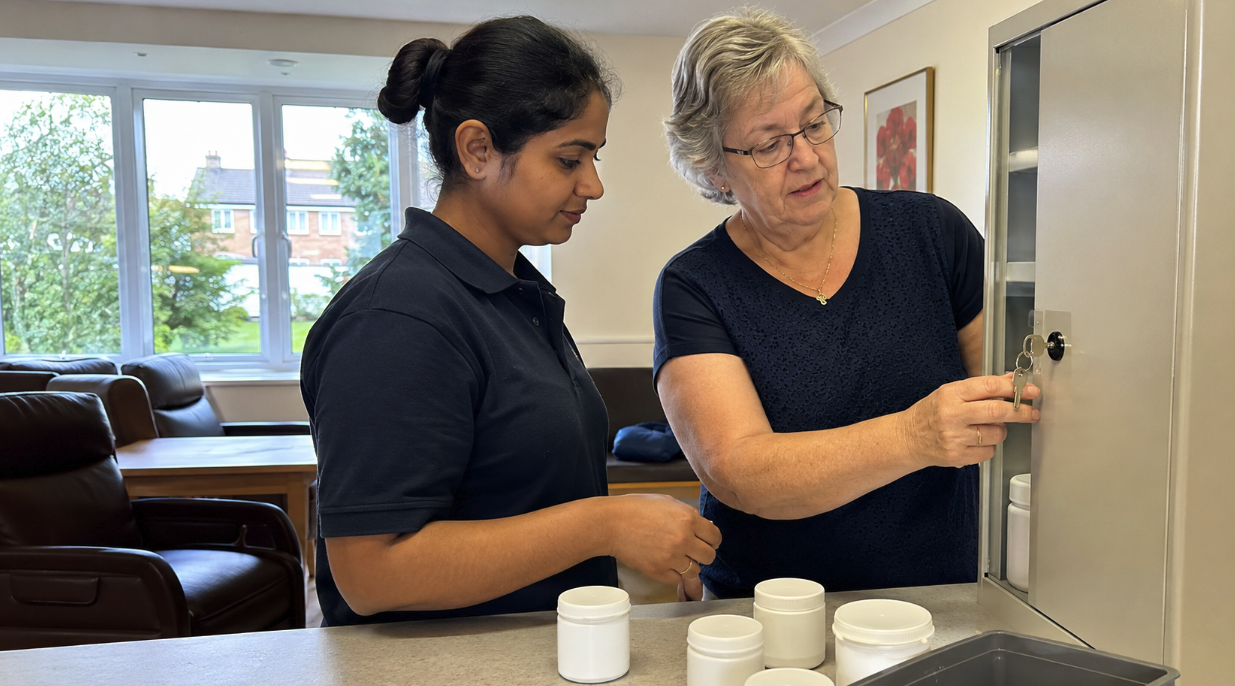
Learners will examine safe medicine storage, including secure access, temperature requirements, medicines fridges, controlled drugs and the need to store each person’s medicines separately where required. This module introduces the six rights of administration: right person, right medicine, right dose, right route, right time and the person’s right to decline. Learners will also cover safe use of MAR and eMAR records, including reading, checking, recording, coding and reporting, alongside ways to reduce distractions and interruptions during medicines support.
Module 4: Independence, Non-Prescribed Medicines and Person-Centred Support
Learners will consider how to support people who self-administer all or part of their medicines, including assessment, consent, risk review, storage and agreed prompts. This module explains how to support independence without taking over tasks the person can manage safely. It also covers prescribed medicines, over-the-counter medicines, homely remedies, authorised lists, clear records and the importance of not recommending medicines. Learners will explore support needs linked to swallowing, eyesight, memory, mobility, dexterity and communication, as well as safeguards for covert administration.
Module 5: Practical Difficulties, Missed Doses and Medication Incidents
Learners will look at common practical difficulties with medicines, such as refusal, spitting out medicines, damaged packaging, unclear labels, missing medicines, delayed visits, timing concerns and changes in a person’s presentation. This module explains what to do about missed or delayed doses, including pausing, checking records, seeking advice and recording clearly. Learners will also cover the response to medication errors and how to notice, record and report possible side effects or adverse drug reactions without making clinical judgements.
Module 6: Escalation, Reporting and Mistake Prevention
Learners will learn when to stop and seek advice, including unclear records, unexpected medicines, possible allergy warnings, refusal, swallowing concerns or signs that the person is unwell. This module outlines reporting and record-keeping expectations, including accurate medicines entries, incident reports, traceable corrections and appropriate sharing of information. Learners will also identify who to contact for medicines concerns, such as senior care workers, managers, prescribers, GPs, pharmacists, NHS 111, emergency services and safeguarding routes, before reviewing common mistakes to avoid.
Target Audience
This course is suitable for:
- Care workers in adult social care settings
- Homecare and domiciliary care staff
- Support workers in supported living services
- Care home staff who provide medicines support
- Senior care workers supervising medicines practice
- New starters who need an introduction to safe medicines support
No previous specialist knowledge is required.
FAQ
Who is this course suitable for?
This awareness course is suitable for adult social care staff who provide, support or supervise medicines support in care homes, homecare, supported living or similar care services.
Do I need any previous experience?
No. The course introduces key principles clearly and is suitable for learners who are new to medicines support, as well as staff who need refresher training.
What will I learn on this medication support course?
You will learn about medicines support, common medicine types, role boundaries, care plans, MAR and eMAR records, safe storage, consent, refusal, missed doses, medication errors, reporting and escalation.
Will this course help with day-to-day care practice?
Yes. The course focuses on practical situations care workers may face, including unclear instructions, refusals, delayed doses, distractions, record gaps and when to seek advice.
Does the course cover practical medicines support skills?
Yes. It covers practical checking, recording, storage, communication and escalation skills. It also explains the importance of working only within training, competence, authorisation and local policy.
Does it cover relevant responsibilities and good practice?
Yes. The course explains responsibilities linked to safe care, records, confidentiality, consent, capacity, controlled drugs, safeguarding concerns, professional advice and service procedures.
How long does the course take?
The course is self-paced and usually takes around 1 hour to complete.
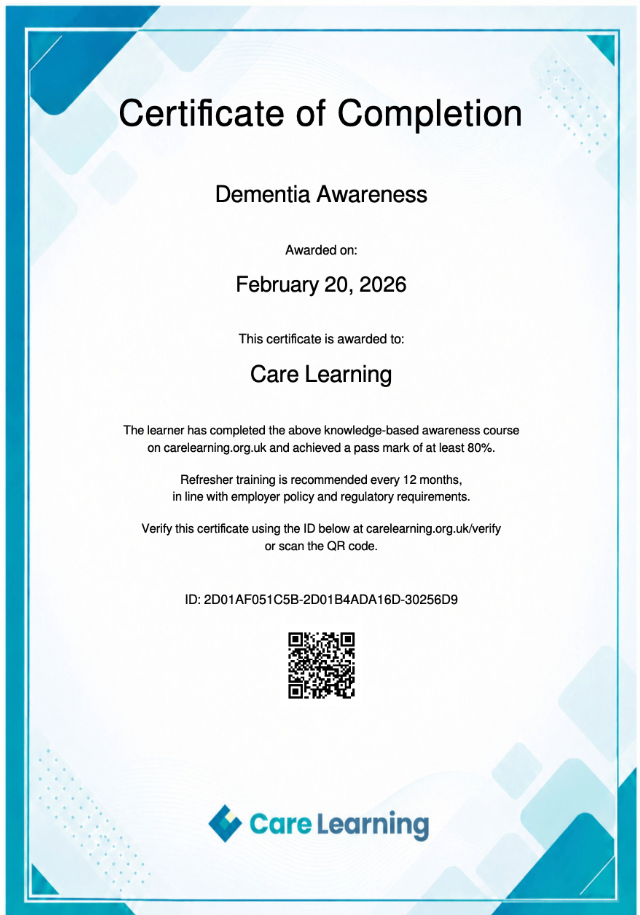
Will I receive a certificate?
Yes. A certificate is issued after successful completion.
This online medication support course gives learners a clear and practical understanding of safe medicines support in adult social care. It supports careful checking, accurate recording, person-centred practice and confident escalation when something is unclear or unsafe.
Enrol now to build your understanding of medication support in adult social care.