
This introductory palliative care course is designed for health and social care workers who support adults or children living with progressive or life-limiting conditions. It explains how compassionate, person-centred care can improve quality of life while protecting dignity, choice and individual wellbeing.
This free course covers the meaning and scope of palliative care, end of life care and terminal care. Learners will explore holistic support, symptom awareness, multidisciplinary working, care standards, communication, record keeping, role boundaries and the concerns that should be reported or escalated.
Why Take This eLearning Course?
People receiving palliative care may have complex and changing physical, psychological, social and spiritual needs. This course supports workers to understand those needs, contribute safely to agreed care and communicate effectively with the person, their family and the wider care team.
This course will help you to:
- Understand how palliative care can support people at different stages of illness
- Distinguish between palliative, end of life and terminal care
- Challenge common misunderstandings about when and where support is provided
- Recognise the different dimensions of holistic care
- Promote comfort, dignity, choice and quality of life
- Respond respectfully to personal, cultural and spiritual preferences
- Support families and unpaid carers within appropriate boundaries
- Work effectively with multidisciplinary and specialist services
- Recognise changes that require reporting or urgent escalation
- Contribute to consistent, coordinated and person-centred support
Learning Outcomes
By the end of this course, you will be able to:
- Define palliative care and explain its purpose
- Identify people who may benefit from a palliative approach
- Explain when palliative care may begin alongside other treatment
- Describe the differences and overlaps between palliative, end of life and terminal care
- Identify physical, psychological, social and spiritual care needs
- Explain how individual preferences inform care planning and delivery
- Describe the roles of general and specialist palliative care teams
- Outline recognised approaches and quality priorities for end of life care
- Record and report changes accurately through agreed procedures
- Apply appropriate role boundaries and escalation routes in practice
Introduction to Palliative Care Course Outline
The course is organised into six modules, progressing from the foundations of palliative care to practical responsibilities for workers providing everyday support.
Module 1: Understanding Palliative Care
Learners will explore the meaning of palliative care as an approach that aims to improve quality of life for adults, children and families affected by life-threatening illness. The module explains who may benefit, including people living with cancer, advanced organ disease, neurological conditions, dementia, frailty and other progressive illnesses. It also examines when support may begin, how it can be provided alongside disease-directed treatment and why palliative care is not limited to hospices or the final days of life. Common myths are addressed so that learners can communicate more accurately and confidently.
Module 2: Palliative, End of Life and Terminal Care
Learners will examine the terminology used across health and social care. The module defines end of life care, including the assessment, planning, coordination and review that may be required when a person is thought likely to be approaching the final stage of life. It also considers how terminal care is commonly associated with the actively dying phase and the final hours or days. Learners will compare the three terms, recognise where they overlap and understand the importance of using clear language that reflects local procedures and the person’s current care plan.
Module 3: Holistic and Person-Centred Support
Learners will consider how palliative care addresses the whole person rather than focusing only on a diagnosis. The module covers physical symptoms, emotional distress, relationships, practical circumstances, culture, identity, faith, values and spiritual concerns. It explains how symptom awareness, comfort measures and responsive everyday care can support quality of life without exceeding the worker’s competence. Learners will also explore how to identify personal priorities, respect changing preferences and communicate with families and unpaid carers while maintaining consent, confidentiality and the person’s central role in decision-making.
Module 4: Team Working and Specialist Support
Learners will identify the professionals and support workers who may contribute to multidisciplinary palliative care, including medical staff, nurses, pharmacists, care workers, social workers, therapists, counsellors, spiritual care staff and trained volunteers. The module explains how accurate information sharing, clear responsibilities and joined-up planning support continuity across homes, hospitals, hospices and care services. It also examines the contribution of general health and social care teams and identifies when specialist input may be required for complex pain, uncontrolled symptoms, severe distress, social difficulties, spiritual concerns, rapid deterioration or repeated crises.
Module 5: Good Practice, Frameworks and Quality Standards
Learners will explore what good palliative care looks like in practice, including personalised support, prompt recognition of needs, coordinated services and suitable assistance for families and carers. The module introduces the Gold Standards Framework at awareness level, focusing on earlier identification, assessment and proactive care planning. It also outlines the priority areas within NICE Quality Standard QS13, including systematic recognition, opportunities for advance care planning, coordinated services, access to support at any time and practical assistance for carers providing end of life care at home.
Module 6: The Worker’s Role in Everyday Palliative Care
Learners will examine how to provide respectful everyday support in line with the care plan, personal preferences, training and organisational procedures. The module covers consent, personal care, comfort measures, daily choices, observation, communication and factual record keeping. Learners will identify changes that should be reported, including worsening pain, breathlessness, agitation, reduced intake, altered alertness and rapid deterioration. It also clarifies role boundaries, routine and urgent escalation routes, the importance of verbal reporting when prompt action is required and the responsibilities workers must not undertake independently.
Target Audience
This course is suitable for:
- Care workers and support workers
- Healthcare assistants
- Domiciliary and community care staff
- Residential and nursing home employees
- Volunteers supporting people with life-limiting conditions
- New or existing health and social care staff seeking introductory training
No previous specialist knowledge is required.
FAQ
Who is this course suitable for?
The course is suitable for health and social care workers, support staff and volunteers who may assist adults or children with progressive or life-limiting conditions. It is particularly relevant to workers in home care, residential care, nursing care, community services and other non-specialist settings.
Do I need any previous experience?
No previous palliative care experience is required. The course provides an introductory level of knowledge and explains how workers can contribute safely within their role.
What will I learn on this palliative care course?
You will learn what palliative care means, who may benefit and how it differs from end of life and terminal care. You will also explore holistic needs, quality of life, family support, multidisciplinary working, care standards, reporting, communication and professional boundaries.
Will this course help with day-to-day practice?
Yes. The course links key principles to everyday responsibilities such as listening, providing agreed comfort measures, supporting personal choices, observing changes, recording information and reporting concerns.
Does the course cover practical skills?
The course explains practical approaches to personal care, communication, comfort, observation and record keeping. It does not authorise learners to carry out clinical tasks, diagnose conditions, prescribe treatment or change medicines independently.
Does it cover relevant responsibilities and good practice?
Yes. Learners will consider dignity, consent, confidentiality, person-centred care, factual record keeping, safe information sharing, multidisciplinary working and appropriate escalation. The course also introduces the Gold Standards Framework and NICE Quality Standard QS13 at awareness level.
Does palliative care always mean that active treatment has stopped?
No. Palliative care can be provided alongside treatment intended to manage, control or slow an illness. The balance between treatment and supportive care should reflect the person’s needs, informed choices and agreed clinical plan.
How long does the course take?
The course is self-paced and usually takes around 1 hour to complete.
Will I receive a certificate?
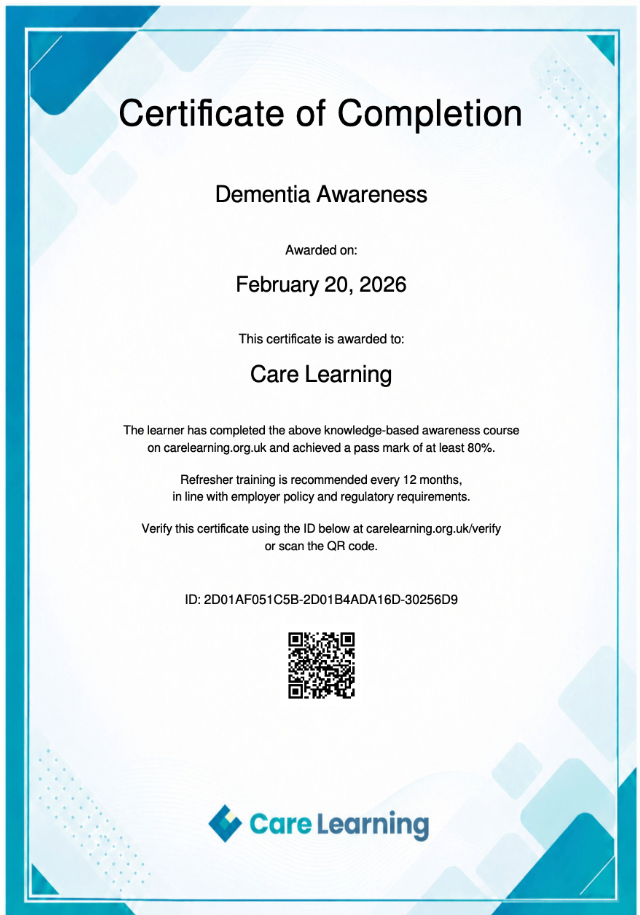
Yes. A certificate is issued after successful completion.
This course provides a clear foundation for understanding palliative care and the contribution health and social care workers can make. It supports compassionate, coordinated and responsible practice while reinforcing the importance of individual choice, professional guidance and timely reporting.
Enrol now to build your understanding of palliative care.