
This online course is designed for health and social care workers who support adults with learning disabilities. It explains how legal rights, legislation, national guidance and organisational procedures shape safe, respectful and person-centred support.
This free course covers the Human Rights Act 1998, Equality Act 2010, Mental Capacity Act 2005 and Care Act 2014. Learners will explore privacy, liberty, equality, decision-making, wellbeing, advocacy, safeguarding and the practical steps staff should take when rights may be restricted or concerns arise.
Why Take This eLearning Course?
Understanding rights and legislation helps staff provide support that protects dignity, promotes independence and remains within lawful professional boundaries. This course connects key legal principles with everyday situations in supported living, residential care, day services and community support.
This course will help you to:
- Understand how rights, legislation, guidance and workplace procedures work together.
- Recognise why equal citizenship, privacy and personal control matter in support.
- Apply human rights principles to everyday care and support decisions.
- Identify discrimination, access barriers and possible reasonable adjustments.
- Support people to make their own decisions wherever possible.
- Understand when a best-interests process may be required.
- Promote wellbeing, meaningful involvement and person-led outcomes.
- Recognise restrictions that may be unnecessary, unsafe or unlawful.
- Respond appropriately to possible abuse, neglect or rights violations.
- Record, report and escalate concerns through authorised routes.
Learning Outcomes
By the end of this course, you will be able to:
- Distinguish between legal rights, legislation, guidance, policies, procedures and support plans.
- Explain how key Human Rights Act protections apply in learning disability services.
- Identify common forms of disability discrimination under the Equality Act 2010.
- Describe practical reasonable adjustments that improve communication and access.
- Explain why mental capacity must be considered for a specific decision at a specific time.
- Apply the five statutory principles of the Mental Capacity Act 2005.
- Describe how to support a person to understand and communicate a decision.
- Explain how the Care Act wellbeing principle informs assessment and care planning.
- Recognise rights-limiting practices and identify less restrictive alternatives.
- Record, report and escalate legal or safeguarding concerns appropriately.
Rights and Legislation for People with Learning Disabilities Course Outline
The course is organised into six modules covering the foundations of rights-based support, human rights, equality, mental capacity, Care Act responsibilities and practical responses to restrictions or concerns.
Module 1: Rights, Law and Professional Responsibilities
Learners will examine the differences between legal rights, legislation, national guidance, organisational policies, procedures and individual support plans. The module explains why rights matter to people with learning disabilities and how accessible information, advocacy and communication support can help people exercise those rights. It introduces the Human Rights Act 1998, Equality Act 2010, Mental Capacity Act 2005 and Care Act 2014, including their geographical scope. Learners will also consider professional role boundaries and when to follow an agreed plan, report a concern or seek advice from a manager, safeguarding professional or legal adviser.
Module 2: Human Rights in Everyday Support
Learners will explore how Human Rights Act protections apply to daily care and support. This includes the right to life under Article 2, protection from inhuman or degrading treatment under Article 3 and the right to liberty and security under Article 5. The module examines lawful authority, blanket restrictions and the importance of regular review. It also covers Article 8 rights relating to privacy, relationships, home and communication, alongside Article 14 protection from discrimination in the enjoyment of other Convention rights. Practical examples show how staff can identify unequal treatment, preserve dignity and raise concerns about unnecessary restrictions.
Module 3: Equality, Discrimination and Reasonable Adjustments
Learners will develop an understanding of disability as a protected characteristic under the Equality Act 2010 without being expected to make complex legal determinations. The module introduces direct and indirect discrimination, harassment, victimisation, discrimination arising from disability and failures to make reasonable adjustments. Learners will consider practical adjustments involving accessible information, communication assistance, appointment times, physical environments and service procedures. The module also explains how to agree, record, communicate and review adjustments, as well as how to escalate unresolved barriers.
Module 4: Mental Capacity and Supported Decision-Making
Learners will examine the decision-specific and time-specific approach required by the Mental Capacity Act 2005. The module explains the presumption of capacity, the duty to provide practical support, respect for unwise decisions, best-interests decision-making and the requirement to choose the least restrictive option. Learners will explore ways to make information accessible, use communication aids, select an appropriate time and setting, involve trusted support and check understanding. The module also outlines how best-interests decisions should consider the person’s wishes, feelings, beliefs and values, and when serious or disputed decisions must be escalated.
Module 5: Care Act Wellbeing, Planning and Safeguarding
Learners will explore the Care Act 2014 wellbeing principle and its application to dignity, physical and emotional wellbeing, protection from abuse, personal control, suitable accommodation, relationships and participation in community life. The module explains how assessments and care plans should be completed with the person, using accessible communication and clearly identified personal outcomes. Learners will also consider independent advocacy, carers’ rights and partnership working between individuals, families, providers, local authorities and health professionals. Adult safeguarding content covers recognising concerns, listening carefully, protecting immediate safety, making factual records and following local reporting and escalation routes.
Module 6: Community Living and Rights-Based Responses
Learners will consider the aims of Transforming Care and Building the Right Support, including stronger community services and reduced reliance on unnecessary inpatient care. The module examines blanket restrictions, punitive responses, inaccessible communication and other practices that may limit rights. It introduces responsive approaches that consider communication, health, sensory, environmental and emotional causes of distress. Learners will also review how to create accurate records, maintain confidentiality, report concerns and use safeguarding, complaints or whistleblowing procedures. Examples from residential care, supported living, day services and community settings demonstrate how rights-based practice protects privacy, promotes choice and challenges unnecessary control.
Target Audience
This course is suitable for:
- Support workers assisting adults with learning disabilities.
- Care workers in residential and supported living services.
- Day service and community support staff.
- Team leaders, supervisors and care coordinators.
- Personal assistants and staff providing individualised support.
- New employees completing an introduction to rights-based practice.
No previous specialist knowledge is required.
FAQ
Who is this course suitable for?
The course is designed for staff who support adults with learning disabilities in residential care, supported living, day services or community settings. It is also suitable for supervisors, coordinators and personal assistants who need a practical understanding of rights and legal responsibilities.
Do I need any previous experience?
No previous legal or specialist knowledge is required. The course introduces the main principles in clear language and explains how they relate to ordinary support situations.
What will I learn on this learning disability rights course?
You will learn about human rights, disability equality, reasonable adjustments, mental capacity, supported decision-making, Care Act wellbeing, advocacy, safeguarding and the appropriate reporting of concerns.
Will this course help with day-to-day practice?
Yes. The course connects legal principles with practical situations involving personal care, privacy, relationships, communication, healthcare access, activity choices, community participation and restrictions on freedom.
Does the course cover practical skills?
The course covers practical approaches such as providing accessible information, supporting decisions, recording observations, reporting concerns, reviewing restrictions and identifying reasonable adjustments. It does not train learners to provide legal advice or make decisions outside their professional authority.
How does the course address restrictions on a person’s rights?
It explains how to recognise blanket or unnecessary restrictions, consider lawful authority, review whether an arrangement is proportionate and identify less restrictive alternatives. Learners are also shown when to follow a plan, report a concern or seek professional advice.
Does it cover relevant responsibilities and good practice?
Yes. The course explains the responsibilities of staff under key England-focused health and social care frameworks. It also reinforces confidentiality, accurate recording, professional boundaries, person-centred planning and the correct use of safeguarding and escalation routes.
Does the course cover the Mental Capacity Act?
Yes. It covers the five statutory principles, decision-specific and time-specific capacity, practical decision-making support, best-interests processes and the least restrictive approach.
How long does the course take?
The course is self-paced and usually takes around 1 hour to complete.
Will I receive a certificate?
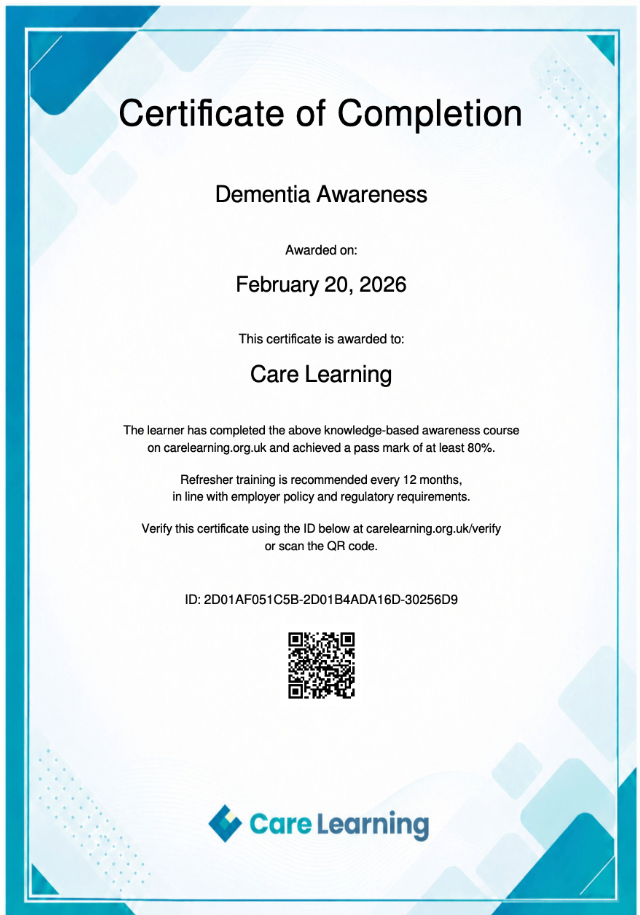
Yes. A certificate is issued after successful completion.
This course provides a practical foundation for supporting people with learning disabilities in ways that respect their rights, promote meaningful involvement and meet professional responsibilities. It helps staff recognise barriers and restrictions while responding through clear, accountable and authorised processes.
Enrol now to build your understanding of rights and legislation for people with learning disabilities.