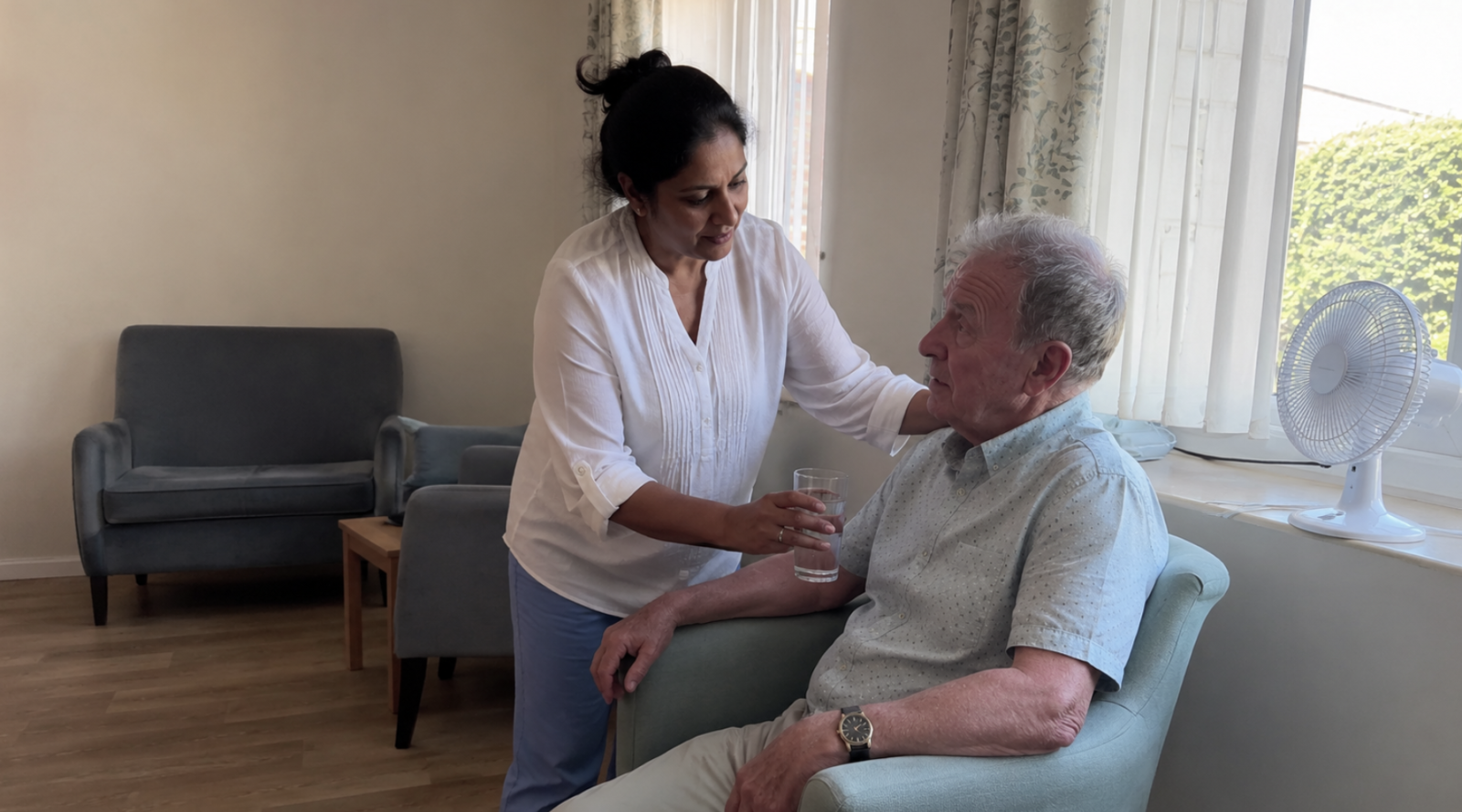
This online course is designed for health and social care workers who support people during periods of hot weather. It explains how extreme heat can affect health, why some people face greater risks and how staff can recognise and respond to heat-related illness.
This free course covers heat exhaustion, heatstroke, dehydration, individual risk factors, indoor overheating, first aid, emergency escalation and practical heatwave planning. It also explores Heat-Health Alerts, equality considerations, medicines safety, welfare checks and safer working practices.
Why Take This eLearning Course?
Extreme heat can affect a person’s health before they realise they are becoming unwell. Staff need the knowledge to identify increasing risks, take practical preventive action and respond promptly when symptoms develop.
This course will help you to:
- Understand how extreme heat affects the body and living environment
- Recognise people who may require additional support
- Identify the signs of dehydration and overheating
- Distinguish heat exhaustion from heatstroke
- Provide appropriate first aid within your role
- Know when NHS 111 or emergency services should be contacted
- Support hydration and reduce unnecessary heat exposure
- Help keep homes and care environments cooler
- Use Heat-Health Alerts alongside local procedures
- Contribute to effective heatwave and service continuity planning
Learning Outcomes
By the end of this course, you will be able to:
- Define overheating, dehydration, heat exhaustion and heatstroke
- Explain why UK buildings and care environments can become excessively hot
- Describe personal, clinical, social and environmental heat risk factors
- Recognise common signs of heat exhaustion and suspected heatstroke
- Explain the differences between heat exhaustion and heatstroke
- Demonstrate the correct initial response to heat exhaustion
- Identify when an immediate 999 call is required
- Describe practical ways to reduce heat exposure and maintain hydration
- Explain how medicines should be managed safely during hot weather
- Outline how services can prepare for and respond to Heat-Health Alerts
Heat-Related Illness and Extreme Heat Awareness Course Outline
The course is organised into six modules covering heat awareness, individual risk, symptom recognition, first aid, prevention and organisational preparedness.
Module 1: Understanding Extreme Heat and Heat-Health Planning
Learners will explore how extreme heat, overheating, dehydration, heat exhaustion and heatstroke affect health. The module explains why temperature alone does not determine risk and considers the effects of humidity, exposure, health, housing and access to support. Learners will examine why many UK buildings retain heat, the lessons identified following the 2003 and 2022 heatwaves, and the purpose of England’s Adverse Weather and Health Plan. It also explains green preparedness and yellow, amber and red Heat-Health Alerts, including the need to follow local procedures and national arrangements.
Module 2: Identifying People and Situations at Increased Risk
Learners will examine how age, pregnancy, long-term conditions, mobility, cognition, hydration and prescribed medicines can affect a person’s ability to cope with hot weather. The module considers the additional risks associated with living alone, limited social contact, communication barriers and dependence on others for drinks, personal care or access to cooler spaces. It also explores housing, neighbourhood and occupational exposure, including top-floor accommodation, limited green space, outdoor work and personal protective equipment. Equality duties, reasonable adjustments, accessible communication and proportionate planning for communities experiencing health inequalities are also addressed.
Module 3: Recognising Heat Exhaustion and Heatstroke
Learners will identify the common signs of heat exhaustion, including tiredness, dizziness, headache, nausea, sweating, cramps, thirst and changes in behaviour. The module explains the emergency warning signs associated with heatstroke, such as a very high temperature, rapid breathing, confusion, poor coordination, seizures and loss of consciousness. Learners will compare both conditions, understand the importance of improvement within 30 minutes and consider how symptoms may present differently across individuals. Inclusive recognition, communication needs, different skin tones and changes from a person’s usual behaviour are also covered.
Module 4: First Aid and Emergency Escalation
Learners will understand how to move a person with heat exhaustion to a cooler place, remove unnecessary outer clothing, cool the skin and offer suitable fluids when swallowing is safe. The module explains how to begin and record the 30-minute check, monitor awareness and breathing, and contact NHS 111 when further advice is needed. It identifies the symptoms that require an immediate 999 response and outlines safe actions while emergency help is travelling. Learners will also review professional boundaries relating to diagnosis, medicines, cardiopulmonary resuscitation, incident reporting and safeguarding procedures.
Module 5: Preventing Heat-Related Illness
Learners will examine practical ways to maintain hydration, reduce strenuous activity, plan journeys for cooler periods and support people who cannot drink independently. The module explains how shading, safe ventilation, cooler rooms and reduced use of heat-producing equipment can help control indoor temperatures. Learners will review safe medicines storage, the importance of continuing prescribed treatment unless advised otherwise and when pharmacy or clinical advice should be obtained. Safer working practices are also covered, including work scheduling, drinking water, rest breaks, workload adjustments, protective clothing and individual occupational health needs.
Module 6: Organisational Preparedness and Joined-Up Support
Learners will explore how Heat-Health Alerts should be checked, communicated and applied alongside local heatwave and business continuity procedures. The module explains how services can assign responsibilities, test communication routes, prepare equipment, identify cooler areas and monitor rooms that overheat. It covers risk lists, planned welfare checks, support following missed contact and coordination during hospital discharge, temporary accommodation or service changes. Learners will also consider partnership working, lawful information sharing and reflective questions that can lead to named actions, responsible roles and improvements before future hot weather.
Target Audience
This course is suitable for:
- Care workers and support workers
- Nurses, healthcare assistants and allied health staff
- Social workers and community support teams
- Registered managers and service coordinators
- Housing, outreach and homelessness support staff
- Volunteers supporting people who may be vulnerable during hot weather
No previous specialist knowledge is required.
FAQ
Who is this course suitable for?
The course is suitable for health, social care, housing and community workers who may support people during periods of extreme heat. It is also relevant to managers responsible for staff safety, service continuity or heatwave planning.
Do I need any previous experience?
No previous specialist experience is required. The course introduces the main risks, symptoms, preventive actions and escalation procedures in clear and practical language.
What will I learn on the heat-related illness course?
You will learn how to identify heat risk factors, recognise heat exhaustion and heatstroke, provide an appropriate initial response and help reduce heat exposure. You will also learn how Heat-Health Alerts support organisational planning in England.
Will this course help with day-to-day practice?
Yes. The course provides practical guidance for monitoring people during hot weather, offering hydration, cooling indoor environments, carrying out welfare checks and escalating concerns appropriately.
Does the course cover practical first aid skills?
The course explains the immediate steps for supporting a person with heat exhaustion, including active cooling, suitable fluids and continuous monitoring. It also explains when NHS 111 or 999 should be contacted. Staff should always work within their training and local procedures.
Does it cover responsibilities and good practice?
Yes. The course covers professional boundaries, equality considerations, medicines safety, accessible communication, risk assessment, record keeping, welfare arrangements and local emergency procedures.
Are Heat-Health Alerts used throughout the UK?
The Heat-Health Alert system described in the course applies to England. Learners working in Scotland, Wales or Northern Ireland should follow the alerting arrangements, public health advice and local procedures used in their nation.
Can staff advise someone to change their medicines during hot weather?
No. Staff must not advise a person to stop, reduce or alter prescribed medicines without advice from an appropriate healthcare professional. Concerns should be referred to a pharmacist, prescriber or relevant clinical service.
How long does the course take?
The course is self-paced and usually takes around 1 hour to complete.
Will I receive a certificate?
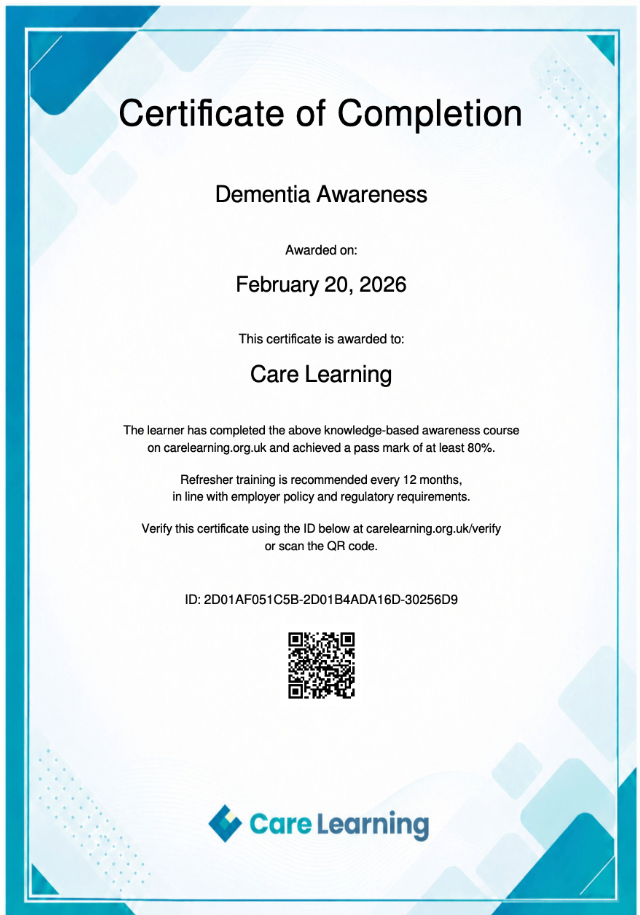
Yes. A certificate is issued after successful completion.
This course provides practical knowledge for preventing avoidable harm, recognising deterioration and supporting a safe, organised response to extreme heat. It can help staff, managers and services prepare confidently before hot weather arrives and respond appropriately when concerns develop.
Enrol now to build your understanding of heat-related illness and extreme heat awareness.