This Introduction to Supported Living course is designed for people working in, managing or supporting community-based adult social care services in England. It explains what supported living means in practice and how the model promotes a person’s rights, independence, choice and control while ensuring that assessed support needs are met appropriately.
This free course covers supported living arrangements, the difference between supported living and residential care, person-centred practice, communication, consent, safeguarding, risk management and multi-agency working. Learners will also explore the Care Act 2014, CQC’s role, relevant mental health and mental capacity legislation, commissioning arrangements, documentation and professional boundaries.
Why Take This eLearning Course?
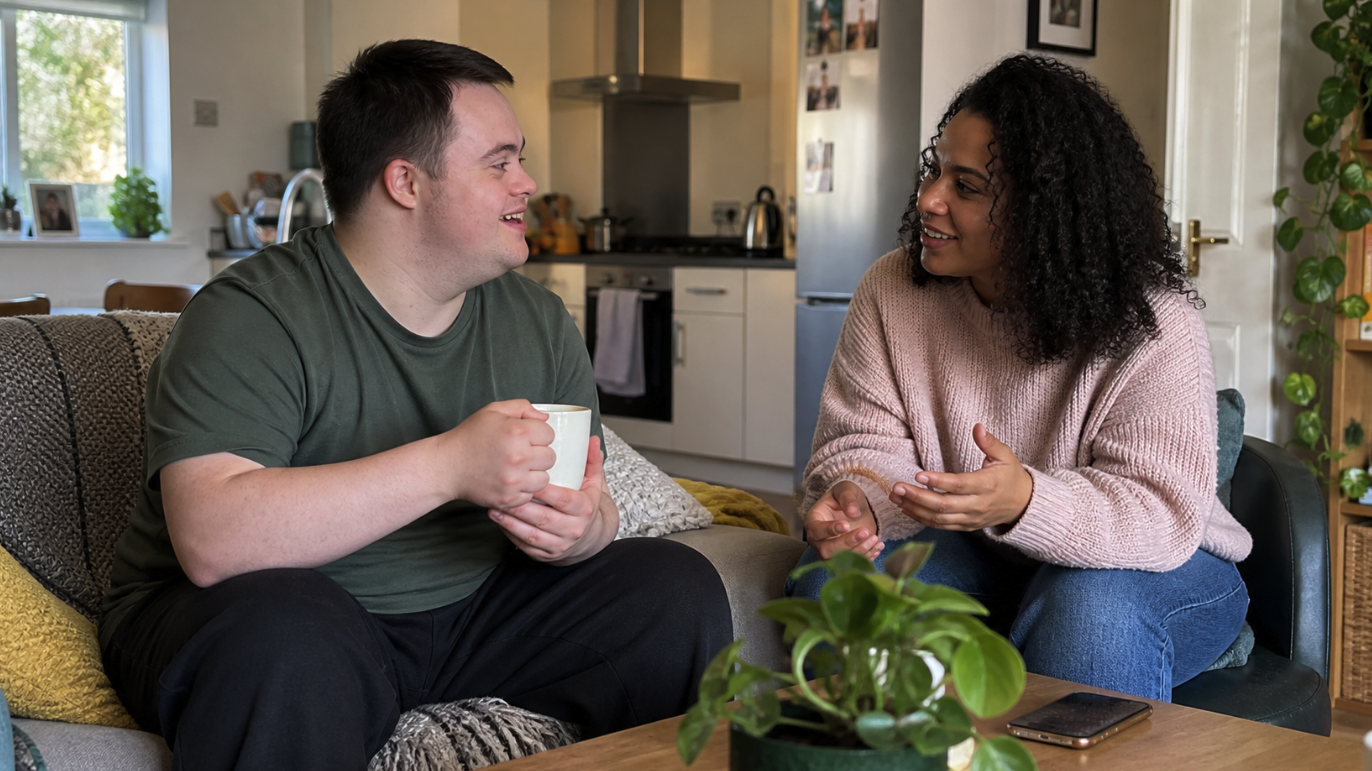
Supported living requires staff to understand that they are providing care or support within another person’s home. Effective practice depends on respecting individual rights while responding proportionately to changing needs, risks and agreed responsibilities.
This course will help you to:
- Understand what supported living means and how it differs from residential care.
- Recognise the importance of separating housing arrangements from care and support.
- Promote choice, privacy, dignity, independence and community participation.
- Provide person-centred support that respects a person’s home and preferences.
- Communicate inclusively and support people to participate in decisions.
- Understand key responsibilities relating to consent and mental capacity.
- Recognise changes in needs, wellbeing or risk that may require further action.
- Respond appropriately to safeguarding concerns and changing circumstances.
- Work within your role and know when an issue should be referred or escalated.
- Understand the importance of accurate records and coordinated multi-agency working.
Learning Outcomes
By the end of this course, you will be able to:
- Define supported living and describe common housing and funding arrangements.
- Explain how supported living differs from residential care.
- Identify people who may use supported living and the values that underpin good support.
- Explain how choice, wellbeing and proportionate safety measures work together.
- Outline the relevance of the Care Act 2014 and CQC regulation to supported living.
- Describe how mental health legislation, consent and the Mental Capacity Act may affect practice.
- Apply person-centred approaches to communication, independence and everyday support.
- Identify common risks, safeguarding concerns and signs that support needs may have changed.
- Describe appropriate referral, recording and escalation processes.
- Distinguish between housing, care, commissioning and role-specific responsibilities.
Introduction to Supported Living Course Outline
The course is organised into six modules covering the foundations of supported living, the people and values involved, legal and professional responsibilities, person-centred practice, responding to changing needs and the documents and systems that support effective services.
Module 1: Understanding Supported Living
Learners will explore the meaning of supported living and how it enables adults to live in their own homes while receiving individualised care or support. The module explains the distinction between supported living and residential care, including the importance of keeping housing and support arrangements appropriately separate. Learners will consider common tenancy, licence, funding and commissioning arrangements, including local authority, NHS, personal budget, direct payment and private funding routes. It also introduces the policy direction towards community-based support, individual rights, meaningful choice and services designed around the person’s wider life and outcomes.
Module 2: People, Values and Everyday Support
Learners will consider the range of adults who may use supported living, including people with learning disabilities, autistic people, adults with physical disabilities and people with mental health needs. The module explains why suitability should be determined through individual assessment rather than diagnosis or service labels. It explores the values of privacy, dignity, choice, control, independence, relationships and community inclusion, alongside common support needs and potential risks. Learners will also examine how personal choice, wellbeing and safe support should be balanced without introducing unnecessary restrictions.
Module 3: Legal, Regulatory and Professional Responsibilities
Learners will develop an awareness of the legal and regulatory frameworks relevant to supported living in England. This includes the Care Act 2014 and its principles relating to wellbeing, assessment, care planning, prevention, safeguarding and commissioning. The module explains CQC’s role in regulating relevant care activities while recognising that the person’s home is not automatically a registered care home. Learners will also consider mental health aftercare, including Section 117 arrangements, the staged implementation of mental health reforms and the importance of following current guidance. Role boundaries for support workers, managers, social workers, health professionals, commissioners and housing providers are also explored.
Module 4: Person-Centred Support, Communication and Independence
Learners will examine how person-centred practice should operate in someone’s own home, including respecting privacy, possessions, visitors, personal routines and agreed access arrangements. The module covers inclusive communication, accessible information, communication aids, processing time, language support and reasonable adjustments. Learners will consider consent and supported decision-making under the Mental Capacity Act 2005, including the need to avoid assumptions about capacity and to recognise that an unwise decision does not automatically indicate a lack of capacity. Practical examples also show how support can build independence with household tasks, travel, relationships, education, employment and community activities.
Module 5: Responding to Changing Needs, Risks and Safeguarding Concerns
Learners will explore common signs that a person’s health, wellbeing, safety or support needs may have changed. This includes changes in behaviour, self-care, daily abilities, communication, finances, social contact or the home environment, as well as possible abuse, neglect, exploitation and self-neglect. The module explains how to follow existing plans, involve the person, record factual information and seek review rather than altering arrangements informally. Learners will also examine emergency action, safeguarding and referral routes, escalation procedures, multi-agency working, lawful information sharing and the importance of timely, accurate records.
Module 6: Documentation, Commissioning and Good Practice Resources
Learners will identify the main documents used in supported living and understand the different purposes of occupancy agreements, support agreements, individual support plans, risk assessments, communication information and medicines records. The module explains how commissioning, funding, housing and care responsibilities may involve different organisations and why these responsibilities should remain clearly distinguished. Learners will consider review arrangements and the principle that changes to care should not be treated informally as decisions about someone’s right to remain in their home. The course concludes by identifying key sources of current guidance and reinforcing the central principles of rights, choice, independence, appropriate support, professional boundaries and timely escalation.
Target Audience
This course is suitable for:
- Support workers working in supported living services.
- New staff preparing to work in community-based adult social care.
- Team leaders and supervisors responsible for supported living practice.
- Adult social care staff who need an introduction or refresher on supported living.
- Housing, commissioning or community support staff who work alongside supported living services.
- Employers and organisations providing induction or awareness training for relevant staff.
No previous specialist knowledge is required.
FAQ
Who is this Introduction to Supported Living course suitable for?
The course is suitable for support workers, team leaders, adult social care staff and others whose work involves supported living services in England. It can also support staff who need a clearer understanding of how housing, care and professional responsibilities fit together.
Do I need any previous experience?
No. The course provides an introduction to supported living and does not require previous specialist knowledge. It is suitable for new workers as well as people who want to refresh their understanding.
What will I learn on this course?
You will learn what supported living means, how it differs from residential care and how good practice promotes rights, privacy, choice and independence. The course also covers legal and regulatory responsibilities, communication, consent, safeguarding, risk, documentation, referrals and multi-agency working.
Will this course help with day-to-day practice?
Yes. The content connects supported living principles with everyday situations such as entering someone’s home, providing assistance without taking over, supporting decisions, recognising changes in need, recording concerns and knowing when to seek further help.
Does the course cover practical skills?
The course focuses on practical knowledge and decision-making rather than teaching physical care techniques. It provides examples of how staff can promote independence, communicate effectively, follow support plans, respond to changing needs and work within professional boundaries.
Does it cover relevant responsibilities or good practice?
Yes. The course introduces responsibilities arising from the Care Act 2014, CQC regulation, the Mental Capacity Act 2005 and relevant mental health arrangements. It also covers safeguarding, reasonable adjustments, role boundaries, information sharing and the separation of housing and care responsibilities. Staff should always follow current organisational procedures and seek appropriate professional advice when an issue falls outside their role.
How long does the course take?
The course is self-paced and usually takes around 1 hour to complete.
Will I receive a certificate?
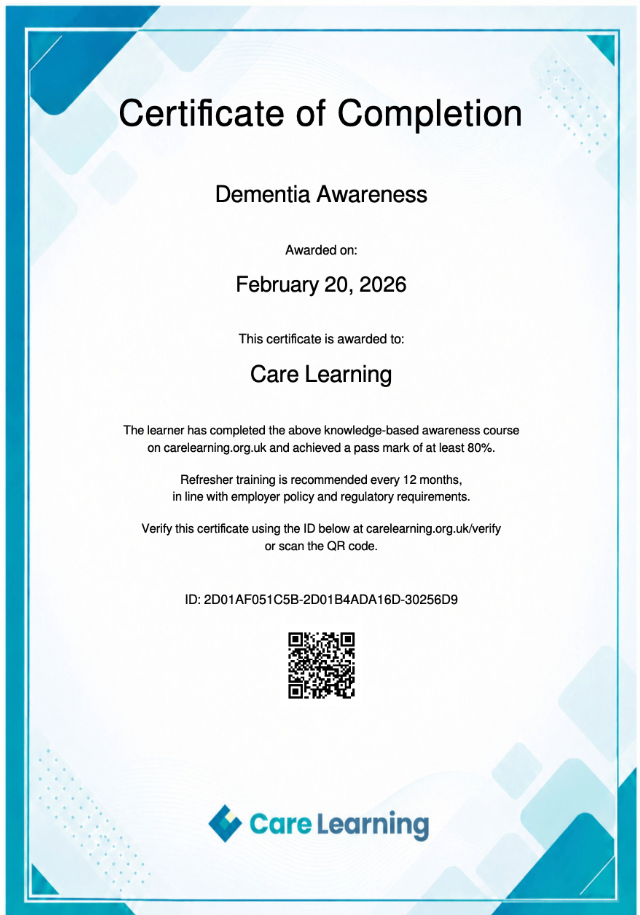
Yes. A certificate is issued after successful completion.
This Introduction to Supported Living course provides a clear foundation for understanding how rights-based, person-centred support should work within someone’s own home. It supports staff to recognise their responsibilities, promote independence, respond appropriately to concerns and contribute to safe, respectful and well-coordinated support.
Enrol now to build your understanding of supported living.