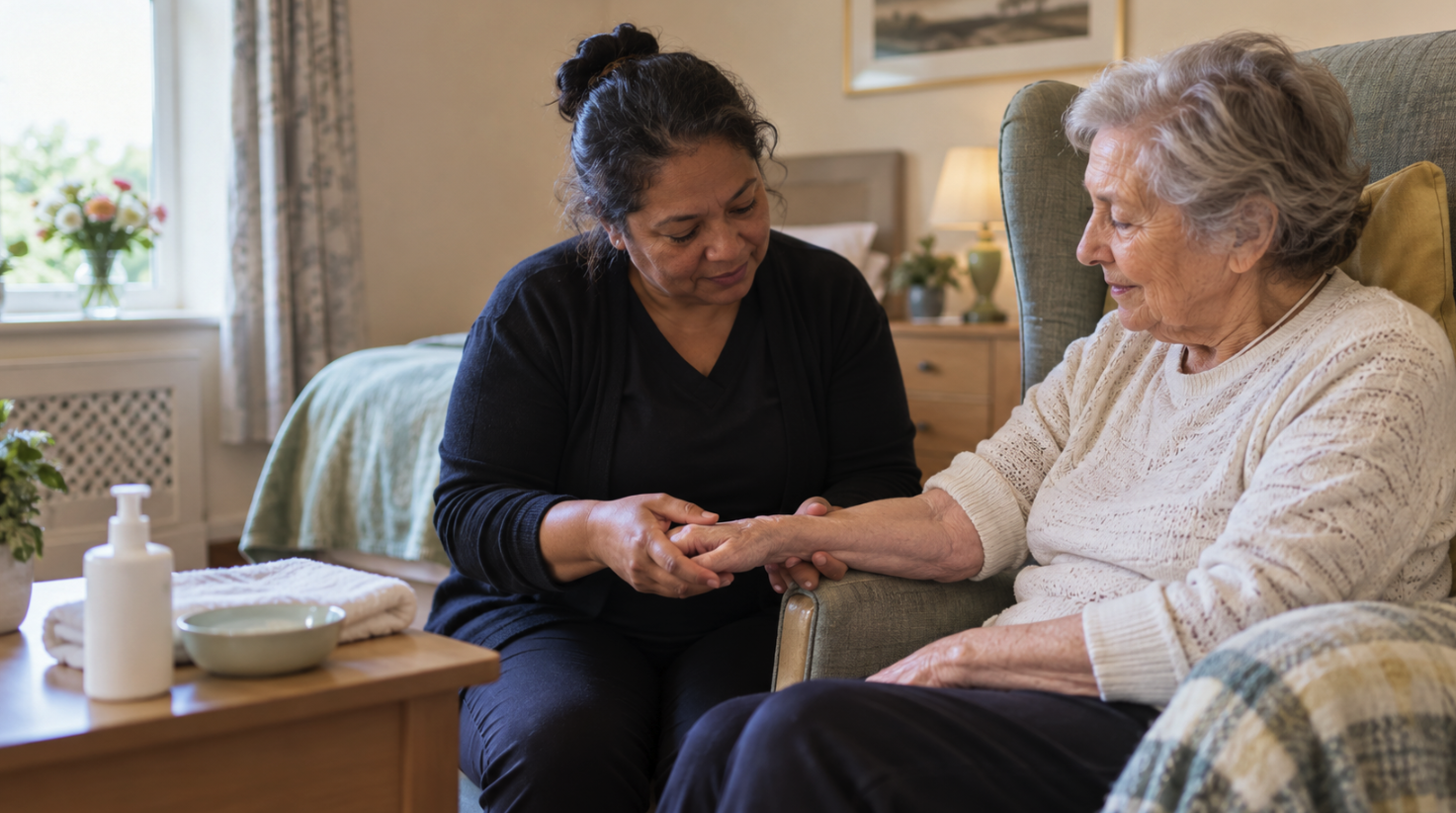
This online course is designed for care workers and others who support adults with personal care in health and social care settings. It develops practical awareness of skin health, common skin conditions and the changes that may require reporting or escalation, while keeping observation and care within the worker’s role.
This free course covers the functions of the skin, eczema, dry skin, psoriasis, ichthyosis, skin tears, cellulitis, fungal and yeast-related problems, emollient safety and skin-friendly personal care. Learners will also explore dignity, consent, documentation, referral routes and the importance of recognising deterioration without attempting to make a clinical diagnosis.
Why Take This eLearning Course?
Skin problems can affect comfort, mobility, sleep, dignity and general wellbeing. Care workers are often well placed to notice changes during routine personal care, making accurate observation, appropriate support and timely reporting important parts of safe practice.
This course will help you to:
- Understand why healthy skin is important for protection, comfort and wellbeing.
- Recognise common features associated with a range of skin conditions.
- Notice changes across different skin tones without relying only on redness.
- Reduce avoidable damage to fragile skin during personal care and movement.
- Recognise possible signs of cellulitis and serious deterioration.
- Support good hygiene and moisture control while protecting skin integrity.
- Use emollients safely in accordance with agreed care instructions.
- Understand important fire, fabric and slip risks associated with emollients.
- Record and communicate skin observations clearly and factually.
- Provide skin care that respects dignity, consent, choice and independence.
Learning Outcomes
By the end of this course, you will be able to:
- Describe the main protective, sensory and temperature-regulating functions of the skin.
- Explain why skin health matters to physical and emotional wellbeing.
- Identify appropriate opportunities to observe skin during agreed personal care.
- Recognise common features of eczema, dry skin, psoriasis and ichthyosis.
- Explain common causes of skin tears and ways to reduce avoidable risk.
- Identify possible signs of cellulitis and circumstances requiring urgent or emergency escalation.
- Recognise features that may be associated with fungal, yeast-related or skin-fold problems.
- Describe safe use of emollients and associated fire, fabric and slip precautions.
- Select appropriate reporting, referral and escalation routes for skin concerns.
- Record observations and provide person-centred skin care within care-worker role boundaries.
Skin Conditions and Dermatology Awareness for Care Workers Course Outline
The course is organised into eight modules covering skin health and observation, common conditions, skin tears, cellulitis, fungal and yeast-related problems, emollient safety, reporting and escalation, and person-centred daily skin care.
Module 1: Understanding Skin Health and Observation
Learners will explore the main functions of the skin, including protection, sensation, temperature regulation and defence against infection and physical damage. The module explains why skin health contributes to comfort, dignity, independence and emotional wellbeing. Learners will also consider appropriate opportunities to notice skin changes during washing, dressing, continence care and other agreed support while maintaining consent, privacy and respect.
Module 2: Recognising Common Dry and Scaly Skin Conditions
Learners will develop awareness of eczema, dry skin, psoriasis and ichthyosis, including common features such as itching, scaling, cracking, soreness and changes in texture. The module explains that skin conditions may appear differently between individuals and across different skin tones. It reinforces the need to compare changes with the person’s usual presentation, follow existing care instructions and report deterioration rather than attempting to diagnose a condition.
Module 3: Skin Tears, Prevention and Immediate Response
Learners will examine what skin tears are, why ageing or fragile skin can be more vulnerable and how friction, shearing, falls, transfers, clothing and equipment may contribute to injury. The module covers gentle personal care, safer movement and handling, immediate first-aid principles, protecting an injured area, prompt reporting, clinical assessment and follow-up within the worker’s training and authorisation.
Module 4: Cellulitis and Signs of Serious Deterioration
Learners will explore common signs that may suggest cellulitis, including pain, heat, swelling, colour change, blistering and general symptoms such as feeling feverish or unwell. The module explains why suspected cellulitis requires prompt assessment and how infection may become more serious if treatment is delayed. Learners will also recognise emergency warning signs such as confusion, severe dizziness, very fast breathing, loss of consciousness and other signs of serious deterioration.
Module 5: Fungal, Yeast-Related and Skin-Fold Problems
Learners will develop awareness of common problems including athlete’s foot, Candida-related thrush and intertrigo. The module considers features such as itching, cracking, moisture, soreness, weeping and changes in colour while emphasising that similar symptoms can have different causes. Learners will also examine gentle washing, careful drying, personal-item hygiene, continence care and infection-prevention measures that can help protect vulnerable skin.
Module 6: Emollients and Safe Skin-Care Support
Learners will understand what emollients are and how creams, ointments, lotions and other preparations may help reduce moisture loss and support dry, itchy or scaly skin. The module covers safe application according to prescribed or agreed care instructions, infection-prevention considerations and observation for unexpected reactions. It also addresses important fire hazards associated with emollient residue on fabrics, laundering considerations and the prevention of slips caused by creams, lotions or ointments.
Module 7: Reporting, Referral and Role Boundaries
Learners will explore which skin changes should be reported, including worsening pain, heat, swelling, blistering, broken skin, discharge, spreading changes or wounds that are not improving as expected. The module explains possible escalation routes through senior staff, nurses, GPs, NHS 111, emergency services and specialist dermatology referral. Learners will also consider the distinction between observing and reporting a concern and making a clinical diagnosis or changing treatment independently.
Module 8: Person-Centred Daily Skin Care and Documentation
Learners will consider how gentle washing, careful drying, agreed skin products and suitable clothing can support a skin-friendly daily routine. The module reinforces dignity, consent, privacy, choice and independence during personal care. Learners will also develop an understanding of factual skin documentation, including recording the location and nature of changes, symptoms reported by the person, actions taken, people informed and agreed follow-up.
Target Audience
This course is suitable for:
- Care workers and support workers providing personal care.
- Residential and nursing care staff working within their agreed responsibilities.
- Home care and domiciliary care workers.
- Personal assistants supporting adults with everyday care needs.
- New care staff who need an introduction to skin health and dermatology awareness.
- Experienced care staff seeking to refresh their understanding of observation, reporting and safe skin-care practice.
No previous specialist knowledge is required.
FAQ
Who is this course suitable for?
This course is suitable for care workers, support workers, personal assistants and other staff who may observe or support a person’s skin during routine personal care. It is particularly relevant to adult social care environments where staff need to recognise changes and report concerns appropriately.
Do I need any previous experience?
No. The course introduces the subject in clear, practical language and does not require previous dermatology knowledge. It is suitable for new staff as well as experienced workers who want to refresh their awareness.
What will I learn on this skin conditions awareness course?
You will learn about the functions of the skin, common skin conditions, skin tears, cellulitis, fungal and yeast-related problems, emollients, skin-friendly personal care and the signs that should be recorded, reported or escalated.
Will this course help with day-to-day practice?
Yes. The course focuses on situations that care workers may encounter during washing, dressing, continence support, mobility assistance and other agreed care. It supports staff in noticing changes, following care plans and communicating concerns clearly.
Does the course cover practical skills?
The course explains practical principles including gentle washing and drying, reducing friction, safer support for fragile skin, hygiene and moisture control, emollient use and responding appropriately to skin tears. Staff should always follow their organisation’s procedures, individual care plans and the limits of their training and authorisation.
Does it cover relevant responsibilities and good practice?
Yes. The course covers consent, dignity, privacy, person-centred support, infection prevention, factual documentation, reporting and escalation. It also reinforces the importance of observing and reporting concerns without diagnosing conditions or changing clinical treatment independently.
How long does the course take?
The course is self-paced and usually takes around 1 hour to complete.
Will I receive a certificate?
Yes. A certificate is issued after successful completion.
Understanding skin health helps care workers provide safer, more comfortable and more person-centred support. This course builds practical awareness of common skin concerns while reinforcing careful observation, clear reporting, appropriate escalation and respect for individual choice and dignity.
Enrol now to build your understanding of skin conditions and dermatology awareness for care workers.