
This introductory online course helps care workers, support workers, and social care and health staff understand the principles behind movement support. It is relevant to residential, domiciliary and community care, where the person’s dignity and experience belong alongside physical safety.
The course covers responsibilities, individual assessments, person-centred planning, common risks and equipment awareness. It focuses on England and explains relevant geographical boundaries. It does not teach transfer techniques, hoisting procedures or equipment selection, and does not establish practical competence.
Why Take This eLearning Course?
Recognising a concern and knowing where to seek support are useful parts of responsible care. This course explains how individual plans, suitable equipment, trained staff and organisational controls work together.
This course will help you to:
- Recognise the purpose and limits of movement support in social care.
- Understand the responsibilities behind agreed workplace arrangements.
- Recognise changes that may mean a plan needs review.
- Keep dignity, privacy and communication central to care discussions.
- Understand the role of consent and supported decision-making.
- Distinguish equipment awareness from practical authorisation.
- Recognise when specialist assessment may be needed.
- Understand why reporting and current records support continuity.
Learning Outcomes
By the end of this course, you will be able to:
- Define moving and handling people in social care.
- Describe common physical harms and effects on personal experience.
- Outline the avoid, assess and reduce hierarchy.
- Identify relevant employer and employee responsibilities.
- Explain person-centred involvement, dignity and independence.
- Identify environmental, organisational and person-related risk factors.
- Describe categories of hoisting and moving equipment at awareness level.
- Explain why suitability, compatibility and equipment assurance need confirmation.
- Identify local and specialist support routes.
- Explain the limits of awareness learning and course completion.
Moving and Handling People in Social Care Settings Course Outline
The course contains six sections, with short lessons and a concluding recap.
Module 1: Understanding moving and handling people
Learners will explore what movement support includes and how poorly managed support can affect both people receiving care and staff. The module distinguishes conceptual awareness from practical skill and introduces Great Britain, Northern Ireland and England-specific responsibilities.
Module 2: Responsibilities and risk management
Learners will examine the employer’s risk-management hierarchy and the related responsibilities of staff. They will consider the purpose of individual assessments, the factors that inform agreed support, and why changes in needs or surroundings can require review.
Module 3: Person-centred support
Learners will consider dignity, privacy, accessible communication and listening. This module introduces consent and decision-making boundaries in England and explains how assessed support can recognise individual abilities without withdrawing necessary assistance.
Module 4: Risks and ergonomic principles
Learners will explore ergonomics as the design of work and surroundings around people. The module considers environmental and organisational pressures, changes in participation or comfort, and the distinction between local reporting and external statutory reporting.
Module 5: Equipment awareness and assurance
Learners will recognise equipment categories without learning how to operate them. The module explains individual suitability, compatibility and the organisational equipment lifecycle, including awareness of the September 2026 MHRA hoist-and-sling alert and its action deadline. It reinforces the limits of familiarity and online learning.
Module 6: Seeking support and maintaining continuity
Learners will identify circumstances that may need specialist assessment and the local routes for advice. They will consider factual records, current plans and appropriate communication, then recap how person-centred care and dependable support systems work together.
Target Audience
This course is suitable for:
- Care workers in residential services.
- Domiciliary and home-care workers.
- Support workers in community care.
- Social care and health staff seeking introductory awareness.
- Supervisors supporting staff understanding of agreed arrangements.
No previous specialist knowledge is required.
FAQ
Who is this course suitable for?
It is for staff who need introductory awareness of moving and handling people in residential, domiciliary and community care settings.
Do I need any previous experience?
No. The course introduces principles and responsibilities in plain language. Practical activity remains subject to the person’s plan, local training and assessed competence.
What will I learn on this moving and handling people course?
You will explore risks, responsibilities, person-centred planning, equipment awareness, reporting and specialist support. You will also learn why a general course cannot confirm the safety of an individual handling arrangement.
Will this course help with day-to-day practice?
It supports understanding of agreed care systems and recognition of concerns. It does not authorise staff to choose devices, change plans or devise handling methods.
Does the course cover practical skills?
It does not teach transfers, hoisting, sling fitting or emergency handling procedures. Staff need the local practical instruction, equipment-specific training and assessment relevant to their role.
Does it cover relevant responsibilities or good practice?
Yes. It introduces manual handling responsibilities and relevant care principles, with England-focused care regulation and clear geographical boundaries. Completion does not establish compliance or regulatory approval.
How long does the course take?
The course is self-paced and usually takes around 1 hour to complete.
Will I receive a certificate?
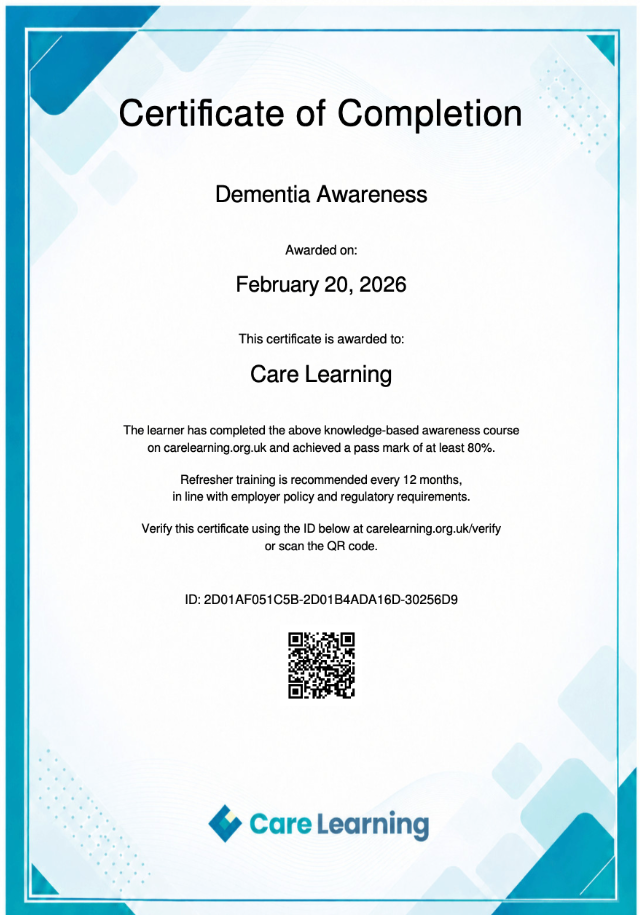
Yes. A certificate is issued after successful completion.
The certificate records course completion; it does not demonstrate practical competence or authorise a handling task.
Understanding the reasons behind individual plans and support arrangements can help staff recognise their responsibilities and the limits of their role.
Enrol now to build your understanding of moving and handling people in social care.