
This course develops the strategic thinking skills health and care managers need to look beyond immediate operational pressures and consider the wider factors shaping future service delivery. It is designed for managers and others with responsibility for planning, coordinating or improving services across health, social care and community settings.
This free course explores the relationship between strategic and operational thinking, environmental scanning using PESTLE, systems thinking, strategic prioritisation and decision-making under uncertainty. Learners will also consider how managers contribute insight to organisational strategy, translate priorities into workable plans and use evidence from delivery to review and improve future approaches.
Why Take This eLearning Course?
Health and care managers need to maintain reliable day-to-day services while also preparing for changing demand, workforce pressures, organisational priorities and wider developments. This course provides practical approaches for considering longer-term issues without losing sight of current responsibilities, helping managers make more informed, proportionate and evidence-based contributions to planning and service improvement.
This course will help you to:
- Distinguish between strategic thinking and operational management.
- Recognise when recurring or emerging issues require a longer-term perspective.
- Use environmental scanning to understand influences on future service delivery.
- Consider connections and dependencies across health, care and community services.
- Prioritise issues using evidence, organisational objectives and likely consequences.
- Make more balanced decisions where information or future conditions remain uncertain.
- Contribute frontline knowledge and practical insight to organisational strategy.
- Translate strategic priorities into realistic objectives, actions and measures.
- Balance implementation activity with safe and sustainable day-to-day delivery.
- Review strategic approaches and use learning to inform future decisions.
Learning Outcomes
By the end of this course, you will be able to:
- Define strategic and operational thinking and explain why managers need both.
- Identify situations where a more strategic management perspective is appropriate.
- Apply the PESTLE approach to examine external influences on a service.
- Explain how systems thinking supports understanding of connected services and unintended consequences.
- Assess potential strategic priorities using evidence, alignment and longer-term consequences.
- Describe how scenario planning, assumptions, indicators and trigger points support decisions under uncertainty.
- Explain how managers can contribute evidence and operational insight to organisational strategy.
- Translate strategic direction into practical objectives, actions, measures and review arrangements.
- Identify signs that a strategic approach may require adjustment.
- Use evidence and learning to support decisions about whether to continue or change an approach.
Strategic Thinking Skills for Health and Care Managers Course Outline
The course is organised into eight modules, progressing from the foundations of strategic thinking through environmental and systems analysis, prioritisation and uncertainty, before considering strategic contribution, implementation and ongoing review.
Module 1: Strategic and Operational Thinking
Learners will explore the differences between strategic and operational thinking and why effective health and care managers need to move between both perspectives. The module considers how longer-term direction connects with current service delivery, situations that should prompt a more strategic perspective, and common barriers such as firefighting, silo working and fixed assumptions. Learners will also consider practical ways to create space for evidence, discussion and longer-term analysis while continuing to manage immediate responsibilities.
Module 2: Environmental Scanning and PESTLE
Learners will examine how the PESTLE approach can be used to scan Political, Economic, Social, Technological, Legal and Environmental influences affecting a service. The module considers national and local priorities, funding, workforce pressures, population needs, inequalities and digital developments, alongside broader sector trends in demand, staffing and models of delivery. Learners will also explore how to distinguish evidence from assumptions and turn environmental information into useful strategic insight by identifying implications, patterns and signals that may require monitoring or further action.
Module 3: Systems Thinking Across Health and Care
Learners will develop a systems perspective by considering services as part of a wider network of people, teams, organisations, processes and resources. The module explores connections across NHS services, social care, local authorities and voluntary, community and social enterprise organisations, as well as shared pathways and dependencies. Learners will examine unintended consequences, shifted demand, delays, duplication and feedback loops, and consider how a proportionate systems review can help identify wider effects before a service change is introduced.
Module 4: Strategic Priorities and Trade-Offs
Learners will consider what makes an issue a genuine strategic priority, including its relationship with organisational objectives, future outcomes, available resources and longer-term consequences. The module distinguishes urgent work from strategically important activity and examines how recurring operational pressures can indicate deeper issues. Learners will explore how to make reasoned trade-offs when time, money or capacity are limited and how to test proposed priorities against evidence, stakeholder experience, organisational alignment and effects across connected services.
Module 5: Strategic Decisions Under Uncertainty
Learners will explore common sources of uncertainty in health and care management, including demand, workforce availability, funding, policy, technology and dependencies on partner organisations. The module introduces scenario planning as a way of exploring several plausible futures and testing how proposed plans might perform under different conditions. Learners will also consider how assumptions, indicators and trigger points can support structured review, and how to make proportionate decisions with incomplete information by considering evidence, consequences, reversibility, authority and planned review arrangements.
Module 6: Contributing to Organisational Strategy
Learners will examine the manager’s role in connecting organisational direction with practical service knowledge. The module considers how managers can understand strategic aims, contribute evidence from frontline delivery and challenge assumptions constructively. Learners will explore useful insights from people who use services, carers, staff, workforce information, performance data, demand and inequalities, as well as how to communicate strategic insight clearly by explaining evidence, relevance, wider effects, realistic options and uncertainty. The module also reinforces the importance of working within delegated authority and appropriate governance arrangements.
Module 7: Turning Strategy Into Operational Delivery
Learners will explore how broad strategic direction becomes practical work through objectives, actions, responsibilities, measures and review. The module contrasts workable implementation plans with weaker approaches and considers the importance of realistic milestones, resources and dependencies. Learners will also examine communication and engagement with staff and partner organisations, including how early involvement can expose practical barriers. The module concludes by considering how managers can maintain strategic progress without undermining safe staffing, continuity, access or other essential aspects of current service delivery.
Module 8: Reviewing and Learning From Strategy
Learners will examine why strategic plans require regular review as external conditions, evidence, risks and operational experience change. The module considers signs that an approach may not be producing its intended effect and how managers can distinguish temporary implementation difficulties from more fundamental problems. Learners will explore evidence-based decisions about whether to persevere with an existing approach or pivot to a different one, while considering costs, benefits, risks and governance. The module also shows how results, updated assumptions and lessons from implementation can inform future strategic planning and be shared across relevant teams and services.
Target Audience
This course is suitable for:
- Health and social care managers with responsibility for service planning or delivery.
- Team leaders and operational managers preparing for broader management responsibilities.
- Service managers involved in improvement, transformation or organisational planning.
- Professionals contributing operational evidence to strategic discussions.
- Managers working across NHS, social care, community or partnership services.
- Aspiring managers who want to develop a stronger understanding of strategic decision-making.
No previous specialist knowledge is required.
FAQ
Who is this strategic thinking course suitable for?
The course is suitable for health and care managers, team leaders, service managers and aspiring managers who need to understand how longer-term organisational priorities connect with day-to-day service delivery. It is also relevant to professionals who contribute evidence, operational knowledge or service insight to wider planning discussions.
Do I need any previous experience?
No specialist knowledge of strategic management is required. The course introduces the key concepts in a practical way and is suitable for learners who already have management responsibilities as well as those preparing to take on a broader management role.
What will I learn on this course?
You will learn how strategic thinking differs from operational thinking, how to scan the external environment using PESTLE, apply systems thinking, assess priorities, make decisions under uncertainty and translate strategic direction into practical plans. You will also explore how evidence from frontline services can contribute to organisational strategy.
Will this course help with day-to-day practice?
Yes. Although the course focuses on strategic thinking, it repeatedly connects longer-term planning with operational management. It can help you recognise recurring pressures, consider wider consequences, communicate evidence more clearly and make more informed decisions about priorities, capacity and implementation.
Does the course cover practical strategic thinking skills?
Yes. The course introduces practical approaches including PESTLE analysis, systems reviews, testing strategic priorities, scenario planning, identifying assumptions and trigger points, assessing dependencies and translating strategic priorities into actions and measures.
Does it cover relevant responsibilities or good practice?
Yes. The course emphasises evidence-based judgement, appropriate governance, delegated authority and proportionate decision-making. It also makes clear that established clinical, safeguarding, legal, financial and organisational responsibilities continue to apply when managers are planning or implementing strategic change.
How long does the course take?
The course is self-paced and usually takes around 1 hour to complete.
Will I receive a certificate?
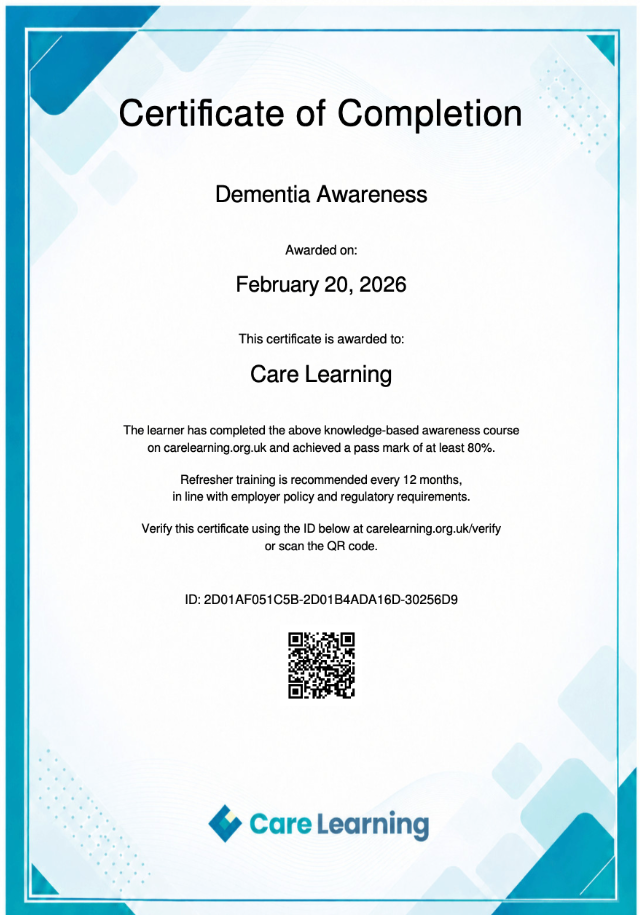
Yes. A certificate is issued after successful completion.
Strategic thinking enables managers to look beyond the next immediate pressure while remaining grounded in the realities of service delivery. This course provides a structured introduction to analysing future influences, understanding connected systems, setting priorities, working with uncertainty and turning organisational direction into practical action.
Enrol now to build your understanding of strategic thinking for health and care management.