
This Alcohol Brief Intervention (ABI) Training Course is designed for health, social care, pharmacy, housing and community professionals who may encounter alcohol-related concerns during their work. It provides a clear introduction to identifying alcohol-related risk, discussing alcohol respectfully and responding within appropriate professional boundaries.
This free course covers alcohol units and UK low-risk drinking guidance, AUDIT and AUDIT-C screening, different levels of brief intervention and referral, motivational principles, professional responsibilities and situations requiring specialist, urgent or safeguarding action. Learners also work through practical scenarios showing how these principles can be applied across different settings.
Watch the course trailer

Captions are available in the player (CC). The video plays from YouTube, which only loads when you press play.
Why Take This eLearning Course?
Alcohol-related conversations can arise during routine health, care and community contacts. Knowing how to identify risk, communicate without judgement and select an appropriate response can help professionals provide proportionate support while recognising when specialist assessment or another pathway is required.
This course will help you to:
- Understand the purpose and limits of alcohol brief intervention and identification and brief advice.
- Discuss UK alcohol units and low-risk drinking guidance more confidently.
- Recognise different categories of alcohol-related risk.
- Understand how AUDIT-C and full AUDIT screening are used with adults.
- Match screening findings with appropriate brief advice, further intervention or referral.
- Approach sensitive alcohol conversations respectfully and without stigma.
- Use basic motivational principles to support informed choices about change.
- Recognise possible dependence and other situations requiring specialist assessment.
- Work safely within professional competence, confidentiality and information-sharing requirements.
- Respond appropriately when immediate health, safety or safeguarding concerns take priority.
Learning Outcomes
By the end of this course, you will be able to:
- Define alcohol brief intervention and identification and brief advice.
- Explain alcohol units and current UK low-risk drinking guidance covered by the course.
- Distinguish between low-risk, increasing-risk, higher-risk and possible dependent drinking.
- Explain the purpose, structure and appropriate use of AUDIT and AUDIT-C.
- Interpret the adult AUDIT score ranges presented in the course and identify their usual implications.
- Describe Level 1 brief advice, Level 2 extended brief intervention and Level 3 specialist referral.
- Apply respectful communication and basic motivational principles during alcohol-related conversations.
- Identify professional boundaries and situations requiring referral, escalation or safeguarding action.
- Describe appropriate recording, confidentiality, consent and information-sharing practice.
- Apply course principles to primary care, hospital, pharmacy, community, housing and social care scenarios.
Alcohol Brief Intervention (ABI) Training Course – Course Content Outline
The course is organised into six modules, progressing from the foundations of alcohol brief intervention and screening through to appropriate responses, professional responsibilities and practical workplace scenarios.
Module 1: Understanding Alcohol Brief Intervention and Alcohol-Related Risk
Learners will explore what alcohol brief intervention and identification and brief advice mean, including the distinction between brief intervention and specialist alcohol treatment. The module explains UK alcohol units and low-risk drinking guidance, introduces the main categories of alcohol-related risk and considers how alcohol conversations may arise naturally in clinical, pharmacy, community, housing and social care roles. It also reinforces the importance of avoiding assumptions and ensuring discussions are relevant to the person’s circumstances and the worker’s role.
Module 2: AUDIT and AUDIT-C Alcohol Screening
Learners will examine the purpose and structure of the Alcohol Use Disorders Identification Test and its shorter AUDIT-C screening component. The module explains how AUDIT-C can be used as an initial adult screen, including consistent questioning, accurate scoring and completion of the full AUDIT when indicated. Learners will review the full AUDIT risk ranges from low risk through to possible dependence and consider the limitations of screening, including why scores must be interpreted alongside the person’s circumstances, age, health, safety and appropriate service pathways.
Module 3: Matching the Intervention to the Identified Risk
Learners will explore the three response levels used within the course. Level 1 covers structured brief advice, including feedback, possible benefits of reducing consumption, realistic goals and practical options. Level 2 introduces extended, person-centred brief intervention using motivational approaches where suitably trained practitioners provide additional support. Level 3 addresses referral for specialist alcohol assessment, including possible dependence, higher-risk drinking with additional health needs and the importance of current local referral routes. The module also clarifies when ABI may be appropriate and when brief intervention alone is not sufficient.
Module 4: Respectful Alcohol Conversations and Supporting Change
Learners will consider how to introduce alcohol-related questions sensitively by explaining their relevance, asking permission where appropriate and normalising routine questions. The module covers giving clear feedback about screening results and risk without turning a score into a diagnosis. It also examines the use of UK units and drinking guidance during feedback, basic motivational principles such as empathy, personal choice and confidence-building, and how to agree realistic next steps or arrange further support while respecting the person’s autonomy.
Module 5: Professional Boundaries, Referral and Safe Practice
Learners will examine the professional limits that apply when discussing alcohol and the importance of working within training, competence and organisational responsibilities. The module identifies situations in which specialist assessment or referral may be required, including possible dependence, complex physical or mental health needs and limited response to previous brief intervention. Learners will also consider urgent health, safety and safeguarding situations that must take priority over routine ABI activity, alongside accurate recording, confidentiality, consent, appropriate information sharing and the use of current local procedures and support routes.
Module 6: Applying ABI Principles in Practice
Learners will apply the course principles to realistic workplace scenarios. These include responding to an elevated AUDIT-C score in primary care or hospital settings, addressing increasing-risk drinking during pharmacy or community contacts, and recognising when alcohol use in housing or social care is associated with self-neglect, worsening mental health or possible dependence. The module concludes by reviewing common mistakes, including diagnosing from screening scores, exceeding professional competence, overlooking safeguarding concerns and attempting to manage possible dependence through routine brief advice rather than appropriate specialist assessment.
Target Audience
This course is suitable for:
- Health and social care professionals who may discuss alcohol use as part of routine practice.
- Nurses, primary care and hospital staff involved in screening, assessment or health conversations.
- Community pharmacy professionals working within relevant alcohol identification or wellbeing services.
- Social care and housing staff who may identify alcohol-related concerns while supporting adults.
- Community and wellbeing workers whose roles include appropriate health promotion or signposting.
- Managers and other staff who need an awareness of ABI pathways, professional boundaries and referral responsibilities.
No previous specialist knowledge is required.
FAQ
Who is this course suitable for?
The course is suitable for professionals working across health, social care, pharmacy, housing and community settings where alcohol-related risk may arise during routine contact with adults. The exact screening, advice or referral activities a learner can carry out will depend on their training, competence and organisational role.
Do I need any previous experience?
No specialist alcohol treatment experience is required. The course introduces ABI concepts and appropriate professional responses, but it does not qualify learners to diagnose alcohol dependence or provide specialist treatment.
What will I learn on this alcohol brief intervention course?
You will learn about alcohol units and UK low-risk guidance, alcohol-related risk categories, AUDIT and AUDIT-C screening, brief advice, extended intervention, specialist referral, respectful communication and safe professional practice.
Will this course help with day-to-day practice?
Yes. The content focuses on situations that can arise during routine health, care, pharmacy, community and housing contacts. Practical scenarios show how screening results, professional boundaries and the person’s wider needs can influence the next appropriate action.
Does the course cover practical skills?
The course explains practical approaches to introducing alcohol conversations, using approved screening tools, giving risk feedback, discussing realistic next steps and recognising when referral is appropriate. Learners must still follow their organisation’s requirements regarding training, competence and authorised practice.
Does it cover relevant professional and safeguarding responsibilities?
Yes. The course addresses professional boundaries, confidentiality, consent, information sharing, accurate recording, referral, urgent escalation and safeguarding. It emphasises that immediate health, safety or safeguarding concerns take priority over routine alcohol screening or brief advice.
Does the course explain AUDIT and AUDIT-C screening?
Yes. Learners are introduced to both tools, including the role of AUDIT-C as an initial screen, the threshold covered in the course for completing full AUDIT and the established adult risk ranges. The course also makes clear that a screening score supports decision-making but does not establish a clinical diagnosis.
What happens if screening suggests possible alcohol dependence?
Possible dependence requires an appropriately skilled specialist assessment rather than routine ABI treatment. The course explains how practitioners can recognise when referral is needed while avoiding diagnosis or withdrawal management outside their professional competence.
How long does the course take?
The course is self-paced and usually takes around 1 hour to complete.
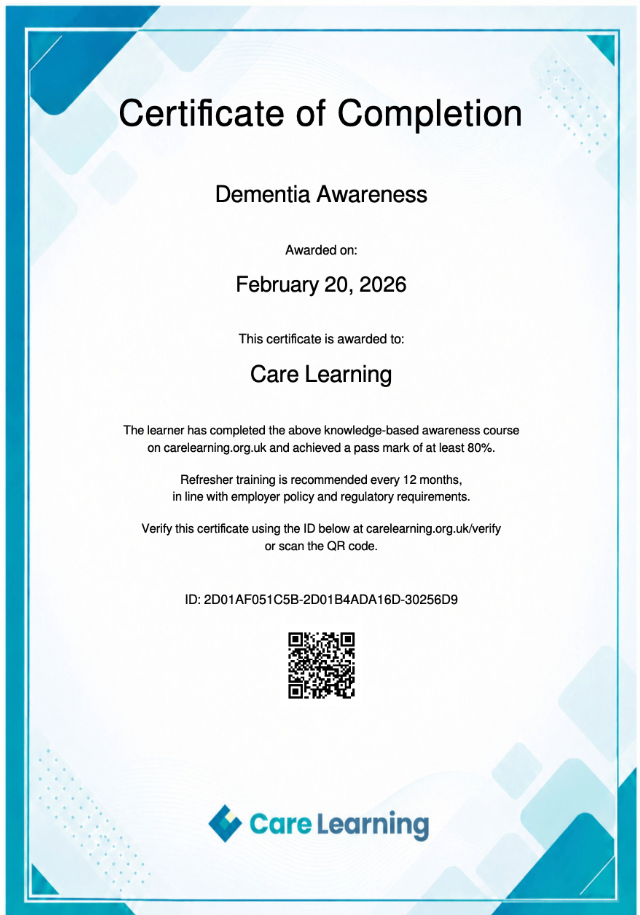
Will I receive a certificate?
Yes. A certificate is issued after successful completion.
This Alcohol Brief Intervention training provides a practical foundation for recognising alcohol-related risk, communicating respectfully and matching the response to the person’s needs. It supports learners to understand where brief advice may be useful, where further intervention may be appropriate and when specialist, urgent or safeguarding pathways should take priority.
Enrol now to build your understanding of alcohol brief intervention.