
This Closed Cultures in Adult Care Settings course is designed for people working in adult social care who need to understand how unhealthy workplace cultures can develop, how they affect people receiving care and support, and how concerns should be recognised and addressed. It is relevant across care homes, supported living, day services, learning disability services and other adult care environments.
This free course explores the relationship between closed cultures and organisational abuse, leadership and workforce risk factors, restrictive practices, warning signs and lessons from Winterbourne View and Whorlton Hall. It also covers adult safeguarding responsibilities, relevant CQC Fundamental Standards, deprivation of liberty safeguards, regulatory oversight, speaking up and practical ways organisations can promote an open and respectful culture.
Watch the course trailer
Captions are available in the player (CC). The video plays from YouTube, which only loads when you press play.
Why Take This eLearning Course?
Closed cultures can develop gradually, particularly where poor practice becomes normalised, concerns are not challenged or people have limited opportunities to make their voices heard. This course supports staff and organisations to recognise emerging risks, maintain professional curiosity and respond appropriately when practice or culture causes concern.
This course will help you to:
- Recognise what a closed culture is and how it can develop.
- Understand the connection between poor organisational culture and organisational abuse.
- Identify leadership, workforce and service conditions that can increase risk.
- Recognise restrictive or institutional practices that may become normalised.
- Spot warning signs in people’s experiences, staff behaviour and service records.
- Understand the importance of patterns, professional curiosity and effective challenge.
- Apply safeguarding responsibilities appropriately when concerns arise.
- Understand how CQC may identify and explore cultural concerns.
- Support speaking up, whistleblowing and proportionate escalation.
- Contribute to a more open, respectful and person-centred service culture.
Learning Outcomes
By the end of this course, you will be able to:
- Define a closed culture and explain its relationship with organisational abuse.
- Describe how closed cultures can affect dignity, choice, independence, communication and relationships.
- Identify leadership, governance and workforce factors associated with increased cultural risk.
- Recognise restrictive, institutional and isolating practices that may allow poor care to continue.
- Identify common warning signs and consider concerns as part of a wider pattern.
- Explain key learning from Winterbourne View and Whorlton Hall.
- Outline relevant adult safeguarding responsibilities and CQC Fundamental Standards.
- Explain the role of deprivation of liberty safeguards, review and independent oversight.
- Distinguish the responsibilities of care workers, managers, quality leads and CQC inspectors.
- Describe practical ways to monitor culture, speak up and respond to warning signs.
Closed Cultures in Adult Care Settings Course Outline
Module 1: Understanding Closed Cultures and Their Impact
Learners will explore what is meant by a closed culture and how harmful attitudes, unsafe routines, limited challenge and weak oversight can increase the risk of abuse and breaches of people’s rights. The module explains the relationship between closed cultures and organisational abuse and considers how dignity, choice, independence, communication and relationships may be affected. Learners will also examine why risks can develop across different types of adult care service, including where people have high levels of dependence, communication barriers or limited contact with people outside the staff team.
Module 2: Factors That Allow Closed Cultures to Develop
Learners will examine how distant leadership, weak governance, poor follow-up of concerns and reduced accountability can gradually allow unacceptable behaviour to become established. The module considers workforce pressures including insufficient training, weak supervision, staffing shortages, high turnover, low morale and lack of continuity, while reinforcing that such pressures never justify abusive or disrespectful practice. It also explores how blanket restrictions, task-led routines and habitual restrictive responses can become normalised, and how isolation or fear of speaking up can reduce effective challenge.
Module 3: Recognising Warning Signs and Learning from Serious Failures
Learners will identify warning signs including fear or withdrawal, disrespectful behaviour, limited personal voice, blanket restrictions, weak reporting and staff silence. The module examines key learning from Winterbourne View and Whorlton Hall, including the importance of effective leadership, safeguarding, scrutiny, listening to people and families, and looking beyond written systems to people’s actual experiences. Learners will also consider how professional curiosity and accurate recording can help identify recurring themes before apparently minor concerns develop into more serious harm.
Module 4: Safeguarding, Regulation and Legal Protection
Learners will develop an awareness of adult safeguarding responsibilities under the Care Act 2014, including organisational abuse and the circumstances in which Section 42 enquiries may apply. The module reviews relevant CQC Fundamental Standards covering person-centred care, dignity and respect, safe care and treatment, safeguarding, complaints and good governance. It also explains the role of deprivation of liberty safeguards and appropriate court authorisation, including the need to use the current approach when considering whether restrictions may engage Article 5, alongside the protective value of independent contact and external monitoring.
Module 5: How CQC Identifies and Explores Cultural Concerns
Learners will consider the distinction between factors that may make a service vulnerable to a closed culture and warning signs that poor culture may already be developing. The module explains how information from people receiving care, relatives, carers, staff, whistleblowers, advocates, visiting professionals and service information can contribute to CQC’s understanding of risk. Learners will also explore how concerns may be examined through intelligence, conversations, observation, records and wider regulatory activity, while recognising the different responsibilities of care workers, managers, quality leads and inspectors.
Module 6: Promoting Openness, Monitoring Culture and Speaking Up
Learners will explore the behaviours that support an open and respectful culture, including approachable leadership, person-centred practice and respectful challenge. The module considers practical ways to monitor culture through supervision, observations, feedback, complaints, incidents, restrictions, safeguarding information, staff turnover and other organisational indicators. It also explains internal and external routes for speaking up, whistleblowing and escalating concerns, before applying these principles to role-appropriate examples involving frontline staff, managers, quality leads and regulators.
Target Audience
This course is suitable for:
- Adult social care workers and support workers.
- Senior care staff, team leaders and supervisors.
- Registered managers and other service managers.
- Quality assurance and governance staff.
- Staff working in care homes, supported living, day services or learning disability services.
- Professionals who need an awareness of closed-culture risks, safeguarding and regulatory expectations.
No previous specialist knowledge is required.
FAQ
Who is this Closed Cultures in Adult Care Settings course suitable for?
The course is suitable for people working across adult social care, including frontline workers, supervisors, managers, quality staff and others who need to recognise and respond to unhealthy or potentially harmful service cultures.
Do I need any previous experience?
No specialist knowledge is required. The course provides an awareness-level introduction while also covering responsibilities and practical issues relevant to people already working in adult care services.
What will I learn on this course?
You will learn how closed cultures develop, how they can affect people receiving support and which leadership, workforce and organisational factors may increase risk. You will also explore warning signs, safeguarding responsibilities, CQC expectations, regulatory scrutiny, speaking up and ways to promote an open culture.
Will this course help with day-to-day practice?
Yes. The course focuses on recognising changes in everyday practice, listening to people’s experiences, identifying patterns, recording concerns factually and using appropriate reporting and escalation routes.
Does the course cover practical skills?
The course develops practical awareness rather than hands-on care techniques. It includes examples of identifying warning signs, reviewing patterns of concern, supporting people’s voices, challenging poor practice appropriately and responding within the boundaries of different professional roles.
Does it cover relevant responsibilities and good practice?
Yes. The course covers adult safeguarding under the Care Act 2014, organisational abuse, relevant CQC Fundamental Standards, deprivation of liberty safeguards, speaking up and the responsibilities of staff, managers, quality leads and CQC inspectors. It emphasises working within your role and following appropriate organisational and local procedures.
How long does the course take?
The course is self-paced and usually takes around 1 hour to complete.
Will I receive a certificate?
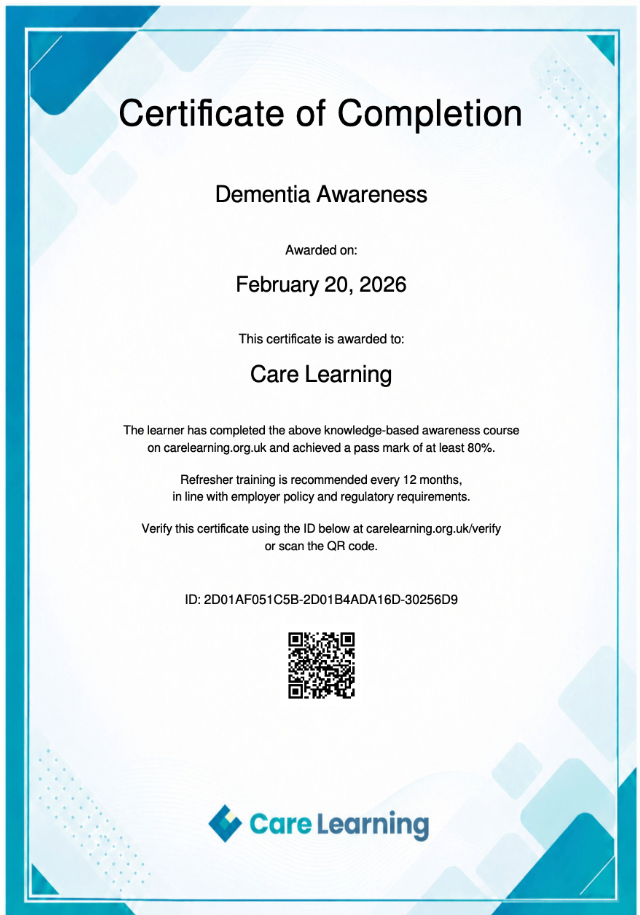
Yes. A certificate is issued after successful completion.
Understanding how closed cultures develop helps staff and organisations recognise concerns earlier, maintain appropriate professional challenge and keep people’s experiences at the centre of care. This course provides a clear foundation for identifying cultural risks and contributing to safer, more open and accountable adult care services.
Enrol now to build your understanding of closed cultures in adult care settings.