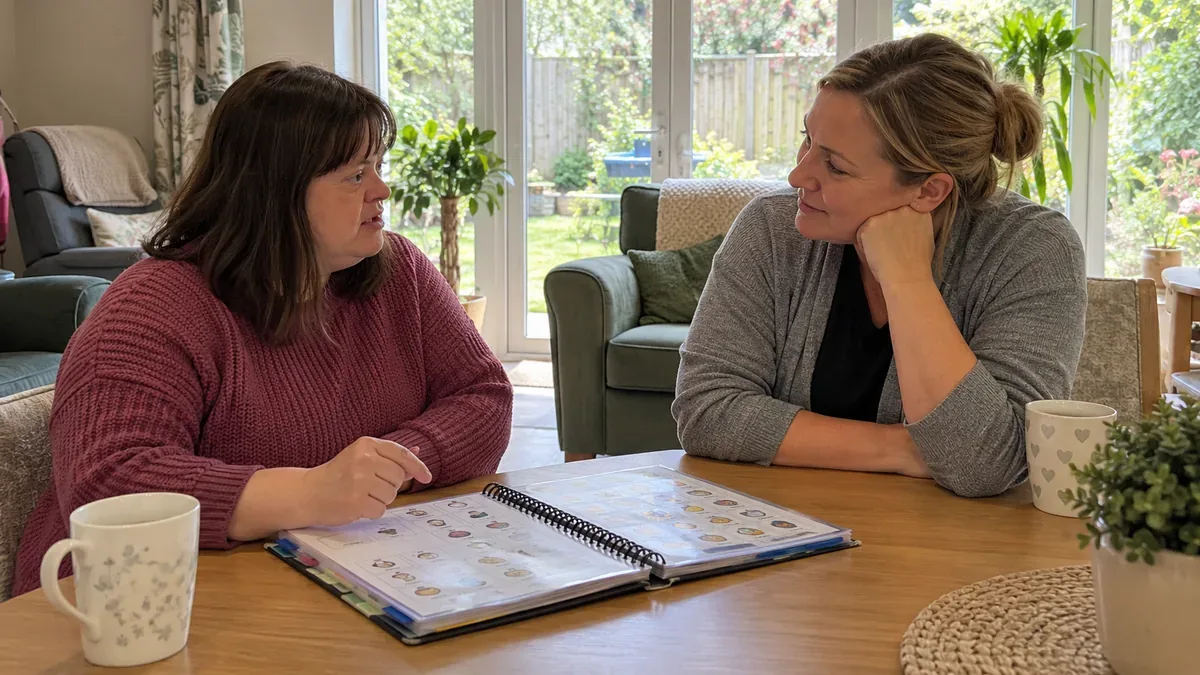
This online awareness course introduces communication aids and augmentative and alternative communication, known as AAC. It is designed for care workers, support workers and allied professionals supporting adults in care homes, supported living, domiciliary care and community settings.
This free course explains low-tech and powered aids, Total Communication and the role of communication partners. It focuses on supporting a person’s established plan, developed with a qualified speech and language therapist and the wider team. It does not teach assessment, prescription, device selection or therapy.
Why Take This eLearning Course?
An aid alone does not create a helpful conversation. Staff also need to understand the person’s preferences, allow time and follow agreed support. This course provides a clear introduction to those everyday responsibilities.
This course will help you to:
- Recognise different forms of AAC and their everyday uses.
- Understand how communication aids can work alongside speech.
- Distinguish generic picture resources from named approaches such as PECS.
- Recognise powered aids and different access methods without selecting equipment.
- Understand the purpose and limits of partner-assisted scanning.
- Preserve the person’s own message, choices and opportunities to disagree.
- Identify barriers to communication and appropriate advice routes.
- Understand how plans, passports and factual records support continuity.
Learning Outcomes
By the end of this course, you will be able to:
- Define augmentative and alternative communication.
- Describe Total Communication and the relationship between AAC and speech.
- Identify low-tech and powered communication aids.
- Explain the difference between direct access and scanning.
- Describe respectful communication-partner habits.
- Explain care staff’s responsibilities within an established AAC plan.
- Outline privacy, continuity, reporting and review boundaries.
- Identify when qualified specialist advice is needed.
Communication Aids and AAC Awareness Course Outline
The course contains six concise modules covering lessons.
Module 1: Understand AAC and communication rights
Learners will explore what AAC means and how aided and unaided methods can support understanding and expression. The module introduces Total Communication, addresses the myth that AAC should be withheld to encourage speech, and explains the person’s place within the communication team.
Module 2: Know established low-tech communication aids
Learners will consider ordinary preparation for an agreed communication opportunity and recognise objects, photographs, symbols and written aids. Picture exchange and PECS are introduced at recognition level. Examples show how established aids can support conversation and community participation beyond basic care requests.
Module 3: Know powered aids and access support
Learners will recognise features of powered AAC and the distinction between direct and indirect access. The module explains partner-assisted scanning without teaching a procedure. It contrasts helpful support with interference such as taking over messages or changing a person’s system without authorisation.
Module 4: Know how partners support real conversations
Learners will consider time, surroundings and respectful partner habits. The module explains authorship, uncertainty and communication repair, while preserving the person’s choices and supported decision-making. Social conversation, opinions and disagreement are treated as ordinary parts of adult participation.
Module 5: Know responsibilities and boundaries
Learners will explore England-focused guidance and recognise differences in UK service arrangements. The module distinguishes an AAC plan from a communication passport and everyday records. It covers reporting access difficulties and respecting privacy, permission and approved information-sharing routes.
Module 6: Know continuity, review and the course recap
Learners will consider arrangements that keep agreed AAC available and support continuity across home visits, appointments and other settings. Person-led feedback and specialist review complete the course. The recap reinforces everyday support, further advice routes and the limits of awareness learning.
Target Audience
This course is suitable for:
- Care workers in residential and domiciliary care.
- Support workers in supported living and community services.
- Team leaders supporting consistent everyday communication arrangements.
- Speech and language therapists seeking an introductory shared-learning resource for care teams.
- Occupational therapists and other allied professionals working with adult support services.
No previous specialist knowledge is required.
FAQ
Who is this course suitable for?
It is suitable for people supporting adults who use established communication aids or AAC. The level is introductory, including where specialist and non-specialist staff learn together.
Do I need any previous experience?
No. AAC terms and the main types of aid are explained in plain language. Person-specific instruction and workplace training remain necessary for implementing a plan.
What will I learn about communication aids and AAC?
You will learn about low-tech and powered aids, Total Communication, access methods, communication-partner habits and the boundaries of everyday support.
Will this course help with day-to-day practice?
It provides awareness of how to preserve the person’s message, follow agreed arrangements and recognise barriers needing advice. It does not replace the person’s AAC plan or local procedures.
Does the course cover practical skills?
It explains approaches without teaching clinical procedures, device calibration, assessment, prescription or therapy. Completion does not establish competence in PECS, scanning or any other specialist method.
Does it cover relevant responsibilities or good practice?
Yes. It covers privacy, person-led communication, factual records, continuity and review. The service context is England-focused, with a reminder to check the applicable nation and local arrangements. Attendance does not prove regulatory compliance.
How long does the course take?
The course is self-paced and usually takes around 1 hour to complete.
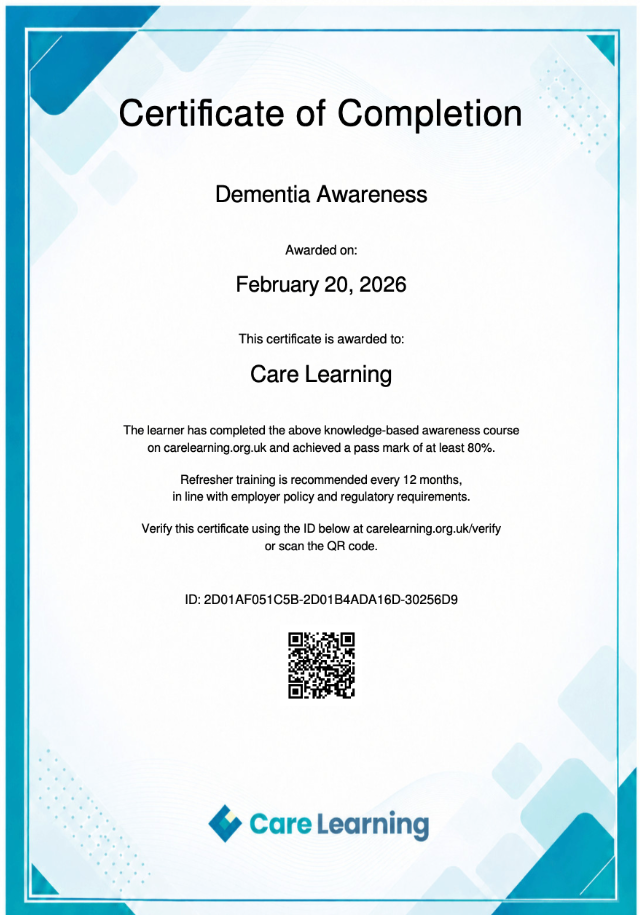
Will I receive a certificate?
Yes. A certificate is issued after successful completion.
Build your understanding of communication aids and the everyday support that helps people use their established AAC. Continue to follow the person’s plan and seek specialist advice where responsibilities or arrangements are unclear.
Enrol now to build your understanding of communication aids and AAC.