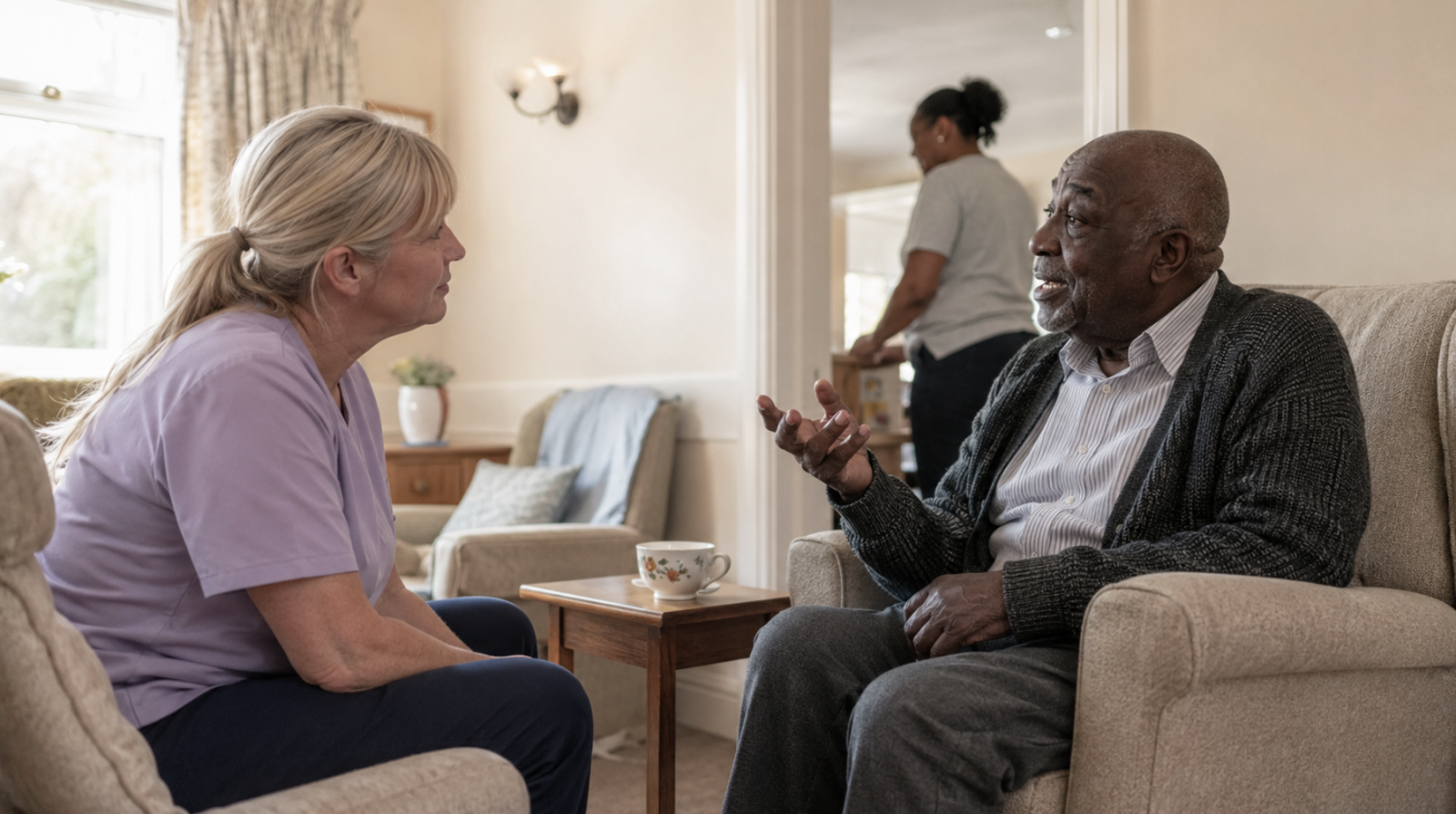
The Communication Skills in Dementia Care course is designed for care workers, healthcare assistants, nurses and other staff who support people living with dementia. It provides practical guidance for communicating respectfully and effectively in care homes, hospitals, domiciliary care and specialist dementia services.
This free course explores how dementia may affect communication at different stages. It covers supportive verbal and non-verbal techniques, validation, Total Communication, communication without spoken words, responding to distress and helping relatives communicate more confidently. Learners will also consider when changes or concerns should be recorded, reported or escalated.
Why Take This eLearning Course?
Communication difficulties can affect a person’s dignity, choices, relationships and experience of care. This eLearning course helps staff recognise individual communication needs, respond to behaviour as a form of communication and use person-centred approaches that reduce frustration and support meaningful involvement.
This course will help you to:
- Communicate more confidently with people at different stages of dementia.
- Adapt conversations to individual needs, abilities and preferences.
- Protect dignity by listening patiently and avoiding memory testing or unnecessary correction.
- Recognise feelings, needs and choices expressed through behaviour and non-verbal cues.
- Use validation approaches without arguing or increasing distress.
- Combine speech, gestures, objects, pictures and environmental cues effectively.
- Respond calmly when a person is anxious, agitated or distressed.
- Identify possible barriers such as pain, illness, sensory loss or environmental distractions.
- Record and report significant communication changes appropriately.
- Support relatives while keeping the person living with dementia at the centre.
Learning Outcomes
By the end of this course, you will be able to:
- Define communication and common communication methods used in dementia care.
- Identify changes commonly associated with early, middle and later-stage dementia.
- Describe verbal communication techniques that support dignity, choice and understanding.
- Explain how tone, facial expression, positioning, eye contact and touch affect meaning.
- Apply validation principles to acknowledge emotions and perceived experiences.
- Identify ways to communicate when a person cannot rely on spoken language.
- Explain how Total Communication combines verbal, visual, tactile and environmental methods.
- Describe a calm and non-confrontational response to agitation or distress.
- Recognise when communication changes and safety concerns must be recorded or escalated.
- Suggest practical ways to help relatives communicate while respecting the person’s preferences.
Communication Skills in Dementia Care Course Outline
The course is organised into eight modules. Each module develops practical knowledge that staff can apply when communicating with people living with dementia, working with colleagues and supporting family members.
Module 1: How Dementia Affects Communication
Learners will explore what communication means in dementia care, including spoken language, understanding, information processing, expression, behaviour and non-verbal communication. The module examines changes that may occur during early, middle and later-stage dementia while emphasising that every person is different. It also considers the effects of dementia type, life history, culture, preferred language, hearing, sight, pain, illness, tiredness, medication and environmental distractions. Learners will understand when significant or sudden changes should be documented and reported rather than automatically attributed to dementia.
Module 2: Supportive Verbal Communication
Learners will examine how pace, language and sentence length can make information easier to understand. They will learn to introduce one idea at a time, ask one question at a time, allow sufficient response time and offer simple choices where appropriate. The module also covers listening habits that protect dignity, including avoiding interruption, patronising language, memory tests and repeatedly finishing or correcting the person’s sentences. Examples demonstrate how these techniques can be adapted during personal care, meals, activities, hospital procedures, home visits and discussions about care.
Module 3: Non-Verbal Communication
Learners will consider how tone of voice, facial expression, posture, gestures and body language influence meaning. The module explains how to approach someone where they can see the worker, communicate at the same level and respect personal space. It also addresses the careful use of touch, including consent, culture, personal history, care-plan information and signs of discomfort. Learners will practise recognising changes in expression, movement, posture, breathing, vocal sounds and withdrawal as possible communication of a need, feeling, preference or refusal.
Module 4: Validation and the Person’s Reality
Learners will understand validation as a way of responding to a person’s emotions and perceived experience rather than concentrating only on factual accuracy. They will explore how respectful listening and knowledge of the person’s history can help staff understand the meaning behind what is being communicated. The module covers acknowledging and naming feelings, offering reassurance, using familiar topics and gently redirecting attention where this is helpful. It also explains the limits of validation, the importance of following agreed care plans and when senior or professional advice should be sought.
Module 5: Communication Without Spoken Words
Learners will explore how people can continue to express feelings, needs and preferences through movement, facial expression, behaviour, sounds and responses to others. The module introduces yes or no responses, gestures, demonstrations, familiar objects, photographs, pictures and established routines. It explains how to observe signs of comfort, pain, preference and refusal without making assumptions. Learners will also consider when a sudden or significant loss of communication requires recording, escalation or advice from a nurse, doctor, speech and language therapist or other appropriate professional.
Module 6: Total Communication Approaches
Learners will examine Total Communication as an individualised approach that combines different ways of presenting and receiving information. Methods include speech, writing, gestures, facial expressions, photographs, objects, demonstrations, appropriate touch, familiar routines and environmental cues. The module explains how communication passports, care plans and personal preferences support consistent practice. It also clarifies staff boundaries, including the need to use agreed approaches without independently diagnosing conditions or creating specialist communication systems outside their competence.
Module 7: Communicating During Agitation or Distress
Learners will identify possible causes of agitation or distress, including pain, fear, unfamiliar surroundings, excessive noise, unmet needs, rushed care and feeling ignored or misunderstood. They will learn to introduce themselves, use a low and steady voice, reduce the number of people speaking and avoid arguments or confrontation. The module covers reducing demands, simplifying requests, offering space, acknowledging feelings and returning later when safe and appropriate. It also addresses personal and environmental safety, safeguarding, reporting possible illness or pain and following local escalation or emergency procedures.
Module 8: Supporting Family Communication
Learners will consider how dementia can affect conversations, recognition, family roles, relationships and feelings of grief or frustration. The module provides practical techniques that can be shared with relatives, including calm speech, short sentences, response time, simple choices and the use of photographs or familiar objects. It explains how to use family knowledge while continuing to speak directly to and involve the person living with dementia. Learners will also examine consent, confidentiality, recording concerns and involving a senior colleague when disagreements or conflicting expectations arise.
Target Audience
This course is suitable for:
- Care workers and senior care workers.
- Healthcare assistants and support workers.
- Nurses and nursing associates.
- Domiciliary and home care staff.
- Staff working in care homes, hospitals or specialist dementia services.
- Team leaders and managers responsible for dementia care practice.
No previous specialist knowledge is required.
FAQ
Who is this course suitable for?
The course is suitable for staff who provide care, treatment or practical support to people living with dementia. This includes care workers, healthcare assistants, nurses, support workers, home care staff, team leaders and others working in dementia services.
Do I need any previous experience?
No previous specialist communication training is required. The course introduces the key principles clearly and is suitable for both new staff and experienced workers who want to refresh or strengthen their practice.
What will I learn on this communication skills in dementia care course?
You will learn how dementia may affect communication, how to adapt verbal and non-verbal techniques and how to recognise behaviour as a possible form of communication. You will also explore validation, Total Communication, communication during distress and ways to support relatives.
Will this course help with day-to-day practice?
Yes. The course includes approaches that can be applied during personal care, meals, activities, home visits, hospital procedures and conversations about a person’s care. It helps learners make communication clearer, calmer and more responsive to the individual.
Does the course cover practical communication skills?
Yes. It covers speaking clearly, using short sentences, asking one question at a time, offering simple choices and allowing enough response time. It also addresses gestures, pictures, objects, positioning, eye contact, personal space and appropriate touch.
How does the course address communication without words?
The course explains how feelings, needs, preferences and refusals may be communicated through expression, movement, posture, behaviour, sounds and responses. It also introduces prompts, demonstrations, objects, photographs, pictures and routines.
Does it cover relevant responsibilities or good practice?
Yes. The course reflects person-centred dementia care principles and covers consent, dignity, confidentiality, safeguarding, care plans, communication passports, documentation and professional role boundaries. It also explains when concerns should be reported or escalated. References to the Care Act 2014 and CQC expectations apply to England; services elsewhere in the UK should follow the legislation, regulator and procedures for their nation.
How long does the course take?
The course is self-paced and usually takes around 1 hour to complete.
Will I receive a certificate?
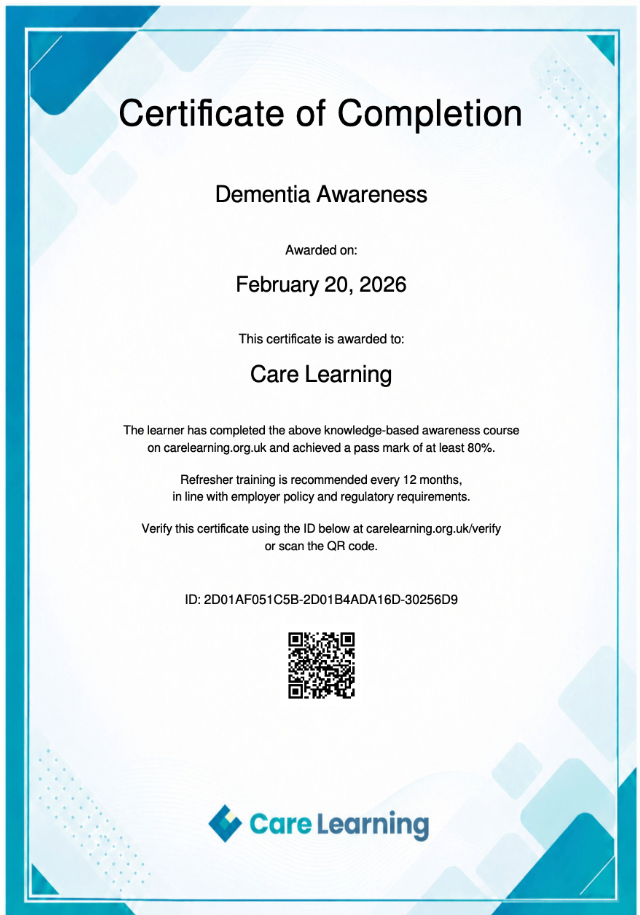
Yes. A certificate is issued after successful completion.
Effective communication can help people living with dementia feel heard, respected and involved in their care. This course provides practical approaches that staff can use to understand individual communication needs, reduce avoidable distress and support positive relationships with relatives and care teams.
Enrol now to build your understanding of communication skills in dementia care.