The Younger Onset Dementia course is designed for health and social care workers who support adults whose dementia symptoms began before the age of 65. It explains how younger onset dementia can affect employment, finances, parenting, relationships, identity and everyday life, helping learners provide respectful and age-appropriate support.
This free course explores terminology, prevalence, different forms of dementia, barriers to diagnosis and the emotional impact of receiving a diagnosis. It also covers strengths-based care planning, communication, family and carer support, professional boundaries, referral pathways and access to specialist services.
Why Take This eLearning Course?
Younger onset dementia can affect people at a stage of life when they may be working, raising children, supporting relatives or managing significant financial responsibilities. This training helps care workers understand these circumstances and respond without making assumptions based on age, diagnosis or perceived ability.
This course will help you to:
- Recognise how younger onset dementia may present differently between individuals.
- Use clear and respectful terminology when discussing dementia.
- Understand how symptoms may affect work, relationships and family responsibilities.
- Respond appropriately when diagnosis has been delayed or remains uncertain.
- Record and report observable changes without attempting to diagnose.
- Communicate in ways that protect identity, dignity and adult status.
- Support meaningful routines, relationships and personal goals.
- Consider the needs of partners, children, parents and wider carers.
- Balance independence, choice and foreseeable risk in care planning.
- Signpost people towards suitable assessments, advice and community support.
Learning Outcomes
By the end of this course, you will be able to:
- Define younger onset dementia and distinguish it from early-stage dementia.
- Describe who may be affected and why prevalence figures are estimates.
- Explain how younger onset dementia can differ from dementia in later life.
- Identify features associated with frontotemporal, vascular and other forms of dementia.
- Describe factors that may delay assessment and diagnosis.
- Explain the possible emotional, social, occupational and financial effects of diagnosis.
- Apply strengths-based principles when supporting routines, relationships and personal goals.
- Identify age-appropriate support needs for partners, children and wider family members.
- Demonstrate respectful communication while maintaining professional boundaries.
- Outline routes to post-diagnosis support, assessments and specialist services.
Younger Onset Dementia Awareness Course Outline
Module 1: Understanding Younger Onset Dementia
Learners will define younger onset dementia and explore related terms, including young onset dementia, early onset dementia and early-stage dementia. The module explains that younger onset refers to symptoms beginning before age 65 rather than to a particular disease or stage. Learners will consider estimated UK prevalence, groups who may be affected and the importance of responding to each person’s symptoms, culture, circumstances and preferences. It also examines how employment, parenting, housing costs, caring responsibilities and age-appropriate interests can make the experience different from dementia beginning later in life.
Module 2: Types and Presentations of Dementia
Learners will examine forms of dementia that may affect younger adults, including frontotemporal dementia, vascular dementia, Alzheimer’s disease, dementia with Lewy bodies, inherited forms and dementia associated with neurological conditions. The module explores possible changes in behaviour, personality, language, planning, attention, movement, memory and visual processing. It reinforces that presentation varies and that care staff must observe, record and report factual changes rather than make clinical judgements or assume that every younger person has the same form of dementia.
Module 3: Diagnosis and Emotional Impact
Learners will identify why younger onset dementia may be recognised late, particularly when symptoms involve language, vision, judgement, behaviour or work performance rather than memory. The module considers alternative explanations such as stress, anxiety, depression, menopause, relationship difficulties and workplace pressure, together with possible routes from general practice to specialist assessment. Learners will also explore emotional responses to diagnosis, including shock, relief, anger, grief, fear, uncertainty and concerns about stigma or loss of identity.
Module 4: Employment, Family and Financial Challenges
Learners will explore how younger onset dementia may affect careers, income, pensions, household costs, driving, transport and social participation. The module considers changes to parenting, caring responsibilities, couple relationships and family identity, including the importance of supporting retained roles rather than removing them unnecessarily. It also explains how workers can provide confidential, consent-based support and signpost people towards qualified employment, benefits, debt, housing, financial or pensions advice without acting outside their professional role.
Module 5: Strengths-Based and Proportionate Care Planning
Learners will identify personal strengths, retained abilities, cultural identity, communication preferences, routines and individual goals. The module explains how meaningful activities such as hobbies, exercise, family participation, volunteering, community groups and adapted work-like tasks can support confidence, purpose and social connection. Learners will consider how to share decisions, make practical adjustments, balance benefits and possible harm, follow agreed plans and review support when circumstances or abilities change.
Module 6: Supporting Partners, Children and Wider Carers
Learners will examine the support needs of partners whose relationships, employment, health, sleep and social lives may be affected by caring responsibilities. The module explains how children can be given honest, age-appropriate information, stable routines and opportunities to express their feelings without taking on unsuitable responsibilities. It also considers the experiences of older parents, siblings and wider relatives, including carer assessments, confidentiality, family disagreements, support boundaries and safeguarding responsibilities.
Module 7: Identity, Communication and Professional Boundaries
Learners will explore why a person may reject terms such as patient, client, service user or carer, particularly when these labels conflict with their identity, achievements or wish to remain independent. The module demonstrates how preferred language, practical goals, acknowledged feelings, meaningful choices and respectful adult communication can improve engagement. It also covers consent and capacity procedures, factual recording and escalation where there is serious distress, self-neglect, possible abuse, changing risk or another safeguarding concern.
Module 8: Post-Diagnosis Support and Access to Services
Learners will outline the possible post-diagnosis pathway, including personalised care planning, coordination, follow-up and review. The module introduces potential sources of support such as general practitioners, memory services, neurologists, community health teams, local authority services, specialist dementia nurses, voluntary organisations and peer groups. Learners will also consider how to support consent-based referrals, accessible information and attendance at assessments, including care and support needs assessments and carers’ assessments under relevant legislation and local procedures.
Target Audience
This course is suitable for:
- Care workers and support workers.
- Adult social care staff.
- Domiciliary and community care teams.
- Supported living and day service staff.
- Team leaders, supervisors and care coordinators.
- Volunteers or family support workers assisting people affected by dementia.
No previous specialist knowledge is required.
FAQ
Who is this course suitable for?
The course is suitable for health and social care workers who support adults living with younger onset dementia, as well as staff who may notice changing cognition, communication, behaviour or daily functioning before or after diagnosis.
Do I need any previous experience?
No previous specialist dementia knowledge is required. The course introduces the topic clearly and is suitable for new staff, experienced workers refreshing their knowledge and people moving into dementia support roles.
What will I learn on the Younger Onset Dementia Awareness course?
You will learn about terminology, prevalence, different forms of dementia, diagnosis, emotional responses, employment and family effects, person-centred care planning, communication, carer support and post-diagnosis pathways.
Will this course help with day-to-day practice?
Yes. The course provides practical guidance on observing and reporting changes, communicating respectfully, maintaining meaningful routines, supporting family relationships and following agreed care, consent and safeguarding procedures.
Does the course cover practical skills?
The course focuses on practical knowledge that can be applied in care settings. This includes factual recording, age-appropriate communication, strengths-based planning, proportionate risk management, signposting and recognising when concerns should be escalated.
Does it cover relevant responsibilities and good practice?
Yes. The course explains professional boundaries, consent, confidentiality, safeguarding, factual reporting and the importance of following organisational procedures. It also introduces access to care and support assessments in England while recognising that legislation and pathways differ across the UK.
How long does the course take?
The course is self-paced and usually takes around 1 hour to complete.
Will I receive a certificate?
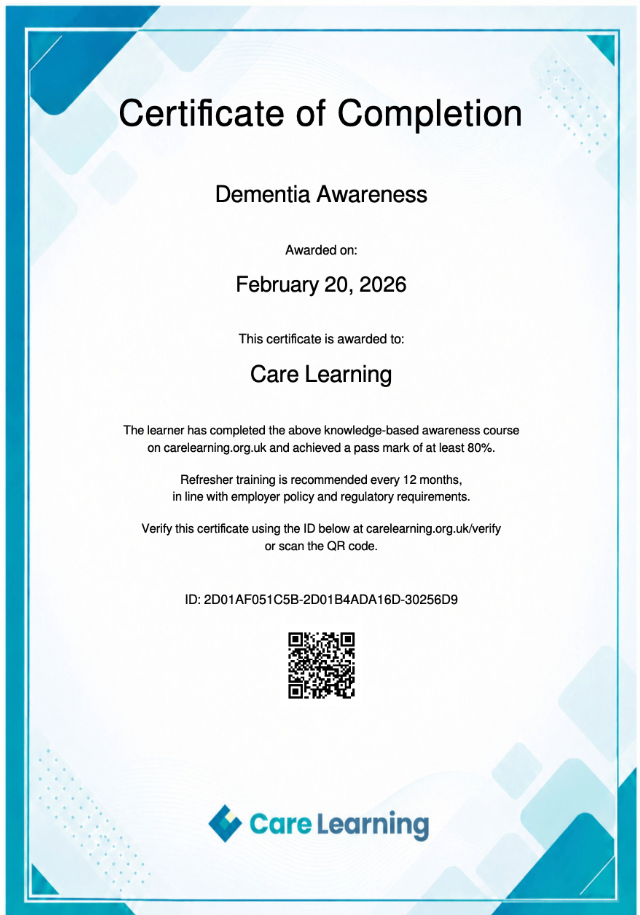
Yes. A certificate is issued after successful completion.
This Younger Onset Dementia Awareness course provides a clear foundation for supporting people whose experiences, responsibilities and goals may differ from those commonly associated with dementia in later life. It helps learners deliver informed, respectful and person-centred support while recognising family needs and remaining within professional boundaries.
Enrol now to build your understanding of younger onset dementia.