
This Neurodivergent Burnout Awareness Course is designed for professionals who may support neurodivergent people in workplaces, education, health and social care, and other services. It introduces reported experiences of burnout and reduced capacity while emphasising individual differences, professional boundaries and the importance of avoiding assumptions or informal diagnosis.
This free course explores current evidence and its limitations, masking and camouflaging, sensory and social demands, executive demands, possible changes associated with burnout, neuro-affirming practice and reasonable adjustments. Learners also consider supportive responses to reduced capacity, return to work or learning, ongoing review and when occupational health or other professional advice may be appropriate.
Why Take This eLearning Course?
Neurodivergent people can experience environments, communication and everyday demands in very different ways. Understanding how sustained demands and barriers may affect capacity can help professionals respond respectfully, recognise when support may be needed and focus on practical changes without making clinical conclusions.
This course will help you to:
- Build a clearer understanding of what people may mean by neurodivergent burnout.
- Recognise the limits of current evidence and avoid overgeneralising research findings.
- Understand how masking, sensory demands and repeated adaptation may increase effort.
- Recognise possible changes in communication, participation, task management and sensory tolerance.
- Avoid interpreting reduced capacity as laziness, unwillingness or deliberate non-compliance.
- Use a more individual and neuro-affirming approach when discussing support needs.
- Consider reasonable adjustments and other practical ways of reducing avoidable barriers.
- Support constructive conversations about returning to work, learning or usual activities.
- Review environmental, communication and workload demands rather than focusing only on output.
- Recognise when concerns should be referred through occupational health, safeguarding, learner-support or other professional pathways.
Learning Outcomes
By the end of this course, you will be able to:
- Define neurodivergent burnout as a term used by some neurodivergent people and explain its diagnostic limitations.
- Describe the developing evidence relating to burnout and identify important limitations in applying research broadly.
- Distinguish reported burnout experiences from ordinary short-term tiredness without attempting to diagnose the cause.
- Explain masking and camouflaging and how repeated adaptation may contribute to increased effort.
- Identify sensory, social, executive and environmental demands that may affect a person’s available capacity.
- Recognise possible changes associated with reduced capacity while acknowledging that similar changes may have other causes.
- Apply neuro-affirming listening and communication principles when discussing an individual’s experience.
- Explain the purpose of reasonable adjustments and identify workplace, education and service-based options that may be considered.
- Describe supportive principles for reduced load, return to work, return to learning and ongoing review.
- Explain the boundaries of an awareness-level role and identify when appropriate professional or organisational pathways should be used.
Neurodivergent Burnout Awareness Course Outline
The course is organised into six modules covering understanding neurodivergent burnout, demands that may contribute to reduced capacity, recognising and responding to change, reasonable adjustments, supportive return and recovery-aware practice, and professional role boundaries.
Module 1: Understanding Neurodivergent Burnout
Learners will explore what people may mean when they describe neurodivergent burnout, including severe exhaustion, reduced capacity and possible links with prolonged demands or a mismatch between individual needs and the environment. The module explains that experiences vary significantly between individuals and that neurodivergent burnout is not presented as a formal diagnosis. It also introduces the developing evidence base, including research relating to autistic burnout and the limitations of applying those findings to every autistic person or to other forms of neurodivergence. Learners will consider how reported burnout can differ from ordinary tiredness and how a neuro-affirming approach focuses on the person’s own description, strengths, needs and individual circumstances.
Module 2: Masking, Sensory Load and Environmental Demands
Learners will examine masking and camouflaging, including the effort that may be involved in monitoring, changing or concealing natural behaviour and communication in response to social expectations. The module considers sensory and social demands such as noise, lighting, busy environments, prolonged interaction and communication difficulties, alongside executive demands involving planning, prioritising, switching tasks and responding to uncertainty. Learners will also explore how environmental barriers, unclear expectations, repeated adaptation and pressure to conceal support needs can affect available capacity over time.
Module 3: Recognising Change and Responding Appropriately
Learners will consider possible changes that may be associated with burnout or reduced capacity, including persistent exhaustion, withdrawal, communication changes, increased task difficulty, sensory changes and reduced access to previously manageable skills. The course emphasises that these changes are not diagnostic and may overlap with other health and wellbeing issues. Learners will explore why reduced participation or performance should not automatically be labelled as laziness or non-compliance, how to listen respectfully to the individual and how to respond proportionately within the limits of their professional role.
Module 4: Reasonable Adjustments and Accessible Support
Learners will explore the purpose of reasonable adjustments and how they are intended to reduce disability-related disadvantage. The module introduces relevant considerations under the Equality Act 2010 in England, Scotland and Wales, while recognising that Northern Ireland has separate disability discrimination legislation. Learners will consider workplace adjustments such as quieter spaces, regular breaks, clearer instructions, staged tasks, advance notice and changes to working patterns. They will also examine supportive approaches in education and other services, including predictable communication, sensory considerations, learner involvement and relevant SEND processes, together with the importance of agreeing, recording, reviewing and adapting support where appropriate.
Module 5: Reduced Load, Return to Work and Return to Learning
Learners will examine non-clinical principles that may help reduce avoidable load, including agreed breaks, clearer priorities, predictable communication, sensory comfort and appropriate communication methods. The module explains how these approaches remain separate from prescribing treatment, rest or an individual recovery programme. Learners will consider supportive return-to-work discussions, review of existing adjustments, possible phased arrangements and the appropriate use of occupational health advice. They will also explore return-to-learning approaches involving existing support plans, manageable demands, predictable information and ongoing review, as well as the importance of monitoring sensory barriers, communication load, workload, transitions and environmental fit.
Module 6: Role Boundaries, Referral and Ongoing Support
Learners will explore the limits of an awareness-level role and how staff can notice changes, listen, address barriers and support agreed arrangements without diagnosing burnout or providing therapy or recovery programmes. The module considers circumstances in which occupational health or other professional advice may be appropriate and reviews possible pathways in employment, education, health, social care and community settings. Learners will also examine how to respond when health, educational, safeguarding, employment or investigative issues fall outside their responsibilities and how ongoing review, appropriate records, escalation and specialist involvement can support situations where needs remain unresolved.
Target Audience
This course is suitable for:
- Health and social care workers who support neurodivergent adults or young people.
- Managers, supervisors and team leaders responsible for supporting staff.
- HR and people professionals involved in workplace support and reasonable adjustments.
- Teachers, SENCOs, tutors and other education or learner-support professionals.
- Coaches, support workers and professionals working in community or service settings.
- Staff who need an awareness-level understanding of neurodivergent burnout and appropriate professional responses.
No previous specialist knowledge is required.
FAQ
Who is this course suitable for?
The course is suitable for professionals who may encounter neurodivergent people in workplaces, education, health and social care, community services or other support settings. It is particularly useful for people who need an awareness-level understanding rather than specialist clinical training.
Do I need any previous experience?
No. The course introduces the subject from an awareness perspective and does not assume previous specialist knowledge of neurodivergence or burnout.
What will I learn on this neurodivergent burnout course?
You will learn about reported experiences of neurodivergent burnout, current evidence and its limitations, masking, sensory and social demands, executive demands, reduced capacity, neuro-affirming approaches, reasonable adjustments, supportive return and professional role boundaries.
Is neurodivergent burnout a formal diagnosis?
The course does not present neurodivergent burnout as a formal diagnosis. It explains the term as one used by some neurodivergent people to describe particular experiences of exhaustion and reduced capacity. Learners are encouraged to listen to the person’s account while avoiding clinical conclusions outside their role.
Will this course help with day-to-day practice?
Yes. The course focuses on practical awareness, including listening to the individual, identifying avoidable barriers, considering appropriate adjustments, communicating clearly and knowing when established support or referral procedures should be followed.
Does the course cover reasonable adjustments?
Yes. It explains the purpose of reasonable adjustments, the importance of individual discussion and examples of changes that may be considered in workplaces, education and other services. It also covers reviewing whether agreed arrangements are addressing the disadvantage they were intended to reduce.
Does it cover relevant responsibilities and good practice?
Yes. The course addresses professional boundaries, confidentiality, organisational procedures, reasonable-adjustment responsibilities and appropriate referral or escalation. It also explains that legislation and education frameworks vary across different parts of the UK and that staff should follow the requirements applying to their own setting and jurisdiction.
How long does the course take?
The course is self-paced and usually takes around 1 hour to complete.
Will I receive a certificate?
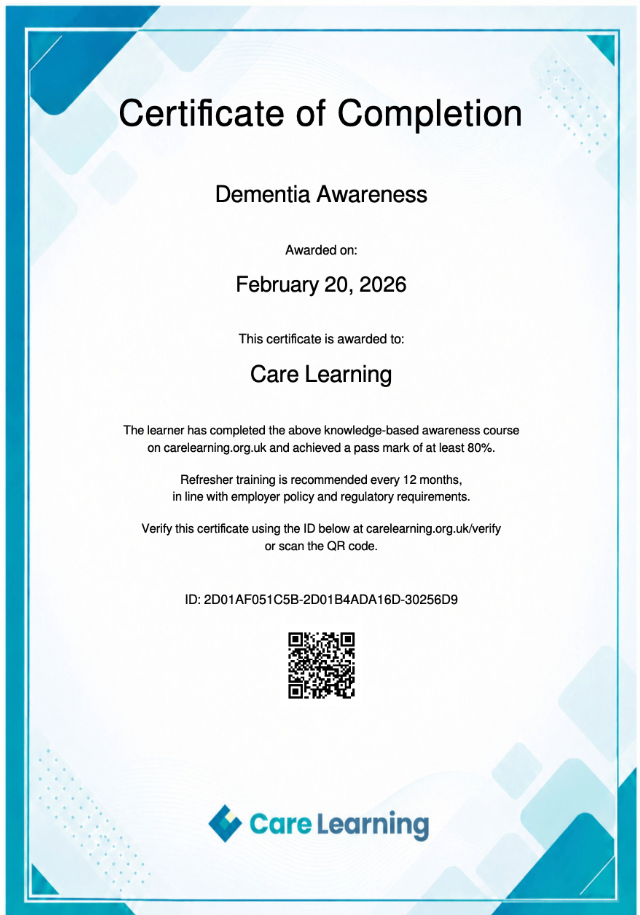
Yes. A certificate is issued after successful completion.
Developing awareness of neurodivergent burnout can support more respectful and individualised conversations when a person’s capacity changes. This course provides a practical foundation for recognising possible barriers, considering proportionate support and knowing when further professional input or established organisational processes are required.
Enrol now to build your understanding of neurodivergent burnout.