
This Neuroscience of Early Brain Development course is designed for early years, family support, health and social care professionals who work with babies, young children and families. It provides a clear introduction to how the brain develops from conception through the first five years, while recognising that development remains individual, adaptable and influenced by many interacting factors.
This free course explores brain plasticity, early experiences, responsive relationships, stress, adversity, protective experiences and play. Learners will also consider how developmental evidence can inform everyday practice, early intervention and work within the Early Years Foundation Stage (EYFS), while maintaining appropriate professional boundaries around neuroscience.
Why Take This eLearning Course?
Understanding early brain development can help practitioners make better sense of the importance of relationships, communication, play and supportive environments. This course provides a balanced introduction to developmental neuroscience without treating children’s experiences as fixed predictors of future outcomes.
This course will help you to:
- Build a practical understanding of key early brain development concepts.
- Recognise how biology, relationships, experiences and environments interact over time.
- Understand the importance of responsive adult-child interactions.
- Apply serve-and-return principles during everyday communication and play.
- Develop a balanced understanding of stress responses and cortisol.
- Recognise how adversity and wider circumstances can influence developmental environments.
- Identify protective experiences that can support children and families.
- Use play and responsive interaction to support children’s development.
- Apply developmental evidence thoughtfully within early years practice.
- Avoid unsupported neurological diagnosis, prediction and common neuroscience misconceptions.
Learning Outcomes
By the end of this course, you will be able to:
- Define key terms associated with early brain development.
- Describe how the brain develops from conception to age five.
- Explain brain plasticity, sensitive periods and continuing developmental change.
- Explain how early experiences and responsive relationships can influence development.
- Describe the stress response and distinguish between positive, tolerable and toxic stress.
- Identify how adversity, poverty and wider circumstances may affect developmental environments.
- Recognise protective experiences and appropriate sources of support.
- Explain how developmentally appropriate play supports communication, learning and regulation.
- Describe how evidence-informed approaches can support children and families.
- Apply neuroscience within EYFS practice while maintaining appropriate professional boundaries.
Neuroscience of Early Brain Development Course Outline
The course is organised into six modules covering the foundations of early brain development, relationships and experience, stress and regulation, adversity and protective factors, play, and the responsible application of developmental evidence in practice.
Module 1: Understanding Early Brain Development
Learners will explore key terms including neurons, neural connections, brain architecture, plasticity and the stress response. The module explains how brain development begins before birth and continues rapidly through the first five years through interaction between biological processes, relationships, experiences and the wider environment. Learners will examine brain plasticity and sensitive periods, including why early experiences can have a strong influence without creating fixed developmental outcomes. The module also challenges common misconceptions, including assumptions that more stimulation is always better, that early development permanently determines the future, or that simplified brain claims can explain individual children’s learning or behaviour.
Module 2: Experiences, Relationships and Responsive Interaction
Learners will examine how everyday experiences influence developing neural systems through repeated interaction between children and their surroundings. The module introduces serve-and-return interactions and explains how adults can notice children’s communication, respond attentively, add suitable language, follow children’s interests and allow time for a response. Learners will consider the importance of attentive, caring relationships for emotional security, communication and shared learning, together with practical examples such as following a baby’s cues, responding to a child’s interests and sharing attention during books, routines and play.
Module 3: Stress, Regulation and Additional Support
Learners will develop a balanced understanding of the biological stress response and the role of cortisol, including why temporary stress responses are normal and why duration, intensity and context matter. The module explains positive, tolerable and toxic stress as patterns of response rather than labels that can diagnose individual children. Learners will explore how responsive relationships can help buffer stress through noticing cues, soothing, connection, predictable routines and appropriate family support. The module also covers how to recognise when a child or family may require additional help, emphasising factual observation, appropriate recording, professional referral and safeguarding procedures rather than attempting to diagnose neurological harm.
Module 4: Adversity, Wider Circumstances and Protective Experiences
Learners will consider how abuse, neglect, persistent stress and other forms of adversity can increase developmental risk without determining a child’s future. The module explores how poverty, housing conditions, access to resources, caregiver pressures and community support can shape children’s developmental environments while avoiding assumptions or blame towards families. Learners will identify protective experiences including caring relationships, safe environments, early education, family support, professional services and community connections. The module reinforces the importance of plasticity and individual developmental pathways, showing why risk should be understood as possibility rather than certainty.
Module 5: Play and Responsive Practice
Learners will explore how play can support communication, movement, problem-solving, emotional development and social interaction. The module examines developmentally appropriate play, including child-led exploration, responsive adult support, safe repetition and opportunities adapted to individual interests and abilities. Learners will consider the adult’s changing role in observing, allowing exploration, joining sensitively, extending learning and stepping back when appropriate. Practical examples from nurseries, childminding, children’s centres, family hubs and home environments demonstrate how responsive interactions can be incorporated naturally into construction, outdoor exploration, songs, books and imaginative play.
Module 6: Applying Developmental Evidence in Professional Practice
Learners will consider how evidence about development can inform decisions about relationships, play and communication while remaining grounded in observation of the individual child and professional judgement. The module introduces evidence-informed early intervention and explains how research can help services consider appropriate support for children and families without promising guaranteed outcomes. Learners will explore links with the Early Years Foundation Stage, including individual development, responsive practice, safe care and professional observation. The course concludes by examining professional boundaries, including why neuroscience should support practice rather than be used to diagnose neurological conditions, infer specific brain changes from behaviour or predict a child’s future.
Target Audience
This course is suitable for:
- Early years practitioners and nursery staff.
- Childminders and other professionals working with children from birth to five.
- Family support and family hub practitioners.
- Health and social care workers supporting young children and families.
- Early years managers, supervisors and team leaders.
- Professionals or volunteers who want a clearer understanding of early development and responsive practice.
No previous specialist knowledge is required.
FAQ
Who is this course suitable for?
This course is suitable for people working with babies, young children and families, including early years practitioners, nursery staff, childminders, family support workers and relevant health and social care professionals. It is also suitable for those who want a responsible introduction to developmental neuroscience and its relevance to everyday practice.
Do I need any previous experience?
No specialist knowledge of neuroscience is required. The course introduces key concepts in clear language and connects them with practical situations that may arise when supporting young children and families.
What will I learn on the Neuroscience of Early Brain Development course?
You will learn about early brain development, neural connections, plasticity, sensitive periods, early experiences, responsive relationships, stress responses, adversity, protective experiences and play. You will also consider how developmental evidence can be applied responsibly within early years practice.
Will this course help with day-to-day practice?
Yes. The course connects developmental knowledge with everyday interactions, including following children’s cues, supporting communication, using responsive approaches during play, helping children manage challenging experiences and recognising when further support may be appropriate.
Does the course cover practical skills?
The course focuses on practical principles that can be applied during everyday care, play, communication and observation. It includes examples of serve-and-return exchanges, shared attention, responsive play and appropriate adult involvement while recognising that individual children communicate and develop in different ways.
Does it cover relevant responsibilities or good practice?
Yes. The course considers professional observation, factual recording, safeguarding procedures, appropriate referral and professional boundaries. It also explains how neuroscience can support understanding of the Early Years Foundation Stage without creating additional statutory duties or replacing current professional guidance.
How long does the course take?
The course is self-paced and usually takes around 1 hour to complete.
Will I receive a certificate?
Yes. A certificate is issued after successful completion.
This course provides a practical and balanced introduction to early brain development for professionals supporting young children and families. It helps learners connect developmental science with responsive relationships, play, observation and evidence-informed practice while avoiding unsupported claims about children’s brains or future outcomes.
Enrol now to build your understanding of early brain development.
Watch the course trailer
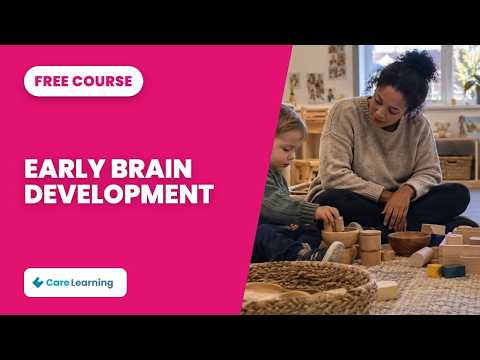
Captions are available in the player (CC). The video plays from YouTube, which only loads when you press play.