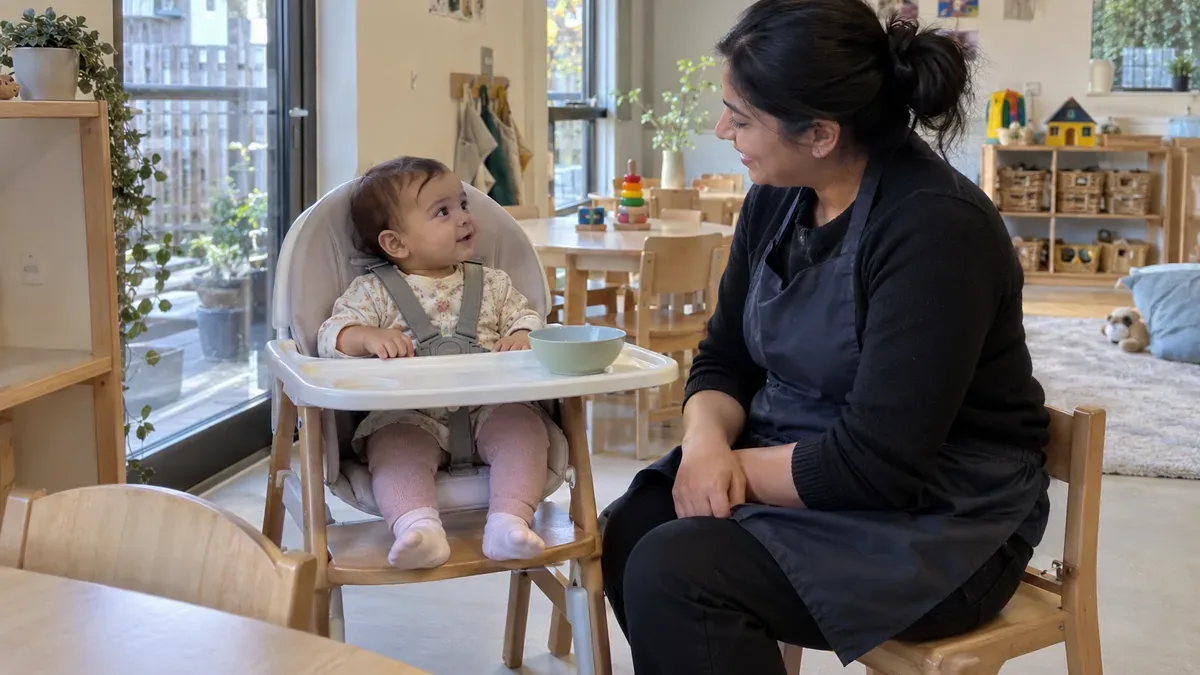
This foundational online course helps early years practitioners, health visitors, childminders and nursery staff understand complementary feeding. It supports informed conversations with families and awareness of the responsibilities involved in providing food for babies.
The course covers readiness, baby-led and spoon-led approaches, responsive feeding, food variety, changing textures and current allergen messages. It also explains food-safety responsibilities, reliable information-sharing and the boundaries of individual professional advice. Provider-framework content focuses on England.
Why Take This eLearning Course?
Families can receive conflicting messages about when to start weaning and which approach to use. A shared understanding helps teams discuss reliable information, recognise when qualified advice is needed and support consistent arrangements across home and the setting.
This course will help you to:
- Understand what complementary feeding adds to usual milk feeds.
- Recognise the general timing and combined signs of readiness.
- Explain feeding choices without ranking one approach as best for every baby.
- Support respectful conversations about appetite and food preferences.
- Understand how food variety and texture experience develop.
- Recognise the limits of general allergen information.
- Understand food-safety and supervision responsibilities in early years settings.
- Identify appropriate professional advice and concern-sharing routes.
Learning Outcomes
By the end of this course, you will be able to:
- Define weaning and complementary feeding.
- Describe the different purposes of NHS information and SACN evidence reviews.
- Explain the usual timing and signs of readiness.
- Describe baby-led, spoon-led and combined feeding approaches.
- Explain responsive feeding and inclusive family partnership.
- Outline food variety, textures and milk messages across the first year.
- Identify common allergenic foods and the limits of general introduction guidance.
- Describe responsibilities for dietary information, food safety and supervision.
- Distinguish clinical and safeguarding support routes within your role.
- Outline relevant England framework boundaries and inclusion responsibilities.
Weaning and Early Nutrition Course Outline
Module 1: Weaning and Reliable Guidance
Learners will understand complementary feeding as the gradual introduction of foods alongside milk. This module explains the different roles of NHS information and SACN recommendations, the usual timing of weaning and the three signs of readiness. It also identifies situations that require individual professional advice, including premature birth and persistent feeding concerns.
Module 2: Feeding Approaches and Responsive Support
Learners will explore how settings agree and review feeding arrangements with families. Baby-led, spoon-led and combined approaches are described as valid choices that all require suitable food and supervision. The module covers attention to appetite cues, a calm feeding environment and inclusive support for cultural preferences, financial circumstances and access needs.
Module 3: Foods and Textures Across the First Year
Learners will understand how food variety and texture experience develop from around six months through the seven-to-nine and ten-to-twelve-month stages. The module covers food groups, iron-containing foods, family mealtimes and continuing milk feeds. General milk and drink messages are explained without prescribing quantities, preparation methods or individual feeding plans.
Module 4: Allergens and Reliable Feeding Information
Learners will identify common foods that can cause allergy and distinguish allergy from intolerance and choking risks. The module explains current general introduction messages, tolerated-food continuity and situations requiring qualified advice. It also covers current dietary records, authorised plans and the provider responsibility to identify who checks food and drink against each child’s requirements at meals and snacks.
Module 5: Food Safety in Early Years Settings
Learners will explore nutrition and food-safety responsibilities within the applicable England provider framework. This module explains developmental suitability, attentive supervision and trained response arrangements. It follows the food journey through the setting and covers common restrictions and product-label limitations, while signposting detailed preparation requirements to current official guidance and separate role-specific training.
Module 6: Family Support and Professional Boundaries
Learners will understand how respectful conversations and suitable signposting support families. Clinical questions and safeguarding concerns are linked to the appropriate qualified roles and local arrangements. The module outlines relevant England frameworks, inclusion responsibilities and inspection limits, then closes with a concise recap of the course’s main messages.
Target Audience
This course is suitable for:
- Early years practitioners supporting babies and families.
- Nursery staff involved in mealtime support or family conversations.
- Childminders providing care during complementary feeding.
- Health visitors using the course as a general awareness resource.
- Children’s centre staff supporting families with reliable information.
- Early years managers reviewing staff awareness and support arrangements.
No previous specialist knowledge is required. Professionals remain responsible for working within their existing qualifications, training and local policies.
FAQ
Who is this course suitable for?
It is designed for early years practitioners, nursery staff, childminders, health visitors and others supporting families in early years settings. It is a foundational awareness course rather than specialist clinical training.
Do I need any previous experience?
No previous specialist knowledge is needed. The course uses clear explanations of complementary feeding and the responsibilities relevant to supporting babies and families.
What will I learn about weaning and early nutrition?
You will learn about readiness, feeding approaches, responsive support, food stages, milk messages and common allergens. The course also covers food-safety responsibilities, information-sharing and when qualified advice is needed.
Does the course recommend baby-led or spoon-led weaning?
It explains both approaches and how families may combine them. It does not present either approach as universally superior, and describes the nutrition and safety responsibilities shared by both.
Will this course help with day-to-day practice?
It supports informed conversations with families and a clearer understanding of agreed feeding information and professional boundaries. Local policies, individual plans and role-specific training remain part of workplace practice.
Does the course cover practical skills?
The course explains responsibilities at awareness level. It does not teach food-cutting methods, clinical feeding techniques, allergy treatment or emergency procedures, and does not establish food-handling or first-aid competence.
Does it cover relevant responsibilities or good practice?
Yes. It outlines relevant England early years responsibilities, family partnership, inclusion and safeguarding boundaries. Services elsewhere in the UK need their own national guidance and local policies. Course attendance does not establish compliance or inspection approval.
How long does the course take?
The course is self-paced and usually takes around 1 hour to complete.
Will I receive a certificate?
Yes. A certificate is issued after successful completion. It records course completion and does not certify practical competence or a provider’s compliance.
Build a shared understanding of weaning and early nutrition through concise, relevant awareness learning. The course supports respectful family conversations while keeping individual advice and practical responsibilities with the appropriate qualified people.
Enrol now to build your understanding of weaning and early nutrition.