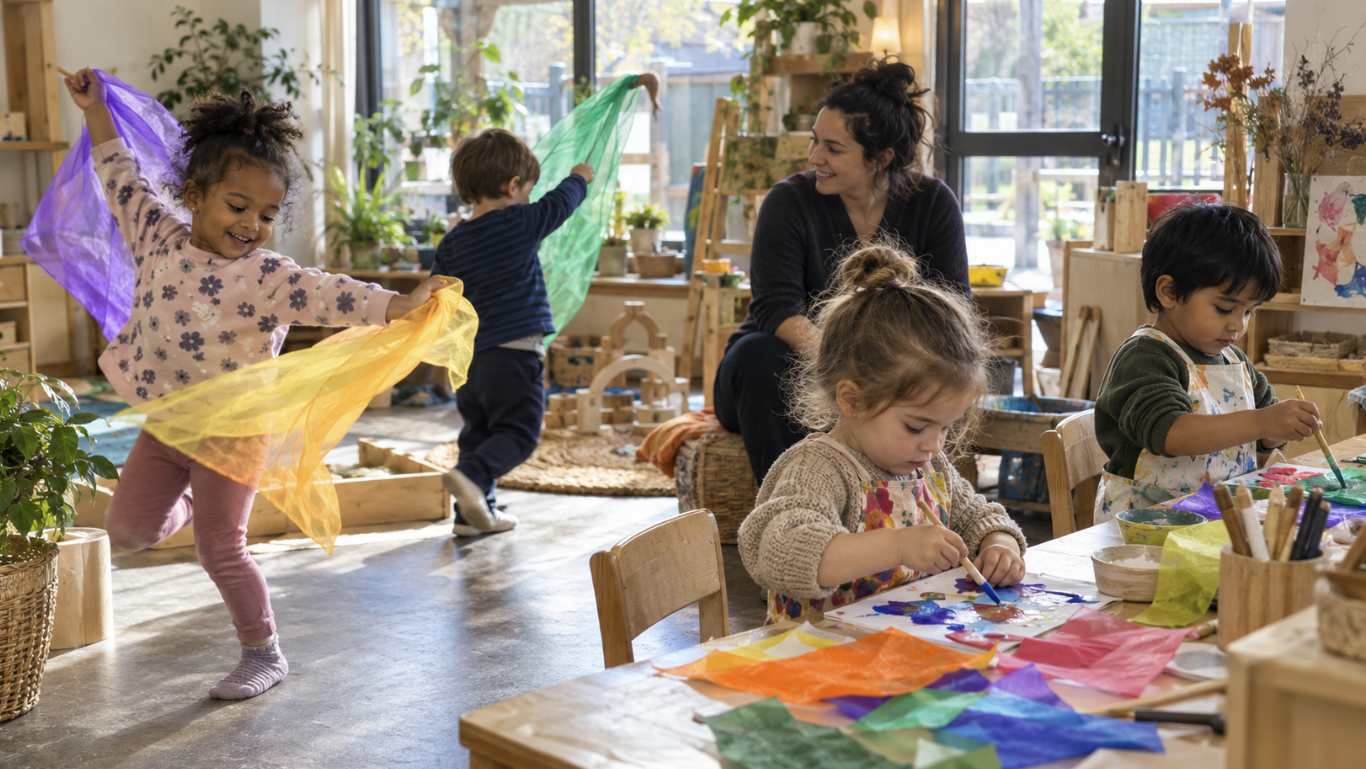
This online Creative Expression and the Arts in Early Years course is designed for early years practitioners and others who support young children’s learning and development. It explores how children communicate, investigate and represent ideas through art, making, imaginative play, music, movement and other forms of creative expression.
This free course considers Expressive Arts and Design within the Early Years Foundation Stage (EYFS), process-focused and child-led practice, open-ended resources, enabling environments, inclusive participation, SEND adaptations and culturally inclusive experiences. It also examines observation, partnership working, practical safety and safeguarding responsibilities during creative activities.
Why Take This eLearning Course?
Creative experiences can give young children valuable opportunities to make choices, experiment, communicate and develop their own ideas. Effective early years practice involves creating the right conditions for exploration while knowing when and how adults should offer support.
This course will help you to:
- Recognise the many ways young children can express ideas creatively
- Understand the place of Expressive Arts and Design within the EYFS
- Provide more open-ended and process-focused creative experiences
- Support child-led exploration without unnecessarily directing the outcome
- Select appropriate materials for art, construction and sensory experiences
- Create an environment that encourages independent creative choices
- Use music and movement as flexible forms of expression and participation
- Adapt creative opportunities to improve inclusion for children with SEND
- Use observation to plan responsive future experiences
- Apply appropriate safety and safeguarding responsibilities during creative activities
Learning Outcomes
By the end of this course, you will be able to:
- Define creative expression in early childhood and identify different forms it can take
- Describe Expressive Arts and Design within the EYFS
- Explain how creative experiences can contribute to children’s communication, exploration and development
- Distinguish between process-focused and product-focused creative experiences
- Explain the practitioner’s role in supporting child-led creativity
- Identify suitable open-ended resources and features of an enabling creative environment
- Describe inclusive approaches to music, movement and creative communication
- Identify appropriate adaptations that can improve access for children with SEND
- Explain how observation and partnership working can inform creative provision
- Describe relevant safety and safeguarding responsibilities during creative activities
Creative Expression and the Arts in Early Years Course Course Outline
The course is organised into six modules covering the foundations of creative expression, child-led practice, enabling environments, music and movement, inclusive communication and SEND, and wider responsibilities including cultural inclusion, observation and safeguarding.
Module 1: Understanding Creative Expression in Early Childhood
Learners will explore what creative expression means in early childhood and how children may communicate ideas through drawing, making, movement, sound, role play, construction and imaginative activity. The module introduces Expressive Arts and Design as an area of learning and development within the EYFS and considers how varied creative experiences can support communication, vocabulary, symbolic thinking, interaction and exploration. Learners will also consider the Reggio Emilia concept of the “hundred languages” as an influential educational philosophy, while recognising that it is distinct from statutory EYFS requirements.
Module 2: Process-Focused and Child-Led Creative Practice
Learners will examine the difference between process-focused experiences, where children can explore and make their own decisions, and product-focused activities organised around a planned result. The module considers the limitations of routinely relying on colouring sheets, pre-cut shapes and identical adult models, while recognising that directed resources can sometimes have a specific purpose. It also explores how practitioners can observe, listen, extend ideas gently and protect children’s ownership of their work. Historical discussions around child-led education are considered alongside current EYFS practice and the practitioner’s responsibility to plan an effective curriculum.
Module 3: Resources, Environments and Supportive Adult Practice
Learners will identify open-ended resources suitable for drawing, mark making, painting, printing, clay, dough, collage, construction and sensory exploration. They will consider how accessible resources, flexible spaces and sufficient time can create an enabling environment in which children can develop ideas independently. The module explains how adults can extend creativity through appropriate demonstrations, language, additional resources and attention to children’s interests without taking control of the outcome. Learners will also consider practical safety, including age-appropriate resources, supervision, allergies, sensory needs, hygiene and proportionate risk assessment.
Module 4: Music and Movement in Early Years Practice
Learners will explore music and movement as everyday forms of creative expression rather than activities centred on performance. The module covers singing, nursery rhymes, instrument play, body percussion, invented sound, action songs, dance and free movement. It also introduces research relating to rhythm and early speech processing, while emphasising the importance of avoiding exaggerated developmental claims. Learners will consider practical examples of child-led sound and movement and ways to make participation more inclusive through accessible instruments, suitable positioning, comfortable sound levels, visual support and flexible ways of joining in.
Module 5: Communication, Emotional Expression and SEND
Learners will consider how drawing, gesture, movement, sound, making and sensory exploration can widen the ways children communicate alongside spoken language. The module examines how familiar sound, rhythmic movement and sensory choices may support expression or regulation for some children while recognising that individual responses vary. Learners will identify SEND adaptations relating to sensory demands, physical access, communication support and processing time. The module also explains when observations should be shared with families, the SENCO or other professionals, how agreed support plans can inform creative provision and why practitioners should remain within their professional role rather than attempting to diagnose needs.
Module 6: Inclusive Participation, Culture, Observation and Safeguarding
Learners will explore how genuine choice and flexible participation can give children meaningful influence over their creative experiences. The module considers culturally inclusive provision that reflects families and communities while introducing wider artistic, musical and creative perspectives without relying on stereotypes. Learners will examine how factual observation of children’s choices and repeated interests can inform future resources and experiences without treating artwork as a test or assigning unsupported meanings. The module concludes with safeguarding responsibilities, including recognising concerns arising during creative activities, recording factual information and following the setting’s established reporting procedures rather than independently interpreting or investigating a child’s creative work.
Target Audience
This course is suitable for:
- Early years practitioners working in nurseries and other early years settings
- Childminders and childminding assistants
- Reception-class staff supporting young children’s creative learning
- Early years apprentices and staff developing their knowledge of creative provision
- Practitioners supporting children with SEND or additional access needs
- Managers and room leaders reviewing creative opportunities within their provision
No previous specialist knowledge is required.
FAQ
Who is this course suitable for?
The course is suitable for practitioners and other staff who support young children in early years provision, including nursery practitioners, childminders and reception-class staff. It can also support those who are developing or reviewing creative experiences within their setting.
Do I need any previous experience?
No previous specialist knowledge of art, music or creative education is required. The course introduces the key principles clearly and focuses on practical early years provision.
What will I learn on this Creative Expression and the Arts in Early Years course?
You will explore child-led creativity, Expressive Arts and Design within the EYFS, process-focused experiences, open-ended materials, music and movement, inclusive participation, SEND adaptations, observation, safety and safeguarding.
Will this course help with day-to-day practice?
Yes. The course considers practical decisions such as choosing resources, arranging creative spaces, responding to children’s interests, extending an idea without taking over and making activities more accessible to individual children.
Does the course cover practical skills?
The course explains practical approaches to providing art, making, construction, sensory, music and movement experiences. It also covers ways practitioners can demonstrate safe tool use, offer additional resources and adapt environments while leaving creative decisions with the child.
How does the course relate to the EYFS?
The course explains the place of Expressive Arts and Design within the EYFS and explores creative practice in an England-focused early years context. It also distinguishes influential educational ideas and historical approaches from current statutory requirements.
Does the course cover inclusion and SEND?
Yes. Learners consider sensory, physical and communication barriers to participation, along with adaptations involving positioning, resources, visual support, processing time and alternative ways of joining creative experiences.
Does the course cover safety and safeguarding responsibilities?
Yes. The course covers proportionate safety considerations for creative activities and explains how practitioners should respond if something said, observed or expressed during an activity raises a safeguarding concern. It emphasises factual observation and following established setting procedures rather than independently investigating or interpreting a child’s work.
How long does the course take?
The course is self-paced and usually takes around 1 hour to complete.
Will I receive a certificate?
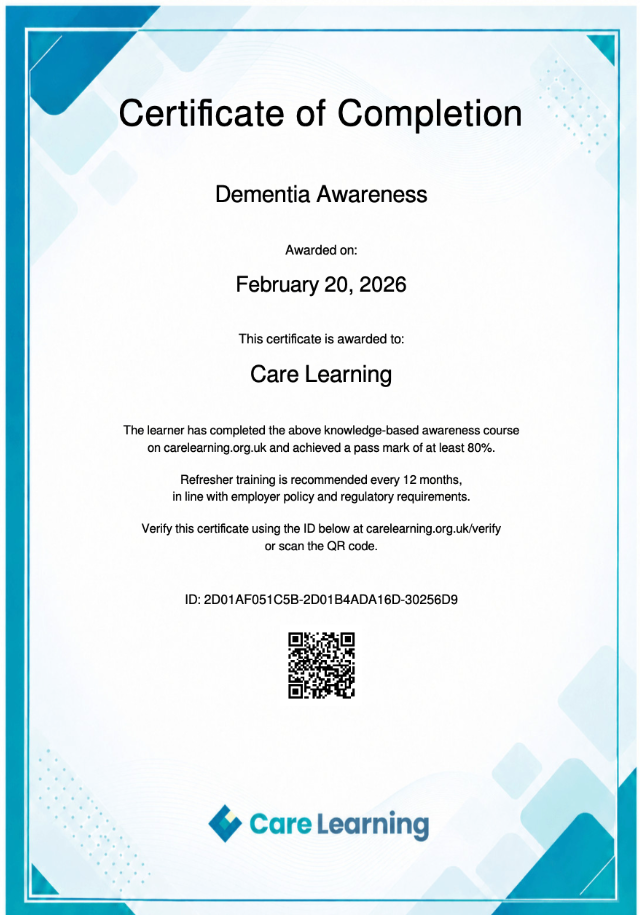
Yes. A certificate is issued after successful completion.
Creative expression is a valuable part of early childhood because it gives children different ways to explore, communicate and develop their ideas. This course provides a practical introduction to creating responsive, inclusive and appropriately supported opportunities for art, music, movement, imaginative play and other forms of expression.
Enrol now to build your understanding of creative expression and the arts in early years.