This introductory Playwork in Early Years course is designed for early years practitioners, assistants, childminders, wraparound staff and anyone new to facilitating play in nurseries, preschools and before or after-school provision. It explores how playwork ideas can support children’s wellbeing, learning and development in early years settings.
This free course covers the meaning of playwork, the playwork principles, child-led play, common play theories, the adult role, enabling indoor and outdoor environments, loose parts, risk–benefit thinking, safeguarding, inclusion, observation and reflective practice.
Why Take This eLearning Course?
Play is central to how young children explore, communicate, build relationships and make sense of the world. This online playwork in early years course helps learners understand how to protect children’s ownership of play while meeting professional responsibilities around safety, inclusion and good practice.
This course will help you to:
- Understand what playwork means in an early years context
- Recognise the value of freely chosen, self-directed play
- Support children’s play without taking control unnecessarily
- Use play theories to inform thoughtful practice
- Create richer indoor and outdoor play opportunities
- Use loose parts and flexible resources with more confidence
- Balance challenge, safety and supervision through risk–benefit thinking
- Support inclusive play for children with different needs
- Work more effectively with families and other professionals
- Reflect on observations to improve play provision
Learning Outcomes
By the end of this course, you will be able to:
- Define playwork and explain how it differs from adult-led activities
- Identify the playwork principles and describe child-led play in practice
- Explain how common play theories influence adult decisions
- Describe how play supports wellbeing, development and communication
- Use appropriate adult language, timing and positioning during play
- Identify when intervention is needed for safety, inclusion or conflict
- Describe how to design enabling play environments indoors and outdoors
- Explain risk–benefit assessment in early years play contexts
- Identify barriers to play and describe inclusive adaptations
- Observe, record and reflect on play in a proportionate way
Playwork in Early Years Course Course Outline
Module 1: Understanding Playwork in Early Years
Learners will explore what playwork means and how it differs from adult-led activities and play-based learning. This module introduces the playwork principles and explains what freely chosen, self-directed play looks like in everyday early years practice. Learners will also consider examples of when a playwork response is appropriate and when adult direction is needed because of safety, welfare or learning responsibilities.
Module 2: Play Theories and the Importance of Play
Learners will look at common play theories taught in UK early years training and how these ideas can shape adult decisions in the setting. The module explains links between play, wellbeing and social, emotional, physical and language development. It also introduces common types and stages of play, with examples across different early years ages and developmental patterns.
Module 3: Supporting Child-Led Play and the Adult Role
Learners will consider the adult role in playwork-informed practice, focusing on supporting rather than directing children’s play. This module explains how adults can tune into the child’s perspective, use language carefully, position themselves thoughtfully and choose the right moment to step in or step back. It also covers proportionate intervention where there are concerns about safety, inclusion, conflict or serious disruption.
Module 4: Enabling Environments and Loose Parts
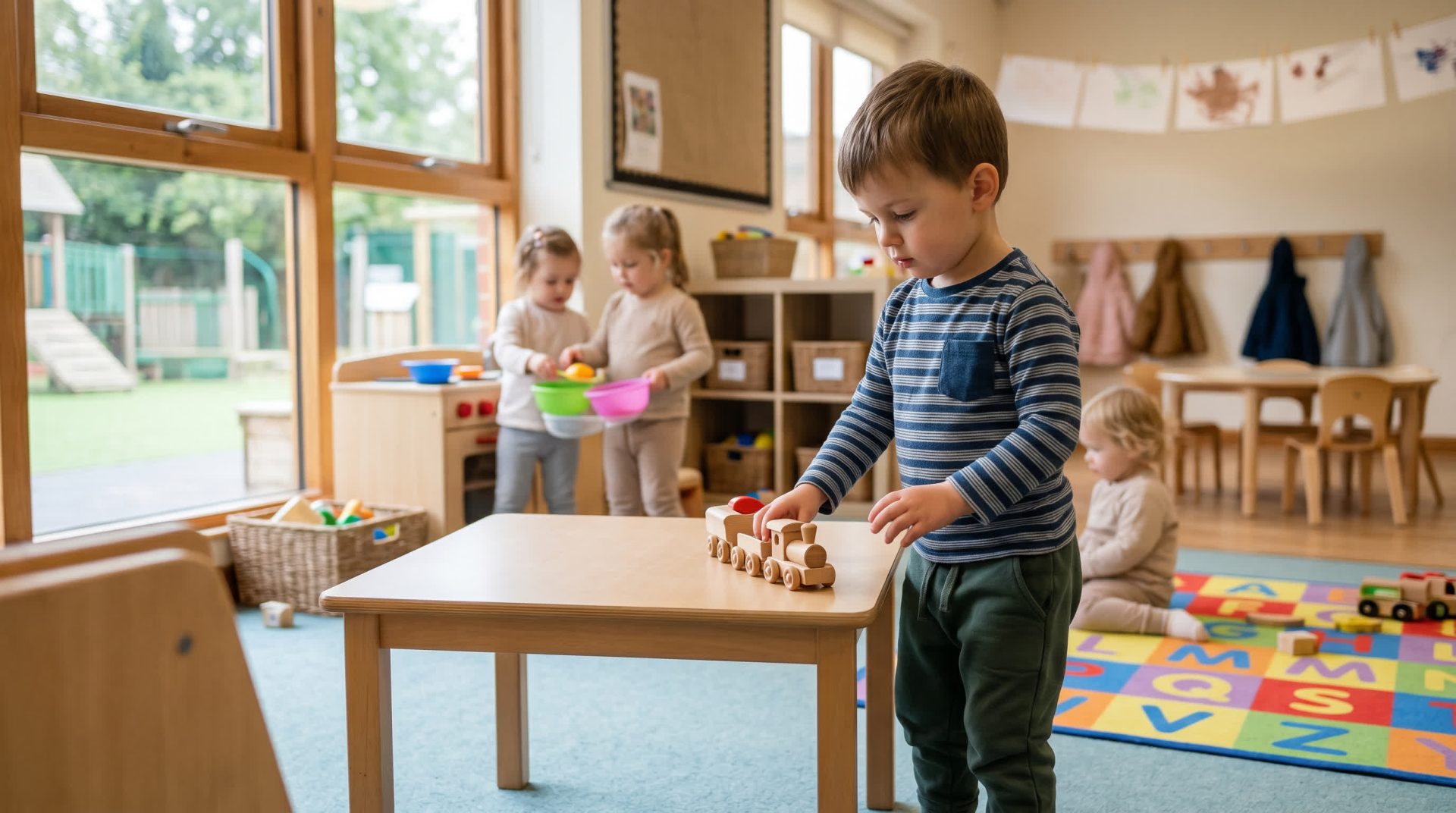
Learners will explore how to design stimulating play spaces that support choice, creativity and independence. This module covers indoor and outdoor provision, including movement, den-making, role play, construction, sensory exploration and quiet retreat. Learners will also consider how loose parts and open-ended resources can widen children’s play opportunities and help them shape the environment through their own ideas.
Module 5: Safety, Risk–Benefit Thinking and Safeguarding
Learners will examine how to balance children’s need for challenge with professional responsibilities for safety and safeguarding. This module introduces risk–benefit assessment, explains why managed risk can support resilience and confidence, and considers supervision that enables play rather than unnecessarily stopping it. It also covers common hazards, sensible controls, safe boundaries, recording and raising concerns in line with setting procedures.
Module 6: Inclusive Play for Every Child
Learners will consider barriers that can prevent children from accessing meaningful play, including communication needs, mobility, sensory processing, anxiety, trauma and SEND. This module explains how to adapt environments, routines, resources and adult responses so that children can participate with dignity and agency. It also covers partnership working with families and other professionals to support consistent play opportunities across home and setting.
Module 7: Observation, Reflection and Improving Practice
Learners will explore how to observe play by looking at children’s choices, interests, patterns, relationships, emotional tone and use of the environment. This module explains how observation can inform planning and support, while keeping evidence proportionate and useful. Learners will also consider reflective practice methods, including self-reflection, team discussion and reviewing the play environment to improve provision over time.
Target Audience
This course is suitable for:
- Early years practitioners and nursery staff
- Preschool and reception support staff
- Childminders and childcare assistants
- Wraparound and out-of-school club staff
- Early years managers and room leaders
- Volunteers or new starters supporting children’s play
No previous specialist knowledge is required.
FAQ
Who is this course suitable for?
This course is suitable for people working with young children in early years, childcare or wraparound settings. It is especially useful for learners who want to understand how playwork principles can support child-led play in practice.
Do I need any previous experience?
No previous specialist experience is required. The course is introductory and explains key concepts clearly, making it suitable for new staff as well as experienced practitioners who want to refresh their approach.
What will I learn on this Playwork in Early Years course?
You will learn what playwork means, how the playwork principles apply in early years practice, how adults can support child-led play, and how to create environments that give children more choice, creativity and control.
Will this course help with day-to-day practice?
Yes. The course focuses on practical early years situations, including when to observe, when to step back, when to intervene, how to support inclusion and how to reflect on the quality of play provision.
Does the course cover practical skills?
Yes. It covers practical approaches such as using loose parts, designing enabling spaces, supporting outdoor and adventurous play, adapting provision for different needs, and using language and positioning that extend play without taking it over.
Does it cover relevant responsibilities or good practice?
Yes. The course covers risk–benefit thinking, safeguarding responsibilities, safe boundaries, supervision, proportionate recording and raising concerns through the appropriate setting procedures.
How long does the course take?
The course is self-paced and usually takes around 1 hour to complete.
Will I receive a certificate?
Yes. A certificate is issued after successful completion.
This Playwork in Early Years course gives learners a clear and practical introduction to supporting children’s play with confidence, care and professional judgement. It is designed to help early years staff create richer opportunities for child-led exploration while maintaining safe, inclusive and reflective practice.
Enrol now to build your understanding of playwork in early years.