
This Effective Handover and Continuity of Care in Home Care course is designed for care workers and others involved in delivering or coordinating domiciliary care. It explains how reliable communication, accurate records and well-managed care arrangements help people receive consistent, person-centred support across visits and between different workers.
This free course covers continuity of care, effective verbal and written handovers, SBAR communication, electronic care records, recognising and reporting changes, urgent escalation, rota disruption, time-sensitive information, communication failures and good care-recording practice. Learners also explore professional role boundaries and the importance of ensuring responsibility for follow-up actions is clearly confirmed.
Why Take This eLearning Course?
Effective continuity and handover are essential when several workers, shifts or teams contribute to a person’s care. Clear communication helps prevent important information from being missed, supports dependable care and ensures concerns and outstanding actions reach the right people at the right time.
This course will help you to:
- Support consistent and person-centred care across home care visits.
- Understand how familiar workers can build trust and recognise changes more readily.
- Give clearer verbal, written and digital handovers.
- Use SBAR to organise important information when handing over or escalating concerns.
- Create accurate, factual and useful care records.
- Recognise changes from a person’s usual presentation without making a diagnosis.
- Escalate urgent concerns using appropriate reporting and emergency arrangements.
- Reduce disruption when visits, workers or rotas change.
- Communicate time-sensitive information and outstanding actions effectively.
- Respond appropriately when information is missing, unclear or conflicting.
Learning Outcomes
By the end of this course, you will be able to:
- Define continuity of care and explain its importance in domiciliary services.
- Describe how continuity supports trust, dignity, choice and person-centred care.
- Explain the purpose and appropriate timing of care handovers.
- Apply good practice to verbal, paper and electronic handover information.
- Explain how Situation, Background, Assessment and Recommendation can structure communication.
- Identify and record relevant changes in a person’s presentation using factual language.
- Explain when concerns require prompt escalation or an emergency response.
- Describe how continuity can be maintained when visits or staffing arrangements change.
- Identify essential and time-sensitive information that should be included in handovers.
- Explain how clear records, confirmed responsibility and incident learning can reduce communication failures.
Effective Handover and Continuity of Care in Home Care Course Outline
The course is organised into eight modules covering continuity of care, handover methods, digital recording, recognising and escalating change, managing disrupted visits, essential handover information, communication failures and effective care documentation.
Module 1: Continuity of Care in Domiciliary Services
Learners will explore what continuity of care means in home care and how reliable visits, familiar workers, consistent support, shared information and well-managed staffing changes contribute to dependable care. The module explains how continuity can support trust, dignity, choice and person-centred practice, while recognising that the same worker cannot always attend every visit. Learners will also consider how familiarity with a person’s usual routines, communication and abilities can help workers notice subtle changes and reduce disruption when staffing arrangements change.
Module 2: Effective Handover and Structured Communication
Learners will examine why handovers are needed between visits, shifts and teams, as well as when new or urgent information arises. The module covers good verbal and paper handover practice, including reviewing current information, selecting relevant facts, communicating clearly, recording information properly, confirming next actions and protecting confidentiality. Learners will also explore the SBAR approach and how Situation, Background, Assessment and Recommendation can help organise information during handovers and escalation.
Module 3: Electronic Care Records and Digital Communication
Learners will identify the information that should be recorded in electronic care systems, including care provided, observations, changes, concerns and follow-up actions. The module explains accurate and secure digital recording, from checking the correct person’s record and entering factual information promptly to protecting devices, accounts and confidential information. Learners will also consider how to respond when digital systems fail or information conflicts, including following downtime procedures, reporting problems, maintaining urgent communication and seeking clarification rather than guessing.
Module 4: Recognising, Recording and Escalating Changes
Learners will consider how to identify changes from a person’s usual physical presentation, mood, communication, behaviour and daily functioning. The module focuses on describing observations clearly without making medical diagnoses, including recording what was seen or heard, the person’s own words, relevant timing and actions taken. Learners will also examine when concerns require prompt escalation and when immediate danger or serious deterioration should be managed through emergency procedures rather than routine handover alone.
Module 5: Managing Late, Missed and Changed Visits
Learners will explore how late, missed or rearranged visits can affect personal care, meals, drinks, medicines-related support, mobility, continence, wellbeing and established routines. The module explains ways to preserve continuity during rota changes through familiar workers, appropriate skills matching, realistic travel planning, current care information, awareness of personal preferences and clear coordination. Learners will also consider what the person receiving care, relevant representatives and replacement workers should be told when arrangements change.
Module 6: Essential and Time-Sensitive Handover Information
Learners will identify the information needed to support the next period of care, including the correct person’s details, current needs, preferred routines, communication requirements, care-plan instructions, known risks and recent changes. The module also covers information that may need to be communicated quickly, such as deterioration, incidents, medicines-related concerns, changed appointments, delayed visits and unfinished care tasks. Learners will examine how to assign actions, confirm that handover information has been understood and record responsibility for follow-up so important tasks do not become lost between workers.
Module 7: Preventing and Learning from Handover Failures
Learners will explore common causes of handover failure, including outdated information, rushed communication, vague wording, missed records, technical problems, unclear responsibility and incomplete follow-up. The module explains how workers can respond to missing, unclear or conflicting information by checking current records, identifying the uncertainty, contacting an authorised person and pausing unsafe action until clarification is obtained where necessary. Learners will also consider incident and near-miss reporting, escalation, reflective discussion and service learning as ways to strengthen communication systems.
Module 8: Effective Care Entries and Professional Role Boundaries
Learners will examine what a clear care entry should contain, including visit details, support provided, relevant observations, the person’s response, changes, concerns, actions taken and outstanding follow-up. The module covers when records should be completed and checked, how errors should be corrected using approved processes and why unresolved actions must remain visible. Learners will also explore the distinction between reporting changes and formally amending a care plan, together with the importance of sharing confidential information only through authorised professional arrangements.
Target Audience
This course is suitable for:
- Domiciliary and home care workers.
- Support workers providing care in people’s own homes.
- Care coordinators and supervisors involved in visit planning and handovers.
- New members of home care teams who need to understand recording and communication expectations.
- Experienced workers refreshing their knowledge of continuity, escalation and care documentation.
- Organisations seeking consistent handover and information-sharing practice across home care services.
No previous specialist knowledge is required.
FAQ
Who is this course suitable for?
This course is suitable for people who provide, coordinate or supervise care in domiciliary and home care settings. It is particularly relevant where several workers may support the same person and need to share reliable information between visits.
Do I need any previous experience?
No. The course explains the key principles clearly and is suitable for new workers as well as experienced staff who want to refresh their understanding of handover, continuity of care and accurate recording.
What will I learn on this handover and continuity of care course?
You will learn how to support continuity between visits, conduct clear handovers, use SBAR, maintain effective digital records, recognise changes in a person’s presentation, escalate concerns and ensure responsibility for follow-up actions is clear.
Will this course help with day-to-day home care practice?
Yes. The content focuses on situations workers may encounter during everyday home care, including worker changes, delayed visits, new concerns, incomplete tasks, conflicting information and the need to pass important information to the next appropriate person.
Does the course cover practical communication skills?
Yes. It explains practical approaches to verbal, written and digital handovers, including how to select relevant facts, use clear language, structure communication with SBAR and confirm what needs to happen next.
Does it cover recognising and reporting changes in a person’s condition?
Yes. The course explains how to recognise differences from a person’s usual presentation and record what has been observed without making a medical diagnosis. It also covers reporting concerns through the appropriate route and escalating urgent situations.
What should I do if handover information is unclear or conflicting?
The course explains why workers should check current records, identify exactly what is unclear and seek clarification through an authorised supervisor, coordinator or other appropriate route. Where uncertainty could affect safety, workers should not proceed on the basis of assumption.
Does the course cover confidentiality and information sharing?
Yes. Learners consider how care information should be shared through approved arrangements, how digital information should be protected and why confidential information should only be accessed or disclosed for legitimate care purposes.
How long does the course take?
The course is self-paced and usually takes around 1 hour to complete.
Will I receive a certificate?
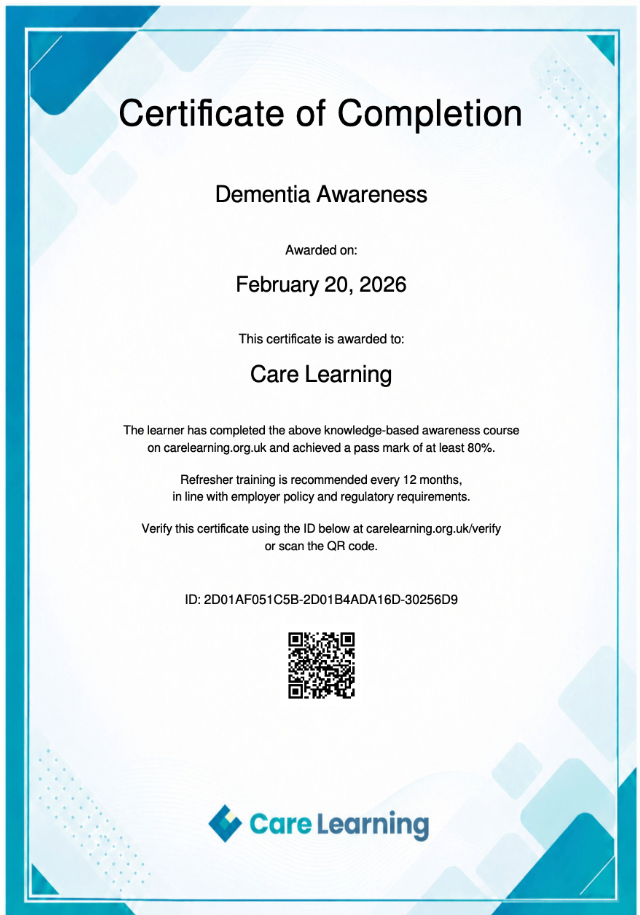
Yes. A certificate is issued after successful completion.
Effective handovers and reliable continuity help ensure that important information follows the person receiving care rather than becoming lost between visits, workers or teams. This course provides practical knowledge to support clear communication, dependable records, timely escalation and consistent home care.
Enrol now to build your understanding of effective handover and continuity of care.