School Record Keeping Awareness is an introductory course for teaching assistants and school support staff who contribute to pupil records. It explains how clear, relevant accounts can support continuity between colleagues and help teachers understand what happened during learning and support activities.
This free course covers progress logs, session details, objective language and contributions to reports. It also explores secure handling, corrections, appropriate advice routes and the limits of the support staff role. Examples focus on primary and secondary schools in England, with clear reminders to follow the applicable national guidance and school procedures.
Why Take This eLearning Course?
A brief note can influence how another colleague understands a pupil’s experience. This course helps learners recognise the difference between a useful observation and an unsupported conclusion, while keeping recording relevant to the task.
This course will help you to:
- Understand the purpose of different school records
- Recognise useful detail for an intervention log
- Describe the support given alongside a pupil’s response
- Distinguish attendance, participation and demonstrated learning
- Use factual, respectful and clearly attributed wording
- Contribute evidence to teacher-led reports and reviews
- Recognise privacy and safeguarding advice routes
- Understand how to raise errors and missing information
- Support concise records and useful handovers
Learning Outcomes
By the end of this course, you will be able to:
- Define records, logs and report contributions
- Describe relevant information about a support session
- Explain how prompts and task conditions affect interpretation
- Distinguish first-hand observations from reported information
- Give examples of objective wording and unsupported conclusions
- Outline the limits of a support staff report contribution
- Identify situations requiring designated school advice
- Describe safe handling and authorised correction principles
- Explain how proportionate records support review and continuity
School Record Keeping Awareness Course Outline
The course contains six modules covering everyday recording awareness, from identifying the purpose of an entry to contributing to a teacher-led review.
Module 1: Understand the purpose of school records
Learners will explore records, logs and reports, and how accurate information can support pupils and colleagues. The module explains the support staff contribution, the difference between observation and assessment, and the routes for progress information, everyday incidents and safeguarding concerns. It includes the boundary that urgent help should not wait for record completion.
Module 2: Know what to include in progress and intervention logs
Learners will consider a recording sequence and useful session details, including the agreed focus, activity, assistance and observed response. The module distinguishes attendance from participation and progress. It explains why relevant task and support conditions should remain visible when colleagues interpret a record.
Module 3: Understand objective and professional writing
Learners will examine factual description, source attribution, respectful language and acknowledged uncertainty. The module covers accessible wording, dates, quantities and abbreviations. Fictional examples illustrate how an account can remain specific without assuming motives, making diagnoses or overstating what an observation proves.
Module 4: Know how to contribute to reports
Learners will explore selecting dated evidence and preserving context when preparing a report contribution. The module explains teacher review, authorised responsibilities and the limits of a support worker’s contribution. It also covers summaries of progress, balanced reporting and accurately attributed pupil perspectives.
Module 5: Understand safe handling and correction of records
Learners will consider everyday privacy, approved systems and the need for designated advice on information rights, disclosure and retention. The module signposts current safeguarding guidance and local procedures. It also explains principles for raising errors, recording authorised amendments and reporting suspected data incidents.
Module 6: Understand how records support review and continuity
Learners will see how records contribute to teacher-led review without proving an intervention’s effect on their own. The module explores missing context, conflicting accounts, proportionate detail and useful handovers. A final recap brings together record quality, authorised use and the continuing need for school induction.
Target Audience
This course is suitable for:
- Teaching assistants in primary schools
- Teaching assistants in secondary schools
- Learning support assistants contributing to intervention logs
- School support staff who provide observations for reports
- New school staff completing role-specific induction
No previous specialist knowledge is required.
FAQ
Who is School Record Keeping Awareness suitable for?
It is designed for school staff who contribute observations, session logs or report information within an agreed support role. It focuses on awareness rather than specialist assessment or school-wide information governance.
Do I need any previous experience?
No specialist knowledge is required. The course introduces common recording terms and uses straightforward school examples.
What will I learn about intervention logs?
You will explore relevant session detail, assistance provided, pupil responses and the context needed to interpret an entry. You will also learn why attending or completing a task does not automatically demonstrate independent learning.
Will this course help with day-to-day practice?
It provides a foundation for understanding clear wording, relevant evidence, safe handling and useful handovers. Your school’s induction and procedures explain how to apply these principles in its own systems.
Does the course cover practical skills?
It explains recording principles and examples of written contributions. It does not assess workplace competence or authorise use of a particular school system without the appropriate induction.
Does it cover privacy and safeguarding responsibilities?
It introduces role boundaries and the need to use current school procedures and designated advice routes. It does not replace safeguarding training, KCSIE Part One reading, privacy specialist advice or decisions about access, disclosure and retention.
Does it apply across the UK?
Examples are England-focused. The course distinguishes the UK data-protection framework from national education and safeguarding arrangements, so staff should follow the guidance and procedures applicable to their school.
How long does the course take?
The core course is self-paced and usually takes around 1 hour to complete. Allow additional time to watch the two optional explanatory videos.
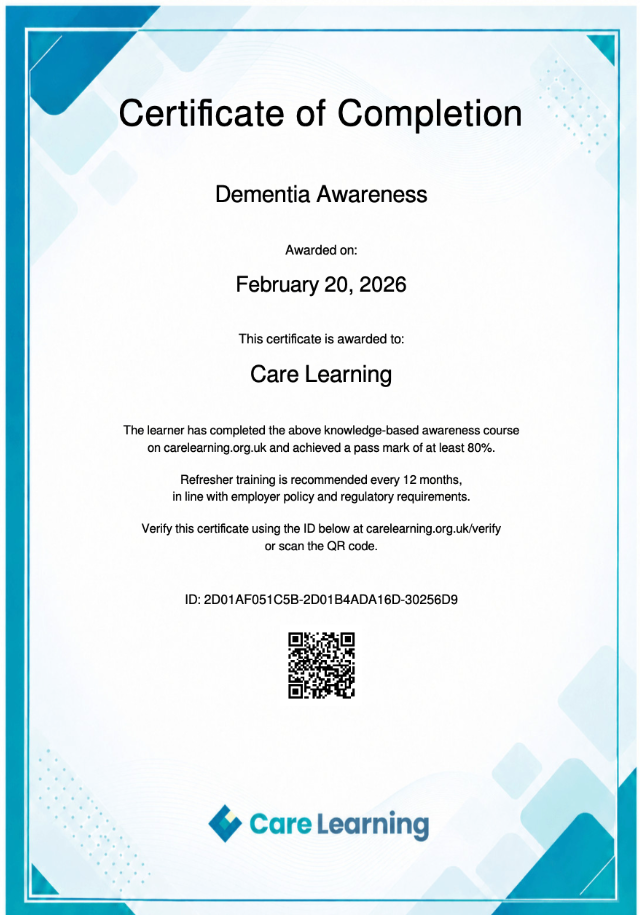
Will I receive a certificate?
Yes. A certificate is issued after successful completion.
Clear school records help colleagues understand the evidence available to them. This course supports a responsible foundation for contributing factual information while recognising when local guidance and specialist advice are needed.
Enrol now to build your understanding of school record keeping.